How Tanzania can shield its economy from a prolonged US-Iran conflict

A drone view shows vessels in the Strait of Hormuz, as seen from Musandam, Oman, June 15, 2026. PHOTO | REUTERS


Dar es Salaam. Tanzania needs to strengthen its domestic economic resilience and adopt longer-term contingency plans as uncertainty over when the US-Iran conflict will end raises the risk of prolonged disruption to energy, transport, trade and agricultural supply chains.

The conflict, which began on February 28, 2026, is increasingly spilling into Tanzania’s economy through higher transport, energy and agricultural costs, highlighting the need for a stronger domestic buffer against external shocks.

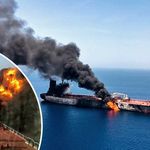
Iran said on August 15 that it had yet to decide whether to resume talks with Washington, while shipping through the Strait of Hormuz remained severely disrupted.

The waterway, through which about a fifth of global oil shipments passed before the conflict, has seen tanker traffic sharply curtailed, raising the risk that prolonged disruption will keep pressure on energy and freight costs.

For Tanzania, the impact is already visible in transport and tourism-related activities.

The Bank of Tanzania (BoT) reported that international flights fell 2.4 percent year-on-year to 8,314 in the quarter ending March 2026, while international passengers declined 1.4 percent to 501,650.

The central bank attributed the slowdown largely to heightened geopolitical tensions in the Middle East, which disrupted air transport routes.

The pressure has also reached domestic transport costs, following fuel price increases; the Land Transport Regulatory Authority (Latra) revised fares, with the minimum daladala fare rising to Sh700 from Sh600.

Ordinary long-distance buses charge Sh57.93 per kilometre on tarmac roads.

Agriculture is another area where Tanzania remains exposed to international market developments, particularly fertiliser prices.

Global urea prices increased from $509 per tonne in February to $658 in May. Although Tanzania currently has adequate fertiliser stocks, sustained international price pressures could raise farmers’ production costs and eventually feed into food prices.

Tanzania plans to produce about 400,000 tonnes of fertiliser domestically against annual requirements of about 1.5 million tonnes, leaving a substantial gap to be met through imports. The wider African economy could also feel the effects of a prolonged conflict.

The African Development Bank estimates that an extended Middle East conflict could shave about 0.2 percentage points off Africa’s economic growth in 2026 through higher hydrocarbon, food and fertiliser prices, disrupted trade and logistics and greater foreign-exchange volatility. The World Bank’s April outlook projected energy prices to rise by 24 percent this year and fertiliser prices by 31 percent, with urea prices potentially increasing by 60 percent.

Under a more severe scenario, Brent crude could average $115 a barrel.

For Tanzania, prolonged elevated energy and commodity prices would increase the import bill and demand for foreign currency, potentially putting additional pressure on the shilling and household purchasing power.

The State University of Zanzibar’s economics department, Prof Haji Semboja, said the conflict demonstrated how geopolitical tensions involving major powers could generate disruptions far beyond the countries directly involved.

“The US is a superpower and any violent action has implications for world peace and the global economy,” he said.

For Tanzania, Prof Semboja said the lesson was the need to strengthen domestic economic capacity rather than becoming excessively dependent on any particular global power.

“We do not have to take positions or align ourselves with superpowers. We have to strengthen our capacity to manage our own development, build systems and make better use of our own resources,” he said.

He said Tanzania should increase domestic ownership and management of strategic resources so more economic value remained within the country, arguing that Vision 2050 could provide an opportunity to build resilience into national planning, particularly in energy, agriculture, manufacturing and transport.

Digging deeper, Political analyst Mr Salbinus David of the University of Dar es Salaam said Tanzania should also protect its diplomatic space and national interests. “Tanzania should not allow a conflict between major powers to force it into choosing sides. Our foreign policy must remain guided by national interests and the need to maintain constructive relations with different centres of power,” he said.

Mr David said the longer the conflict continued, the greater the possibility that it could reshape international relationships, making diplomatic flexibility important.

“The longer the conflict continues, the greater the possibility that it will reshape relationships between countries. Tanzania therefore needs to maintain diplomatic flexibility so that it can respond to changing circumstances without compromising its own interests,” he said.

He urged Tanzania to support dialogue and peaceful settlement while avoiding unnecessary entanglement in rivalries between global powers.

For his part, a political analyst at the State University of Zanzibar, Prof Ali Makame Ussi, said the conflict should not be viewed as a distant Middle Eastern war because developments in strategically important regions could have direct consequences for Tanzania.

“What happens in the Middle East can affect Tanzania because our economy is connected to international energy, trade and transport systems. A disruption in one strategic area can quickly become a national concern for countries that depend on global supply chains,” he said.

Prof Makame said Tanzania needed to treat energy security and strategic preparedness as part of national security while diversifying its economic and diplomatic partnerships. “Our long-term strategy should be to diversify our partnerships, strengthen regional cooperation and ensure that Tanzania has alternatives when one market, supplier or international route becomes disrupted,” he said.

The Institute of Management and Entrepreneurship Development, Dr Donath Olomi, said the crisis highlighted Tanzania’s vulnerability to energy dependence.

He said the country should accelerate investment in renewable energy and alternative technologies while expanding the use of domestic energy resources.

“Tanzania needs to accelerate the use of alternative energy sources and technologies,” Dr Olomi said.

Natural gas should also form part of the strategy, he said, pointing to the planned $42 billion liquefied natural gas project, which is intended to commercialise more than 47 trillion cubic feet of deep-offshore natural gas reserves.

Beyond energy, Dr Olomi urged Tanzania to deepen economic and commercial ties with neighbouring African countries to create alternative markets and supply chains when global routes are disrupted.

“Instead of relying heavily on distant markets and supply routes, we should strengthen our economic relations with neighbouring countries and within Africa,” he said.