Kenya’s Sh21 trillion farm investment blueprint stokes East Africa’s race for agricultural capital
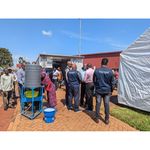
Kenya’s Principal Secretary for Agriculture and Livestock Development, Mr Jonathan Mueke, has launched the National Agri-food Systems Investment Plan (NASIP) 2026–2030 at the Financing Agri-Food Systems Sustainably (FINAS) Summit in Nairobi.
Josephine Christopher is a senior business journalist for The Citizen and Mwananchi newspapers
Mwananchi Communications Limitted
Dar es Salaam. Kenya has unveiled a sweeping agricultural investment blueprint worth KES1.081 trillion (about Sh21 trillion), setting the stage for heightened competition across East Africa for capital, agribusiness investment and food systems transformation.
The National Agri-food Systems Investment Plan (NASIP 2026–2030), launched during the Financing Agri-Food Systems Sustainably (FINAS) Summit held in Nairobi from June 30 to July 2, 2026, seeks to modernise agricultural value chains, expand irrigation infrastructure, strengthen food security and generate more than two million jobs by 2030.
While primarily focused on transforming Kenya’s domestic food systems, the plan is widely expected to have regional ripple effects, particularly in neighbouring countries such as Tanzania, where agriculture remains a key economic pillar but continues to grapple with productivity constraints and limited value addition.
Unlike traditional government-led spending programmes, NASIP is anchored on a blended financing model that relies heavily on private sector participation, with investors expected to fund nearly half of the initiative.
Kenya’s Principal Secretary in the Ministry of Agriculture and Livestock Development, Mr Jonathan Mueke, said the framework is built on a fully costed investment structure designed to attract multiple funding sources.
“At the heart of NASIP is a fully costed investment framework of KES1.081 trillion over the next five years,” Mr Mueke said.
Under the financing arrangement, national and county governments will contribute 35 per cent, the private sector 45 per cent, and development partners 20 per cent.
The model reflects a broader shift across the continent, where governments are increasingly positioning themselves as enablers of investment rather than sole financiers of agricultural transformation.
The launch of NASIP coincided with discussions around the Kampala Comprehensive Africa Agriculture Development Programme (CAADP) Strategy and Action Plan 2026–2035, which calls for accelerated investment in agro-industrialisation, climate resilience and agricultural trade across Africa.
AGRA Vice President for Programme Delivery, Prof Hamadi Boga, urged African countries to move decisively from policy formulation to implementation.
“Africa has no shortage of strategies or commitments. What is needed now is implementation at scale. We must move with urgency to translate the Kampala Declaration into practical investments, stronger institutions and measurable outcomes that improve the lives of farmers and strengthen food systems across the continent,” he said.
FINAS Summit Director, Dr Charity Mutegi, said the forum is increasingly focusing on implementation rather than dialogue, including the formation of a private-sector-led agriculture finance working group aimed at unlocking sustainable investment.
Participants also explored innovative financing tools developed by international organisations to track agricultural expenditure, identify funding gaps and attract greater investment into food systems.
Climate-smart agriculture financing featured prominently, with stakeholders emphasising the need to expand access to credit for smallholder farmers and micro, small and medium-sized enterprises (MSMEs), which remain central to Africa’s agricultural economy.
FSD Kenya Chief Executive Officer, Ms Rashid Pillai, said inclusive financial systems are critical to achieving sustainable agricultural transformation.
“As a sector, we need inclusive finance for sustainable agri-food systems. These systems should work for MSMEs and small-scale farmers to get financial support that works for them,” she said.
As East African countries push ahead with agricultural transformation under the CAADP framework, Kenya’s multi-trillion-shilling investment plan is expected to serve as a key regional benchmark, sharpening competition for capital and accelerating pressure on governments to deepen reforms in order to remain competitive in attracting agricultural investment.
Register to begin your journey to our premium contentSubscribe for full access to premium content