Josephine Christopher is a senior business journalist for The Citizen and Mwananchi newspapers
Mwananchi Communications Limitted
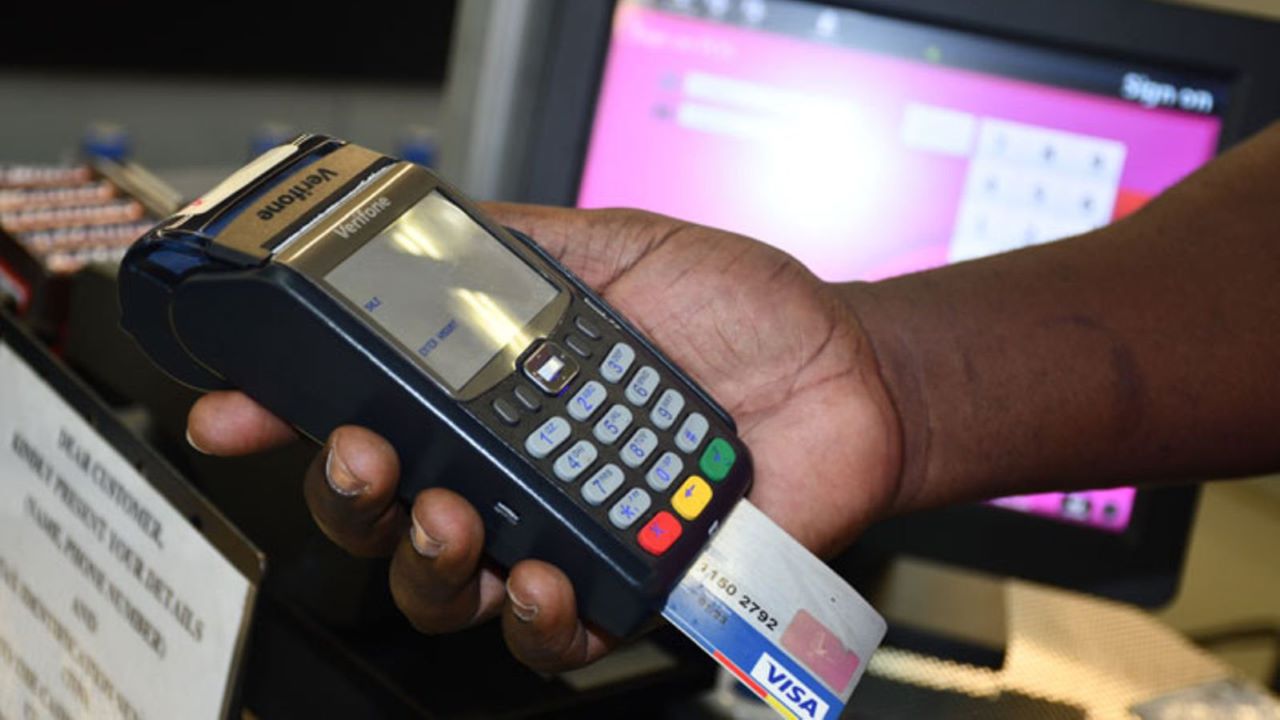
Dar es Salaam. Tanzania's transition to cash-lite economy is accelerating at a faster pace, with the number of merchants accepting digital payments more than doubled last year.
According to the Bank of Tanzania (BoT)'s National Payment Systems Annual Report for 2025, the number of merchants accepting digital payments increased to 2.79 million, up from 1.33 million in 2024.

The surge reflects a broader transformation in payment-to-business (P2B) transactions, which increased by 30.44 percent in volume and 41.04 percent in value over the year.
In total, 2.30 billion transactions worth Sh37.52 trillion were processed in 2025, highlighting growing reliance on digital channels for everyday commercial activity.
The central bank attributes the growth to the widespread adoption of merchant payment solutions such as TANQR codes and mobile-based “Pay Bill” systems, commonly known as Lipa Namba.
“These solutions have enabled customers to make payments easily using their mobile phones without the need for cash or physical point-of-sale (POS) devices,” the report stated in part.
Beyond convenience, the growth has been reinforced by improvements in Tanzania’s digital financial infrastructure, particularly interoperability across payment systems and the rollout of instant payment capabilities, which have improved transaction speed and reliability.
Speaking to The Citizen, Financial analyst, Christopher Makombe said the rise in digital payments was generating benefits that extend beyond the financial sector.
“The main positive impact of the increase in digital transactions is that it promotes financial inclusion, improves convenience, and increases transparency in economic activities,” he said.
However, he cautioned that the rapid expansion of digital transactions also exposes users and businesses to emerging risks.
“The main challenge is the possibility of increasing cybercrime, such as hacking, identity theft, and digital payment scams. Therefore, there is a need for public awareness on these risks and stronger cybersecurity measures,” Mr Makombe added.
Financial analyst and auditor, Eric-Alex Hamissi described the growth in merchant payments as evidence of a maturing digital financial ecosystem.
“The growth we are seeing in digital P2B transactions is a strong indicator of the maturity of Tanzania’s digital financial ecosystem. It suggests that businesses and consumers are increasingly embracing formal digital channels, which is positive for efficiency, transparency, and economic participation,” he said.
Mr Hamissi noted that the rapid expansion was shifting attention from adoption to governance and oversight.
“From an audit and assurance perspective, rapid growth of this nature naturally shifts attention toward the robustness of the underlying control environment. The question is no longer whether digital payments are being adopted, but whether governance, risk management, and oversight mechanisms are evolving at the same pace as the market,” he said.
According to him, one of the biggest advantages of digital transactions is the availability of detailed transactional data and clear audit trails.
“Compared to cash-based activity, this provides significantly greater visibility for regulators, financial institutions, and businesses to monitor trends, identify anomalies, and strengthen accountability,” he said.
Mr Hamissi added that as the ecosystem continues to scale, maintaining high standards of data integrity, cybersecurity, operational resilience, and reporting consistency would remain critical.
“These are not necessarily concerns arising from weakness, but rather the natural priorities of a growing and increasingly sophisticated payments landscape,” he said.
He said a well-governed digital payments ecosystem could support greater economic formalisation, improve efficiency across the financial sector, and provide policymakers with more reliable data for decision-making and long-term economic planning.
The BoT report notes that merchant adoption of digital payments is expanding across retail, transport, hospitality, and small and medium-sized enterprises, signalling a broader transition from cash-based transactions to more efficient, secure, and traceable payment methods.
During the period under review, provision of financial services through digital channels continued to record a remarkable adoption and growth. Banks in collaboration with fintech continued to provide
The value of digital savings increased by 263 percent, reaching Sh3.18 trillion, rising from Sh1.2 trillion reported in 2024, supported by growing use of mobile money services, improved technology, and ongoing financial inclusion and cash-lite efforts.
Digital credit transactions value increased by 32.29 percent to Sh5.5 trillion in 2025 from Sh4.21 trillion registered in 2024, attributed to the mobile technology and alternative credit scoring models that use mobile money transaction histories to extend financing to individuals and businesses without traditional collateral or banking requirements.
As more businesses embrace digital payments, analysts say Tanzania is steadily moving toward a more digitised and data-driven economy, with merchants increasingly becoming central to the country's financial transformation.
Register to begin your journey to our premium contentSubscribe for full access to premium content