Mtwara. Handling of bulk and hazardous cargo at Mtwara Port is set to undergo a major transformation following the construction of a specialised facility designed to handle such shipments more safely and in an environmentally responsible manner.
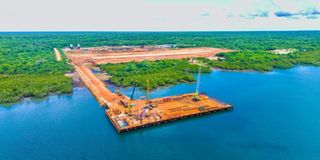
The new Mgao Island Port, currently under construction at a cost of Sh434.5 billion, has reached 38.5 percent completion and is expected to be ready by July next year.
Once operational, the facility will handle bulk and hazardous cargo including coal, cement, fertiliser and Sulphur.
The Director General of Tanzania Ports Authority (TPA), Mr Plasduce Mbossa, said the specialised port forms part of a broader strategy to modernise port infrastructure and support industrial and mining activities in southern Tanzania.
“The facility will mainly handle coal, fertiliser and sulphur, ensuring that heavy shipments move efficiently and safely without affecting nearby communities,” he said.
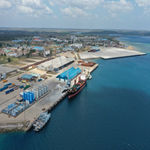
Upon completion, the new port will operate alongside Mtwara Port as an integrated maritime hub, allowing the main port to concentrate on conventional cargo such as cashew exports and containerised goods.
According to Mr Mbossa, relocating bulk cargo operations to Mgao Island will reduce congestion at Mtwara Port, lower transport costs and improve operational efficiency while safeguarding the environment.
“Mgao Island Port will make bulk cargo handling faster and safer while reducing dust and congestion in Mtwara town,” he said.
He noted that existing facilities at Mtwara Port have long supported the movement of various cargo, including agricultural exports, cement imports and general merchandise. However, the growing volume of bulk commodities such as coal has created the need for specialised infrastructure.
Modern cargo-handling systems—including conveyor belts, dust-suppression mechanisms and specialised loading cranes, will be installed to reduce environmental risks and improve efficiency.
“This will help reduce environmental hazards such as coal dust while also improving workplace safety and allowing the port to handle large volumes without delays,” Mr Mbossa explained.
The project’s supervising engineer, Hamis Nyembo, said the port is located along a natural channel similar to that of Mtwara Port.
Minor dredging will deepen the channel from nine metres to between 14 and 16.5 metres, enabling the facility to accommodate larger vessels.
“The natural channel makes the port ideal for expansion, and only minimal excavation is required to allow bigger ships,” he said.
Once completed, Mgao Island Port is expected to handle about 1.2 million tonnes of cargo annually.
Manager of Mtwara Port, Mr Ferdinand Nyathi, said the new facility is intended to complement—not compete with—the existing port.
“Mgao will take over coal, fertiliser and other heavy cargo, allowing the main port to focus on conventional goods,” he said.
TPA statistics show that Mtwara Port currently handles more than one million tonnes of cargo annually, including cashews, coal, fertiliser and industrial imports.
With the new facility in operation, the combined capacity of the two ports is projected to reach between 2.5 million and three million tonnes per year.
Demand for a dedicated bulk terminal has grown alongside increased coal mining in the Ngaka coalfields in Ruvuma Region, where coal has been transported by road to Mtwara for export—causing traffic congestion, dust pollution and higher road maintenance costs.
Mgao Island Port will shift much of this activity offshore, improving safety and efficiency within the municipality.
The facility is also linked to the government’s long-term plan to develop the Standard Gauge Railway corridor connecting Mtwara Port to Mbamba Bay Port on the shores of Lake Nyasa.
Completion of the strategic projects is expected to streamline cargo transport in southern Tanzania and strengthen the country’s position as a logistics hub within the Southern African Development Community (Sadc).
“Our ports are critical not only for Tanzania but also for neighbouring countries that rely on our corridors to reach international markets,” Mr Mbossa said.
Construction of the port has already created employment opportunities for skilled and semi-skilled workers.
Local residents and traders in Mtwara say the project could attract new investment and stimulate economic growth across southern Tanzania.
With offshore and onshore natural gas reserves, mineral resources and fertile agricultural land, the region has long been viewed as an area of untapped potential. The new port is expected to help unlock these resources by improving access to both domestic and regional markets.
Mr Nyembo said the port’s design also allows for future expansion.
“As trade and industry grow in southern Tanzania, Mgao Port can be upgraded with additional berths and storage facilities without disrupting existing operations,” he said.
Official figures show cargo throughput at Mtwara Port has risen sharply—from 106,071 tonnes in the 2018/19 financial year to about 1.7 million tonnes in 2023/24—reflecting increased exports and imports as well as government investment in port infrastructure.
Register to begin your journey to our premium contentSubscribe for full access to premium content