Domestic revenue push as govt plans Sh62.3trn budget
What you need to know:
By Katare Mbashiru
Dodoma. The government is moving to reduce reliance on foreign donors in the 2026/27 fiscal year, placing greater emphasis on domestic revenue mobilisation to fund a proposed Sh62.3 trillion national budget covering both recurrent and development expenditures.
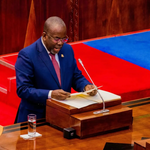
The decision follows some donor countries signalling their withdrawal from General Budget Support (GBS). Presenting the budget before MPs in Dodoma yesterday, Finance Minister Khamis Mussa Omar said the government will prioritise domestic revenue collection to improve efficiency and reduce dependence on external funding.
To achieve this, the government will implement the Medium-Term Strategy for increasing revenue (2025/26–2027/28), aimed at broadening the tax base and boosting collection.
Expenditure will also be managed according to available revenue, with priority given to unavoidable costs such as public sector salaries, government debt obligations, claim warrants and social services.
“In addition, the government will continue implementing the priorities outlined in the Fourth National Five-Year Development Plan while prioritising ongoing development projects,” Mr Omar said, noting increased private sector participation in investment and business activities.
The 2026/27 budget, he said, is projected at Sh62.3 trillion, a 10.3 percent increase over 2025/26. Revenue is expected to reach Sh46.8 trillion, including Sh37 trillion from taxes, Sh9.2 trillion from other sources (including Sh1.97 trillion from Local Government Authorities), and Sh563.1 billion in grants. Domestic revenue will account for 74.2 percent of the total budget.
The minister said the budget ceiling considers factors such as domestic revenue trends, keeping the deficit below three percent of GDP in line with East African Community (EAC) and Southern African Development Community (SADC) agreements, rising national debt, borrowing costs, debt servicing obligations, and changing donor policies.
A significant portion of the budget increase will cover public sector salaries, debt servicing, contractor claims, pension contributions, and local government funds, accounting for roughly 75 percent of the growth.
Net borrowing is projected at Sh7.4 trillion, with Sh6.6 trillion from domestic sources, Sh6.6 trillion in concessional external loans, and Sh2.4 trillion in commercial external loans. Repayments of maturing debt are expected to reach Sh7.8 trillion.
Macroeconomic projections include a 6.3 percent GDP growth, single-digit inflation of 3–5 percent, and domestic revenue reaching 17.1 percent of GDP, with tax revenue at 13.7 percent. Foreign exchange reserves will cover at least four months of imports.
Earlier, Minister of State in the President’s Office for Planning and Investment, Professor Kitila Mkumbo, presented the government’s development plan for 2026/27. He highlighted that private sector investment will contribute Sh60.1 trillion (70 percent) of the estimated Sh86.3 trillion cost of the plan, compared with Sh20.7 trillion (24 percent) from central government and Sh5.5 trillion (6 percent) from public corporations.
“All of us must adjust our mindsets by recognising and supporting the private sector and creating a conducive environment for growth,” Prof Mkumbo said.
With the Long-Term Development Plan (LTPP 2050), the Fourth National Five-Year Development Plan, and the National Development Plan 2026/27 now in place, the groundwork for Tanzania’s Vision 2050 is complete ahead of its official start on 1 July 2026.