Tz-Ophir Energy sinks over Sh160 billion into dry well
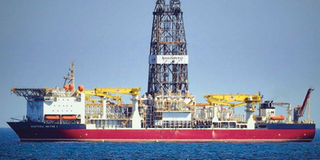
One the Ophir Energy drilling operations in the Indian Ocean deep-sea. PHOTO | FILE.
What you need to know:
Drilled by the Deep-sea Metro I drillship, the well which had strong prospects by the investor did not go as planned as the company reported that its Mlinzi Mbali-1 well came up dry
Dar es Salaam. The petroleum investor, Ophir Energy, has sunk more than $100 million (Sh160 billion) in the wake of failure to strike hydro-carbonic materials after offshore drilling in Block seven located 210km east of Dar es Salaam.
Drilled by a Deep-sea Metro I drillship, the well which had strong prospects by the investor did not go as planned as the company reported that its Mlinzi Mbali-1 well came up dry.
According to the 2013 report circulated by the minister for Energy and Minerals Prof Sospeter Muhongo, the total cost of drilling an offshore well ranges between $100 (Sh160 billion) and $170 million (Sh172 billion). The total cost, according to the report includes $1.5 million for seismic survey per km, between $1.2 and 1.8 million for daily drilling and between $100 million and 170 million for the well cost.
The well was drilled by a Deep-sea Metro I drillship and was targeting a structural crest within a Lower Cretaceous channel complex, with secondary targets in the Upper Cretaceous and Jurassic zones, but drilling did not find any hydro-carbonic materials beneath the earth, according to the statement released by Ophir Energy to The Citizen.
The Cretaceous targets were intersected but were interpreted as being water-bearing, according to the company statement.
The Deep sea Metro I will now be released to BG Group to drill an exploration well in Kenya before returning to Tanzania where wells are planned in Block 1 and in Ophir’s East Pande Block.
Ophir chief executive officer Mr Nick Cooper commented: “Mlinzi Mbali-1 was the first of a series of high-impact, high-risk wells that will be drilled by Ophir through 2014.”
“This frontier well disappointingly did not encounter live hydrocarbons, however, it is the deepest stratigraphic test offshore Tanzania and will provide crucial information that will be integrated into our interpretation of the potential of Block 7 and the wider deep-water basins of Tanzania,” says Mr Cooper.