In an exclusive interview, Faiz Arab, the Chief Executive Officer of iTrust Finance, discusses the rapid transformation of Tanzania's financial sector and the opportunities emerging in capital markets.
Arab shares his perspectives on the evolution of iTrust from a microfinance institution to a capital markets leader, the paramount importance of trust in financial services, the rise of retail investing, and the innovative products his company is bringing to the market.
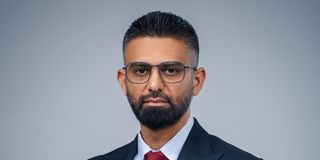
The interview was hosted by Mwananchi Communications Limited Executive Editor, Mpoki Thomson.
When it comes to investment, there is a lot of trust associated with someone parting with their money to invest in equity or bonds. What does trust mean to you personally, as far as financial services is concerned?
“The name iTrust has an important story behind it. Previously, our company was known as Imaan, a word associated with faith and trust. When you are dealing with people’s money, investments and assets, trust becomes everything because these are things people value deeply.
It is never easy to convince someone to invest, especially when every investment also carries risks and challenges. That is why trust sits at the centre of what we do.
For us, the responsibility goes beyond simply attracting investors. We have to nurture, protect and grow those investments responsibly. That is why the word ‘trust’ carries significant meaning for us as a company.”
iTrust has evolved from microfinance roots, to advisory, managing funds, and now you’re also a market convener – hosting roadshows. What drove this shift from transaction advisory into asset management and how do you manage to juggle these may roles?
We have received strong support from our board and we are backed by a very dynamic team. If you look at the average age of our staff, it is around 28 to 30 years old, and most of them have been trained internally.
When it comes to initiatives such as the Safaricom and London Stock Exchange roadshows, our objective has been to help move and energize Tanzania’s capital markets. Over the years, the market slowed down due to several factors, but we saw an opportunity to help revive momentum.
How do we manage all of this? I don’t think there is one simple answer. We focus on identifying opportunities, taking them seriously, and scaling quickly. Whenever something comes onto our plate, we commit fully, push hard, and work relentlessly to deliver results.
How then do you manage a potential conflict where you play an advisory role in securities, but also manage the fund assets?
Our regulatory framework is very clear and structured. Every fund we manage operates under a prospectus that outlines what we can and cannot do in line with the regulations set by the Capital Markets and Securities Authority (CMSA).
We make all investment decisions within those regulatory guidelines, and we cannot breach them. Any asset or instrument included in our funds or ETFs must first meet CMSA requirements and approvals before we can invest in it.
What advice do you have for a first-time investor?
My advice is simple: do your own research. It’s fine to seek advice from people who have invested before, but most importantly, understand exactly what you are investing in.
A lot of people enter capital markets or equity investments based purely on hearsay or trends without doing enough homework. Before investing, you need to properly assess where you want to put your money, why you are investing, and the risks involved.
What is your view about institutional investment and the growth of retail investment in Tanzania?
From the numbers, I see a significant surge in retail participation. However, public knowledge and awareness around capital markets are still limited. Many people are still new to investing in capital markets.
Institutional investors have been active in this space for years because they understand the long-term value and returns it can generate. But on the retail side, the market remains largely untapped. I believe there is still enormous potential for growth in retail investment participation.
What are some of the risks one should be aware of as a retail investor?
When investing in capital markets, there are a few key things you need to consider. The first is your exit strategy, how easy will it be to liquidate the investment if you need to?
Secondly, understand exactly what you are buying. What type of stock or asset is it? How is it structured? For example, if it’s a bond, is it secured or unsecured?
It’s important to do proper research, gather enough information, and then make your investment decision based on your own assessment and understanding of the risks involved.
What is your view about the government’s plan to raise infrastructure funding through bonds?
The government will always look for different avenues to raise funding for important national projects, and I don’t see any issue with that approach.
If there is sufficient liquidity within the economy and the government chooses to raise capital through bonds, that is perfectly reasonable. In many cases, it is an effective way to finance development and infrastructure projects.
What advice would you give an individual looking to invest in the government’s infrastructure bond?
It’s a sovereign bond, which generally makes it a relatively secure investment. The risks are quite low, although lower risk typically also means lower returns.
My advice would depend on your age profile and investment goals. For someone who is semi-retired or already retired and wants to preserve capital rather than take significant risks, this could be a suitable investment option.
What is your view about capital markets growth across the East African region?
It is growing. Every market and economy develops differently, but diversification is always important.
At the same time, public education and understanding of these investment opportunities remain relatively low. There is still a significant need for greater awareness and financial literacy in the market.
Tell us more about the iTrust bond and the opportunities it presents.
It is our first publicly listed bond, offering a 13 percent annual return, free of withholding tax. Interest is paid out quarterly, and it is a four-year instrument. At launch, we secured our first subscriber immediately, with CRDB approving Sh10 billion as an anchor investment. This early commitment reflects strong confidence in iTrust.
Who is the ideal investor?
The ideal investor is anyone. The minimum investment is Sh500,000, which we deliberately set at a low threshold to attract retail investors as well. This is designed to be accessible to everyone.
You also launched an App. How will this make it more convenient for investors?
We launched the iTrust App alongside the bond, making it easier for investors to track their portfolios. The platform is also integrated with CRDB’s SIM banking, allowing users to invest directly in the iTrust bond through their CRDB mobile banking platform.
What advice would you have for a Tanzanian who looks at investing in securities as something that does not immediately pay out?
Let me put it this way: Sh500,000 may seem like a small amount, but if it is sitting in a bank account or at home, it is earning nothing. You might not need that money for the next three months, yet it is still being eroded by inflation and currency depreciation.
However, if you place it in a bond, it becomes productive, liquid, and tradable.
Many of my friends ask me, “Faiz, how much money do you have in your account?” I usually say I don’t keep money sitting in my account, because I prefer to have everything invested.
What's the risk of investing everything you’ve got?
The main risk I look at is liquidity. If I need to liquidate my investment, it could take three to four days to do so. Beyond that, the other risks are similar to those faced in any business. For example, with bonds, if I want to exit my position, I would need to sell the bond in the market. If the market is illiquid, it can take time to find a buyer. In the past, when bonds were actively trading, investors would sometimes sell at a discount to make the paper more attractive to buyers.
So, from my perspective, liquidity risk is the primary concern when it comes to these types of investments.”
What gives you optimism about where the industry is headed? And what keeps you worried about capital markets here in Tanzania and across the region?
I think, at the moment, the biggest concern has been the global environment and the issues playing out internationally. That has created some uncertainty, and we feel the market could slow down as a result.
Of course, I could be wrong, different people interpret things differently. Markets are also driven by human psychology.
What one person sees as a risk, another may see as an opportunity. Ultimately, when you balance those perspectives, that is what the market really is. That is how I view it.
And what's next for iTrust as far as capital markets is concerned?
So I think iTrust’s vision is scale. We are focused on how we can reach all Tanzanians. We have already launched our platforms and are now ramping up services within the app.
We have also integrated with multiple partners to provide a full investment and financial services platform right on your phone, allowing you to monitor your investments daily, top up when you want, and redeem when necessary.
It is about giving users ease of access and control. This also addresses the risk side, because you have the flexibility to redeem on your own, and within about three days the funds are in your account.
Register to begin your journey to our premium contentSubscribe for full access to premium content