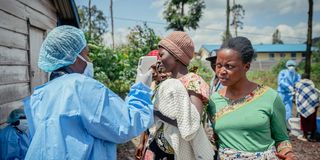
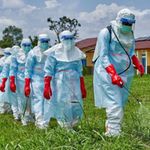
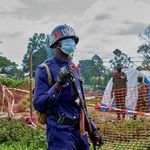
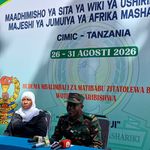
When the last Ebola outbreak in DR Congo was declared over, I breathed a sigh of relief. As long as our neighbours aren’t being ravaged by one of the deadliest diseases ever known, we are safe. Yet barely a year later, here we are again: another outbreak, hundreds of confirmed cases, and this time including Uganda.
That should give us many reasons for concern.
Since Ebola was identified in the DRC in 1976, this is the 17th outbreak. That means, we have already ridden our luck too many times. If Ebola outbreaks continue recurring in the DRC year after year, the probability that one eventually reaches deeper into our communities rises over time. And, knowing Bongo: our packed daladalas, bustling mama ntilie joints, fragile health clinics, and overflowing public toilets – that is a condition for a perfect storm.
So, where do we draw a defence line: wait until Ebola has hit home or partner with the DRC to address it there?
I think it is time we woke up to the reality that this is no longer a solely DRC problem. The assumption that this is a distant storm — dangerous, tragic, but ultimately containable within the borders of our neighbours, is becoming increasingly difficult to sustain. The repeated outbreaks tell us that the DRC remains a very fertile ground for Ebola outbreaks.
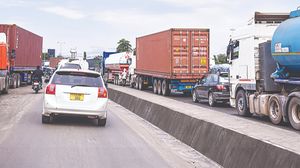
The problem is East Africa is much more interconnected nowadays. Trade routes, refugee flows, trucking corridors, air transport, lake transport, informal border crossings, and so on. Here in Dar es Salaam, we receive traders and truckers from the DRC all the time. And, with them, a virus in Goma is practically a passenger on a bus to Ubungo. So, it is a bad idea to treat Ebola as a temporary event. We should treat it as a permanent regional security challenge that requires a common effort.
After all, Ebola is not an ordinary disease.
In case we have forgotten, when Ebola hit West Africa between 2014 and 2016, more than 11,000 people died in Guinea, Liberia, and Sierra Leone. The World Bank estimates that the epidemic cost those countries over $2.8 billion. Health systems nearly collapsed. International airlines suspended routes. Investors fled. Tourism evaporated.
That’s due to one main fact: the terrifyingly high mortality rate of Ebola. Depending on the strain and response conditions, the figure is between 30 and 70 percent. For comparison, the infamous 1918 Spanish Flu had a mortality rate of below 5 percent. And smallpox, one of history’s deadliest diseases, only killed 30 percent of those infected. Ebola belongs in that category of historically feared diseases.
Thankfully, unlike the Spanish Flu, smallpox, or Covid-19, Ebola does not spread through the air.
It spreads primarily through direct contact with bodily fluids of infected individuals.
Sweat, blood, urine, and the like. That makes Ebola easier to contain if rapid, disciplined, and coordinated measures are taken early.
That implies the repeated outbreaks in the DRC suggest not merely a medical challenge, but a systems challenge. Ebola survives where surveillance is weak, where conflict disrupts health systems, where mistrust undermines public cooperation, and where governments lack sufficient capacity to respond rapidly.
This is why the response to Ebola cannot be left to the DRC government alone.
The DRC doesn’t have the wherewithal to deal with Ebola alone.
Hence, the East African Community (EAC) should treat eastern DRC as the frontline of a shared regional health security strategy.
We all have a direct stake in strengthening its surveillance systems, laboratories, vaccination campaigns, and rapid response capacity. Waiting for outbreaks to burn out on their own while hoping they never cross our borders is not a strategy. It is gambling.
There is also a simple economic logic to this.
It is far cheaper to invest early in containment within the DRC than to absorb the cost of a regional outbreak later.
A fraction of the resources spent on preparedness—on surveillance, diagnostics, and coordinated response mechanisms—can prevent billions in lost productivity, disrupted trade, and strained health systems across East Africa.
Tanzania, in particular, cannot afford complacency.
Our economy depends heavily on trade, transport, tourism, and regional connectivity. Dar es Salaam is one of East Africa’s most important commercial gateways.
That connectivity is an advantage in normal times—but in an outbreak, it becomes a fast-moving channel of risk.
The Covid-19 experience already showed how quickly health crises can become economic shocks.
But Covid-19 also left us with a clearer lesson: preparedness is decisive.
Countries with strong surveillance, rapid response capacity, and coordinated communication contained the damage far more effectively than those that reacted late. Ebola demands an even higher level of discipline because of its severity.
This is precisely where East African cooperation must become more proactive than reactive.
Ultimately, the DRC is no longer just the location of a disease; it is the frontline of a shared regional war. If we fail to fortify that frontline together, we will inevitably discover that what we dismissed as a neighbour’s recurring crisis has quietly become our own catastrophe.
Register to begin your journey to our premium contentSubscribe for full access to premium content