The bill calls for a review of relations between Washington and Dar es Salaam and proposes possible sanctions, including visa restrictions on certain individuals.
Dar es Salaam. Tanzania’s diplomatic relations with the United States have come under renewed attention following heated exchanges in Parliament over a proposed US Senate bill seeking sanctions against the country over alleged human rights violations linked to the October 2025 General Election.
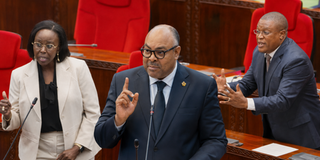
The debate in the National Assembly on Tuesday took place during discussions on the Ministry of Foreign Affairs and East African Cooperation’s Sh359.3 billion budget for the 2026/27 financial year.
At the centre of the matter is the proposed Reassessing the United States–Tanzania Bilateral Relationship Act, introduced on May 20 by US Senators Jeanne Shaheen and Ted Cruz.
The bill calls for a review of relations between Washington and Dar es Salaam and proposes possible sanctions, including visa restrictions on certain individuals, reassessment of security cooperation and a review of economic engagement.
During the debate, Foreign Affairs and East African Cooperation Minister Mahmoud Thabit Kombo said Tanzania would address the issue through diplomatic channels and had invited the bill’s sponsors to visit the country.
He said Tanzania’s Embassy in Washington, led by Ambassador Elsie Sia Kanza, had been instructed to engage US lawmakers while protecting national interests.
Several MPs, including Nape Nnauye and Esther Bulaya, defended Tanzania’s sovereignty and called for calm engagement, while ACT-Wazalendo MP Addo Shaibu urged consistency in addressing human rights concerns both domestically and internationally.
Political analysts say the parliamentary response reflects a strong emphasis on sovereignty but also highlights the sensitivity of Tanzania’s diplomatic position.
A University of Dar es Salaam political analyst, Mr Salbinus David, said the debate would have been more useful if it had focused on steps taken after the post-election unrest.
He said Parliament should have highlighted reforms and accountability measures already initiated.
He cited the formation of the Judge Chande Commission to investigate the election period and recommendations for establishing a criminal justice commission.
“That would have shown the international community that Tanzania is taking the matter seriously and working on corrective measures,” he said.
He added that diplomacy requires explanation and engagement rather than confrontational rhetoric.
A political scientist from the University of Dodoma, Dr Paul Loisulie, said the debate reflects a broader tension between sovereignty and international accountability.
He said modern diplomacy requires states to demonstrate transparency and willingness to engage, especially on governance and human rights issues.
He added that the Government’s decision to invite US lawmakers was a positive diplomatic step.
However, he warned that prolonged tensions could affect cooperation in trade, investment and security.
A political analyst from the State University of Zanzibar, Prof Ali Makame Ussi, said the debate also reflects domestic political sensitivities following the disputed election.
He said strong nationalist rhetoric often appeals domestically but must be balanced with careful international communication.
“The challenge is to avoid appearing defensive while protecting sovereignty,” he said.
He added that Tanzania’s international standing will depend not only on political statements but also on demonstrated progress in reforms and reconciliation efforts.