Unguja. Zanzibar plans to establish its own stock exchange and an investment bank in a move that could transform how businesses, government entities and investors raise capital for economic development.
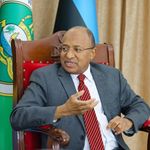
The two initiatives are among the key priorities outlined by the Minister for Finance and Planning, Dr Juma Malik Akil, as he tabled a Sh8 trillion budget for the 2026/27 financial year in the House of Representatives yesterday.
Dr Malik Akil said the government would oversee the establishment of the Zanzibar Investment Bank (ZIB) and the Zanzibar Stock Market.
The proposals signal Zanzibar's intention to deepen its financial sector and create new avenues for investment at a time when the Isles are seeking to attract more private capital into strategic sectors, including tourism, infrastructure, fisheries, blue economy projects and manufacturing.
A stock exchange serves as a marketplace where companies and institutions raise funds by issuing shares and bonds, while investors buy and sell those securities.
Besides providing businesses with access to long-term financing, stock markets improve transparency, corporate governance and public participation in wealth creation.
They also help governments and state-owned enterprises mobilise funds for development projects.
For Zanzibar, a dedicated stock market could provide local enterprises with an alternative to bank borrowing, allowing them to raise capital directly from investors.
It could also enable residents to invest in local companies and benefit from the growth of the Isles' economy.
The planned investment bank is expected to complement the exchange by financing large-scale projects and attracting domestic and foreign investors.
Investment banks typically structure major transactions, advise on fundraising and support businesses seeking capital for expansion.
The move would place Zanzibar alongside a growing number of East African jurisdictions that operate capital markets.
The region is currently served by the Nairobi Securities Exchange in Kenya, the Dar es Salaam Stock Exchange in Tanzania, the Uganda Securities Exchange and the Rwanda Stock Exchange.
These exchanges facilitate the trading of shares, bonds and other securities and have increasingly embraced electronic trading platforms.
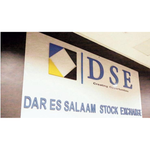
Tanzania's own stock market, the Dar es Salaam Stock Exchange, was incorporated in 1996 and began trading in 1998.
It offers trading in shares, bonds and real estate investment trusts and operates under the oversight of the Capital Markets and Securities Authority (CMSA).
"In this period, the ministry will establish the Zanzibar Stock Market and an investment bank," Dr Akil told lawmakers.
Beyond the two flagship projects, the ministry plans to strengthen digital systems in government budgeting and financial management, promote gender-responsive budgeting and finalise the Zanzibar Development Plan (ZADEP) 2026–2031.
The government also intends to review the Value Added Tax (VAT) Act No. 4 of 1998, prepare legislation governing the Zanzibar Social Security Fund (ZSSF), and develop a population policy alongside procurement guidelines for information technology equipment and special groups.
Other priorities include integrating electronic systems across government institutions, introducing agricultural insurance schemes and establishing a subsidiary to manage life insurance services under ZIC Life Insurance.
Meanwhile, the House Budget Committee urged the ministry to strengthen revenue collection, close loopholes and ensure that growth in public debt remains aligned with repayment capacity.
During the budget debate, members of the House of Representatives called for stronger oversight of revenue collection and the creation of new revenue sources, while urging tax authorities to avoid enforcement measures that unnecessarily disrupt businesses.
Several lawmakers also stressed the need to make Zanzibar more open to trade and investment, arguing that effective implementation of the proposed reforms will be critical if the Isles are to achieve faster economic growth and attract greater private-sector participation.
Register to begin your journey to our premium contentSubscribe for full access to premium content