Not killing, but disrupting: A new angle in malaria control

What you need to know:

  • For years, malaria control has relied heavily on insecticide-treated nets and indoor residual spraying—interventions that have undoubtedly saved millions of lives. However, mosquito populations are not static; they continually adapt to environmental pressures.
  • At the centre of our study was pyriproxyfen, a chemical that works very differently from conventional insecticides. Instead of killing mosquitoes instantly, it interferes with their development, preventing them from maturing into adults.

By Simoni Mnzava

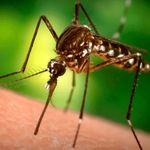
On a warm evening in rural southeastern Tanzania, as the sun slowly disappears beyond the horizon, a familiar enemy awakens. The soft buzz of a mosquito may seem harmless, almost easy to ignore—but I know, as many of us do, that it carries the burden of one of the world’s deadliest diseases: malaria.

According to the World Malaria Report 2025, sub-Saharan Africa bears a disproportionate share of the global malaria burden, accounting for approximately 95 percent of cases and deaths. In Tanzania, nearly 9 million people contracted malaria in 2024, leading to more than 25,000 deaths, mostly among children under five. This places Tanzania among four countries—alongside Niger, the Democratic Republic of Congo, and Nigeria—that together account for more than half of all malaria-related deaths globally.

For years, malaria control has relied heavily on insecticide-treated nets and indoor residual spraying—interventions that have undoubtedly saved millions of lives. However, mosquito populations are not static; they continually adapt to environmental pressures.

In addition to the widespread emergence of insecticide resistance, there is increasing evidence of behavioural changes, such as shifts toward outdoor biting, altered feeding times, and avoidance of treated surfaces, all of which reduce contact with indoor interventions. As a result, the effectiveness of these strategies is gradually declining. This evolving challenge underscores the urgent need to explore and integrate alternative vector control approaches.

To complement long-lasting insecticidal nets (LLINs) and indoor residual spraying (IRS), many African countries, including Tanzania, are increasingly adopting larval source management (LSM) as a supplementary malaria control strategy. Within this approach, there is growing evidence of the effectiveness of juvenile hormone analogues, particularly pyriproxyfen, as an alternative larvicide targeting immature stages of resistant malaria vectors.

While several studies have demonstrated the field efficacy of pyriproxyfen against aquatic stages and emerging adults, limited attention has been given to how pyriproxyfen-based interventions interact with existing vector control measures such as LLINs and IRS at the community level.

Together with my colleagues, under the supervision of Dr Dickson Lwetoijera, a senior research scientist at the Ifakara Health Institute, we conducted a study titled Effects of sublethal pyriproxyfen exposure on Anopheles arabiensis fitness parameters and susceptibility to pyrethroid insecticides over multiple generations. We focused on Anopheles arabiensis because it is a key malaria vector in Tanzania and plays a significant role in outdoor transmission and breeding in diverse habitats, making it highly relevant for evaluating pyriproxyfen-based interventions and their impact on residual transmission.

Our work, published in MDPI Insects, was conducted in semi-field settings—controlled environments designed to closely mimic natural ecological conditions. This approach allowed us to capture realistic mosquito behaviours and responses, providing insights that extend beyond conventional laboratory studies.

At the centre of our study was pyriproxyfen, a chemical that works very differently from conventional insecticides. Instead of killing mosquitoes instantly, it interferes with their development, preventing them from maturing into adults.

What makes pyriproxyfen even more interesting is its use in autodissemination. In this approach, female mosquitoes unknowingly carry the chemical themselves. After contacting treated surfaces, they transfer a lethal dose of pyriproxyfen to breeding sites during egg-laying (oviposition), inhibiting adult emergence and reducing the next generation.

However, real-world conditions introduce complexity. Mosquito breeding sites are often numerous, scattered, and difficult to reach. As a result, the amount of pyriproxyfen delivered can sometimes be very small—what we call a sublethal dose. This is where concern arises.

A previous study by Opiyo et al. (2021) suggested that such low doses might increase resistance to pyrethroids, the most widely used insecticides in malaria control. However, that study examined only a single generation, leaving an important question unanswered: was the observed effect true resistance or temporary tolerance?

This uncertainty motivated our study.

When we exposed mosquito larvae to sublethal doses of pyriproxyfen, we initially observed a similar pattern—adult mosquitoes were harder to kill with pyrethroids. Their mortality decreased, and knockdown rates were reduced. At first glance, it appeared that resistance was increasing.

But as we followed subsequent generations, the story changed.

The effect disappeared completely.

Mosquitoes that were not directly exposed returned to normal susceptibility. This showed that what we observed was not inherited resistance, but a temporary physiological response—tolerance. This distinction is critical, as it indicates that pyriproxyfen does not drive long-term resistance.

At the same time, we observed something equally important: exposed mosquitoes were weaker. They laid fewer eggs, their eggs had lower hatching success, and they were smaller in size. These fitness costs reduce population growth and survival, ultimately helping to lower malaria transmission.

Safety remains a key concern in public health interventions. Evidence from a recent 2026 study by Augustino Mmbaga, which I co-authored under the senior supervision of Dr Dickson Lwetoijera, provides reassuring evidence that pyriproxyfen does not significantly affect non-target organisms, supporting its ecological safety.

In a separate study led by Anitha Mutashobya, microencapsulated formulations of pyriproxyfen demonstrated strong and sustained effects against Anopheles arabiensis under semi-field conditions, significantly reducing larval emergence, adult body size and female fecundity, with residual activity lasting up to six months—highlighting their potential for long-term larval source management in malaria control programmes. I also co-authored this study under the same supervision.

Looking ahead, these findings offer valuable direction for strengthening malaria control in Tanzania. Building a resilient health system will require not only new tools but also stronger community engagement. Educating communities about mosquito breeding habitats and larval control practices is essential. When people understand where mosquitoes breed and how to manage those environments, they become active participants in control efforts.

At the same time, integrating approaches like autodissemination into existing strategies can help reach breeding sites that are otherwise difficult to identify or treat. Continuous monitoring will also be essential to ensure interventions remain effective.

Through this work, I have come to see malaria control differently. It is not only about killing mosquitoes—it is about understanding their life cycle, environment, and vulnerabilities.

Because sometimes, the most powerful solutions are not the most aggressive, but the most thoughtful.

And in the quiet disruption of a mosquito’s life cycle, we may find one of our strongest tools yet in the fight against malaria.

Simoni Mnzava is a public health researcher at the Ifakara Health Institute, where he conducted this study as part of his Master’s project.