“It is their right. There should not be any strings attached to what a journalist should report or not. The public also have the right to access information,” he said in a recent interview with The Citizen in Arusha.
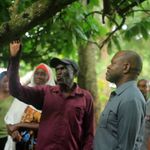
Arusha. For Guy Berger, the United Nations education agency (Unesco)’s director for freedom of expression and media development, freedom of expression is the right of any journalist and members of the public in equal measure.
“It is their right. There should not be any strings attached to what a journalist should report or not. The public also have the right to access information,” he said in a recent interview with The Citizen in Arusha.
According to him, journalists should be left free, independent and pluralistic (many voices) when discharging their duties. He said the free media would enable journalists to do their job more professionally.
The South African-born former journalist says he was fairly exposed to know the state of media freedom in many African countries, now that he is based at the Unesco headquarters in Paris, France.
He considers Ghana to be way ahead of others in matters pertaining to freedom of the press considering that scores of African countries are still grappling with major challenges.
“In South Africa, the government used to have complete control of the media during the apartheid era,” he told The Citizen in Arusha during the marking of the International Day to End Impunity against Journalists, last September.
He said he was not aware of the state of the media freedom in Tanzania, but was already concerned on what he has heard in recent days.
“For Tanzania, I don’t follow all the details. But when a journalist is killed, when the government closes a newspaper or overreacts to a TV or radio station, you should know not everything is in order,” he said.
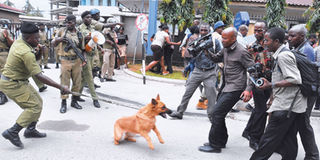
During the interview, Mr Berger repeatedly recalled the death of Daudi Mwangosi, a Channel Ten journalist, who was killed in Iringa some five years ago during a fracas that followed an opposition party meeting.
On September 2, 2012, tragedy hit the Tanzanian media fraternity when Channel Ten journalist Daudi Mwangosi was brutally killed by a police officer while covering an opposition Chadema rally in Iringa.
His murder not only turned a dark chapter in the history of an independent, democratic Tanzania, but also cast a dark shadow on media freedom.
There were calls from various quarters for the perpetrators to be brought to justice. After four years, the High Court in Iringa recently sentenced the police officer who ruthlessly tore a teargas canister through Mwangosi’s stomach to 15 years in jail. He was found guilty of manslaughter. “There must have been an over reaction from the authorities because a policeman was found guilty of killing,” said Mr Berger.
But the Unesco official describes Somalia as the worst country in Africa and one of the leading in the world for killing of journalists, followed by Nigeria.
The situation is equally not encouraging in Kenya due to what he described as intimidation and threats against journalists, which he says should be abhorred at all costs.
According to recent statistics, more than 700 journalists and allied professionals have been killed across the world between 2006 and 2016.
In Africa alone, 103 journalists were killed, according to statistics by the Unesco, but, strange enough, not more than five cases have been judicially resolved.
“Less than one in 10 cases involving the killing of journalists is ever resolved,” he added, noting that reporters and other media people were targeted for boldly reporting news and bringing information to the public.
“It is important to recall that the rate of impunity for crimes against journalists remains extremely high in the world,” he said, adding that, Unesco has condemned more than 540 cases of killings of journalists, media workers and social media producers.
Cycle of violence
Unesco believes that impunity for crimes against journalists was one of the main factors fuelling the cycle of violence against the freedom of expression.
Due to this, the judicial systems - judges, prosecutors, lawyers and investigative police - are crucial in addressing the issue of impunity.
Sharing the experiences and jurisprudences of regional courts, as well as decisions from national High Courts is, therefore, seen as an important tool in fighting impunity by raising knowledge about international standards and international law.
It was due to this that the Unesco Director General Biannual Report on Safety of Journalists and the Danger of Impunity was launched on November 2, last year.
The report focused on the promotion of freedom of expression, freedom of press, safety of journalists and to fight impunity, notably in Africa, within the framework of the UN Plan of Action on the Safety of Journalists and the Issue of Impunity.
Unesco insists by increasing safety of journalists, reinforcing the fight against impunity and raising awareness about the descriminalisation of defamation, the project will contribute to fostering peace and security, good governance, democracy and the rule of law in Africa.
Furthermore, the project will contribute to the UN Sustainabile Development Goals which recognises the need to ensure public access to information and protect fundamental freedoms.
The rate of impunity for crimes against journalists is particularly worrying, according to a report presented during the commemoration of the International Day to End Impunity for Crimes against Journalists in Arusha last September.
The event was jointly organised by Unesco and the African Court on Human and People’s Rights (AfCHPR), a judicial organ of the African Union based in Arusha.
According to the report, the rate of impunity for crimes against journalists remains extremely high in the world, with less than seven per cent of cases solved through judicial systems since 2006.
Unesco statistics indicate that of the 103 journalists killed in Africa between 2006 and 2015, only one case has been judicially resolved!
Besides the killing of Mwangosi, and occasional banning of newspapers, the situation has been worrying in Tanzania with the recent storming of FM Clouds TV studios by a top government official who was accompanied by armed policemen.
Respond to criticisms
Mr Jamal Zuberi, an assistant director of the Tanzania Information Services (Maelezo) is one of the few government officials to respond to the criticisms.
He said during the seminar held alongside launching of the Unesco project that the Tanzanian government had started to create a much more conducive environment that would ensure the safety of journalist and improved welfare of the media workers.
“The efforts include the development of a National Plan of Action for the Safety of Journalists and Media Workers with the aim to engage all relevant actors,” he pointed out.
Among the actions taken by the government, he said, is the recently-passed Media Services Act of 2016. The Act was intended to replace the Newspapers Act, and the Tanzania News Agency (Repealing) Act, which date back to 1976. The Newspaper Act, in particular, has been used to curtail press freedom in a number of instances.
Among other things, the Media Services Act, 2016 abolishes self-regulation of the media by creating a statutory media council that oversees all publishers, from major news outlets to bloggers’ sites. The government-controlled body replaces the current independent Media Council of Tanzania and have the right to ban newspapers and prohibit non-accredited journalists from publishing.
It also introduces tough criminal penalties for offences such as defamation, sedition and publishing false statements, the descriptions of which analysts say have been copied directly from the Newspaper Act, 1976, and for offences under the Cyber Crime Act, 2015 and the Statistics Act, 2015.
Unesco representative to Tanzania Ms Zulmira Rodrigues said freedom of expression is of little value if journalists cannot exercise their right to safety.
“Where individual journalists or media organisations are routinely subject to surveillance, threats, harassments or physical attack, media cannot exercise its role as a platform for democratic discourse,” she said, adding that poor working conditions and corrupt practices have contributed to self-censorship.