Tanzania as many other underdeveloped poor countries of the world since the onset of the new world economic order that dominated the free market economy after the collapse of the eastern communist/socialist block, indulged in reforming the mining industry to conform to the new order.
This is the first instalment of an article on the political economy of reforming the mineral sector in Tanzania
Tanzania as many other underdeveloped poor countries of the world since the onset of the new world economic order that dominated the free market economy after the collapse of the eastern communist/socialist block, indulged in reforming the mining industry to conform to the new order.
This endeavourer came with a lot of public concerns and resentments and on many occasions drove the political agenda of the day. It became a heated political agenda.
Organised mineral prospecting and mining in Tanzania began during the German colonial period, beginning with gold discoveries in the Lake Victoria region around 1894. After 1930, gold production was substantial and increased steadily until 1967 after the Arusha Declaration was introduced. By 1970s, the mining industry had declined to very low levels due to the closure of many large scale gold mines and production was then restricted mostly to artisanal and small scale mining.
As Tanganyika was emerging from colonialism, the mining industry was part of a very important element of the colonial economy in colonies and in the countries of origin. In the Tanganyika Territory, the mining industry fed the raw material needs of the West, especially Europe. It is very clear that during colonial rule the mining industry was a vibrant industry guided by the free market economy of the day which was well linked to the West.
The colonial large scale mining industry was dominated by gold, silver, lead, copper and diamonds. Mines like the Canuck Gold Mine in Nzega District that began in 1945 and closed in 1953; the New Saza Gold Mine in Mbeya that lived between 1934 and 1958; Sekenke and Korandotal Gold Mines in Iramba District operated between 1909 and 1956 are some vivid examples of a vibrant booming large scale mining industry in the Tanganyika Territory.
Other important mines that existed longer just to be closed after independence, included the Geita Gold Mine that was operated between 1938 and 1966. the Mkwamba Lead Mine in Mpanda was in operation between 1956 and 1961. Some other mines survived the Arusha Declaration like Mara Gold Mine that began in 1930 and was closed in 1970; the Karagwe Tin Mine in Bukoba began in 1924 and was closed in 1974. Others were Buhemba Gold Mine that began in 1913 and was closed in 1970; (Buhemba reopened in 2003 and was closed again in 2006); the Kiabakari Gold Mine was in operation between 1933 and 1966; and the Williamson Mwadui Diamond Mine at Mwadui in Shinyanga Region that began in 1940 and has survived to date.
All the large scale gold and metal mines that were nurtured by the free market economy were suddenly suffocated by a new political ideology that surfaced after independence and forced the mines to be closed overnight, with the exception of the Williamson Diamond Mine that survived the crush.
The reason why Williamson Diamond Mine survived is because Mwalimu, the then President of Tanzania, personally decided to keep the investment. Although Mwalimu had broken the diplomatic link with the Apartheid South Africa, he kept a private link with the De Beers family that controlled the diamond mining and trade in the world.
In this special relationship, WDL diamonds were marketed in London, where under a presidential directive special a government diamond sorting organ known as TANSORT was established to maintain the interest of the government in the diamond trade.
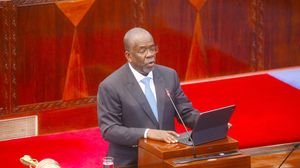
Dr Kafumu is a geologist and former Commissioner for Minerals. He is currently a member of Parliament