A growing coalition of actors; government, educators, parents, universities and private sector players, is reshaping how mathematics is taught, perceived and supported.
From curriculum reforms and scholarships to international training camps and modern teaching methods, Tanzania is laying the groundwork for a new generation of learners equipped to compete regionally and globally in mathematics and science.
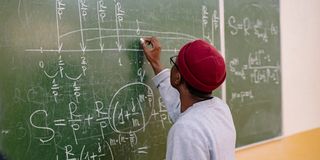
For many years, mathematics has been one of the most persistent challenges in Tanzania’s education system.
Low pass rates in national examinations, widespread fear of the subject among learners, and limited exposure to international standards have combined to weaken the country’s science pipeline.
In the recently announced Certificate of Secondary Education Examination results, while overall pass rates have improved, performance in mathematics, a foundational skill for science and technology, continues to raise concern.
In 2025, only 26.45 percent of candidates passed, meaning nearly three out of every four Form Four students left school without the minimum mathematical skills needed for further studies, technical training, or many modern jobs.
On the global stage, Tanzania’s visibility in elite mathematics and science competitions remains modest, reinforcing concerns that the country is falling behind in an increasingly technology-driven world.
That picture, however, is beginning to change.
A growing coalition of actors; government, educators, parents, universities and private sector players, is reshaping how mathematics is taught, perceived and supported.
From curriculum reforms and scholarships to international training camps and modern teaching methods, Tanzania is laying the groundwork for a new generation of learners equipped to compete regionally and globally in mathematics and science.
One of the most significant shifts in recent years, has been Tanzania’s deliberate push to expose students to international mathematics competitions and training platforms.
Since 2023, the country has steadily increased its participation in continental contests such as the Pan-African Mathematics Olympiad, as well as preparatory programmes linked to the International Mathematics Olympiad.
According to the chairperson of the Mathematics Association of Tanzania, Dr Said Sima, the impact has been tangible.
“When Tanzania first participated in Africa-level competitions in 2023, our performance was not strong,” he says. “But in 2024, during the competition held in South Africa, we won four bronze medals. In 2025, we repeated that achievement. That consistency tells us we are on the right path.”
Beyond medals, participation has begun to influence domestic outcomes. Dr Sima notes that for the first time, although it has not been good enough, the national pass rate in mathematics at Form Four level rose from 20 percent to 26 percent, a shift he links directly to increased motivation, exposure and confidence among learners.
“These competitions show students that mathematics is not about fear, but about thinking,” he explains.
While government leadership remains central, private sector involvement has emerged as a key enabler of this progress. Corporate support has helped unlock access to international training programmes that would otherwise be beyond reach for many students.
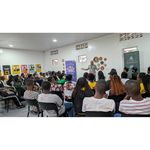
One such intervention was the support of outstanding Tanzanian students by YAS Tanzania, to attend an intensive mathematics training camp in Kigali, Rwanda, organised by the African Olympiad Academy in partnership with MIT–Africa.
Students who participated in the mathematics training programme in Kigali, Rwanda. PHOTOI COURTESY.
The programme brought together high-performing learners from across the continent, offering rigorous preparation for continental and global competitions.
Education analysts argue that such partnerships are most effective when they align with national priorities, encouraging other companies to join in.
“What matters is not who sponsors, but what the sponsorship enables,” says a science education expert, Prof Joseph Mwakalobo. “In this case, it has opened doors to global standards of learning.”
National examination data over the years have consistently shown mathematics to be among the lowest-performing subjects. In some recent cycles, fewer than two in ten Form Four candidates passed the subject.
The consequences were severe, according to experts: fewer students qualifying for science combinations, limited enrolment in engineering and ICT programmes, and a shrinking pool of future innovators.
Education experts argue that the challenge was never about ability alone.
“Mathematics was treated as a subject for a special few, rather than as a tool for building thinking skills. The entry of private sector players signals a bright future for Tanzania,” says Prof Mwakalobo.
Dr Sima, who is a lecturer at the University of Dar es Salaam, further notes, “Once learners develop fear at an early stage, it becomes very difficult to reverse.”
That fear, he adds, was reinforced by teaching methods that prioritised memorisation over understanding, and by limited opportunities for learners to see mathematics applied beyond the classroom.
Learning alongside Africa’s best
For students, exposure to continental peers and international coaches has been transformative. Training camps held outside Tanzania have allowed learners to benchmark themselves against some of Africa’s strongest mathematics minds.
Dr Sima notes that the coaching team at the Rwanda camp included graduates of top science and technology institutions in developed countries, including the United States.
“Our students were tested several times during the camp, and their performance was strong,” he assures. “These are signs that Tanzanian learners can compete globally, especially at a time of rapid technological change.”
He adds: “We often failed to participate in these competitions because we lacked the necessary support. However, with backing from telecom companies such as YAS, we can now see light at the end of the tunnel.”
Participation in such programmes is also strategic. Success in international mathematics competitions often opens pathways to scholarships in world-class universities specialising in science, technology and engineering, opportunities that were once rare for Tanzanian students.
At policy level, the government has intensified efforts to reposition science education. The introduction of a competence-based curriculum, which emphasises practical application and critical thinking, marks a major departure from theory-heavy teaching.
Under the new model, learners actively engage with problems while teachers act as facilitators rather than sole sources of knowledge. Nationwide teacher training is already underway to align classroom practice with these expectations.
Scholarship programmes such as the Samia Scholarship are incentivising excellence in science subjects, with advanced mathematics as a priority, by enabling top-performing students to pursue advanced studies locally and abroad.
“Students who perform well in mathematics competitions have a stronger foundation to benefit from these scholarships,” says a senior education officer, Tom Mburi. “It creates a clear link between effort, excellence and opportunity.”
Goodluck Liali from Ilboru Secondary School in Arusha, who attended the training in Kigali, says international exposure has reshaped his relationship with mathematics.
“We learnt to think creatively and work through problems in new ways,” he says. “It’s not just about passing exams, but about solving challenges.”
Girls are also gaining confidence. Elina Mhagama, a Form Four graduate from St Francis Girls’ Secondary School in Mbeya, says the experience helped demystify the subject.
“Science subjects may look difficult at first, but they become easier with time,” she says. “I want other girls to know that mathematics is not out of reach.”
Mr Lumuliko Anania, whose daughter participated in advanced training, believes attitudes at home matter. “If a parent fears mathematics, the child learns that fear,” he says. “Confidence must start at home.”
Despite the progress, challenges persist. Access to quality teaching resources remains uneven, particularly in rural schools. Teacher shortages continue, and only a small proportion of learners currently benefit from competition-based exposure.
Experts argue that scaling up requires sustained cooperation, stronger support from education officers, incentives for mathematics teachers, expanded private sector partnerships and early identification of talent at grassroots level.
If the current momentum is sustained, Tanzania will not only appear on global mathematics stages but will compete with confidence and, in the process, strengthen science performance across its schools.