How Congo’s Ebola outbreak became the second-deadliest on record

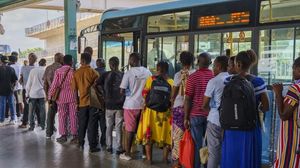
Passengers who disembarked from a boat intercepted by health authorities wait to be tested following the death of a passenger suspected of having Ebola, in Kinshasa, Democratic Republic of the Congo, August 6, 2026. Authorities said the passenger had disembarked earlier in the city. PHOTO | REUTERS
Dakar. The ongoing Ebola outbreak in the Democratic Republic of Congo has become the second-deadliest on record and the deadliest in the country’s history, surpassed only by the West African epidemic of 2014-16.

The grim milestone was reached on Sunday when government data showed that confirmed deaths had exceeded the toll recorded during Congo’s 2018-20 Ebola outbreak, previously the country’s worst.

Delayed detection, overstretched surveillance teams, armed conflict and a lack of vaccines and proven treatments for the virus strain involved have allowed Ebola to spread faster than containment efforts.

How fast is it spreading?

Health officials say the current outbreak is spreading about five times faster than previous outbreaks in Congo did at a similar stage.

According to the latest government data published on Sunday, there have been 4,945 confirmed cases, including 2,325 deaths.

The 2018-20 outbreak ended with 3,481 cases and 2,299 deaths recorded over two years.

It took more than 10 months for that outbreak to reach 2,000 confirmed cases. The current outbreak reached the same figure in roughly two months.

The West African epidemic recorded more than 28,000 cases and 11,000 deaths across Liberia, Guinea and Sierra Leone, according to the World Health Organisation.

A head start for the virus

The rare Bundibugyo species of Ebola spread undetected for months before the outbreak was declared in May.

Reuters reported that some early cases were missed, with patients initially diagnosed with other conditions. Local funeral practices also contributed to the spread before the outbreak was detected and continue to complicate the response.

Health workers initially relied on tests for the wrong Ebola species, while samples sent to Kinshasa were mishandled.

A July report published in Science, a peer-reviewed academic journal, concluded that the outbreak had begun at least as early as January on the outskirts of the mining town of Mongbwalu.

Surveillance teams unable to keep up

World Health Organisation officials estimated in July that about 80 per cent of new infections were occurring outside known transmission chains, suggesting that most cases were being identified only after the virus had spread rapidly through communities.

Health surveillance teams are overstretched, making it harder to identify and contain undetected transmission.

The rising proportion of confirmed Ebola patients dying after infection points to continuing weaknesses in the response, experts say.

The case fatality rate has risen from about 20 per cent in early June to 47 per cent, according to government data.

The increase does not mean the virus has become more lethal. Experts say the earlier figure was probably underestimated, while the rise highlights the fact that many cases are still being detected late.

Aid cuts and unpaid salaries

Cuts in aid have hampered surveillance efforts.

USAID was awarding a five-year contract in 2025 to support health surveillance in Congo when the agency was abruptly shut down, Tom Van Boven, the global health security team lead, told Reuters.

Reuters reported in June that key parts of the Ebola response were facing funding and staffing shortages.

As of mid-July, the World Health Organisation had received less than half of the funding needed to support the response to the outbreak in eastern Congo. Health workers have also protested over unpaid salaries.

No vaccine, no proven treatment

Unlike the more common Zaire species, which was responsible for the 2018-20 outbreak and for which vaccines and treatments are available, there is no licensed vaccine or proven treatment for the Bundibugyo species.

Most vaccines developed over the past decade have focused on the Zaire species.

A small number of experimental vaccines and therapies are being evaluated, while global health authorities are assessing whether existing Ebola treatments could offer protection. Evidence so far is limited to animal studies.

Conflict and mistrust

The outbreak is concentrated in eastern Congo, a region affected by decades of violence. Conflict has delayed access to communities, disrupted the movement of personnel and supplies and made contact tracing more difficult.

Attacks on hospitals and health workers continue, putting response teams at risk.

Eastern Congo lies along major trade and migration routes, with people travelling between towns, displacement camps and neighbouring countries.

Reuters reported in June on dozens of suspected Ebola-linked deaths at a displacement camp, raising concerns about transmission among mobile populations that are difficult for health teams to monitor.