WHO urges ceasefire in Congo to contain Ebola as cases surge
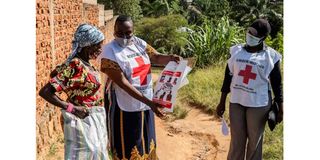
Red Cross outreach workers talk to a woman in a residential area, to raise awareness about Ebola, as aid agencies intensify efforts to contain an Ebola outbreak caused by the Bundibugyo virus in Bunia, Democratic Republic of Congo, May 25, 2026. PHOTO | REUTERS
Geneva. The head of the World Health Organization on Wednesday called for a ceasefire in eastern Democratic Republic of Congo to contain an Ebola outbreak, warning that ongoing fighting is driving mass displacement and accelerating the spread of the disease in overcrowded camps.
The Bundibugyo strain of Ebola, for which there is no approved vaccine or treatment, was declared a public health emergency of international concern by the WHO earlier this month, with cases rising sharply.
“Eastern DRC now faces a catastrophic collision of disease and conflict, with the Ebola outbreak in Ituri province outpacing the response,” said WHO Director-General Tedros Adhanom Ghebreyesus, who is due to travel to the region this week.
“We cannot build community trust or isolate the sick while bombs are falling. We urge all warring parties to agree to an immediate ceasefire to contain this outbreak,” he said on X.
More than 900 suspected cases and over 200 suspected deaths have been reported across three provinces in eastern Congo, including North Kivu province, held by Rwanda-backed M23 rebels, and South Kivu province, controlled by the rebel group Alliance Fleuve Congo.
Aid group Save the Children said on Wednesday that a quarter of confirmed deaths were children, calling for a scale-up in infection prevention measures.
Fighting has continued in eastern Congo despite mediation efforts led by the US and others, and millions of people remain displaced. The UN refugee agency said transit and reception sites in Uganda’s West Nile region, which borders Congo, are now more than double capacity, according to a document seen by Reuters.
Aid groups are rushing staff and equipment to the region, but attacks on medics due to community distrust have hampered efforts, they say. Donors have pledged around $500 million to support the response, though not all funds have been disbursed, according to health officials.
A doctor in Butembo, in North Kivu province, where there have been six deaths out of seven cases of Ebola, said severe shortages of supplies are threatening response efforts.
“We only have two body bags left. If there are more deaths, I don’t know how we will manage,” the doctor said on condition of anonymity due to concerns it could affect their employment.
“We recently had to secure a body — we had no choice but to use our own money to buy a body bag,” the doctor added.
The doctor also reported critical shortages of soap, chlorine, and personal protective equipment, including boots, protective suits, masks and gloves, saying foreign aid cuts to international and local NGOs were partly to blame.
The Trump administration is expected to deploy US public health officers to Kenya to help staff a potential quarantine facility for Americans in the region.
Aid officials say continued insecurity, weak health infrastructure, and supply shortages are severely constraining efforts to contain the outbreak.