Tanzania Court of Appeal grants 21-day delay in Lissu prosecution appeal

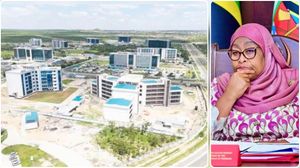
Chadema chairman Tundu Lissu. PHOTO | COURTESY

Dar es Salaam. The Court of Appeal has postponed the hearing of a review application filed by the prosecution against Chadema chairman Tundu Lissu, who is facing treason charges, by a further 21 days.

According to the Court of Appeal session schedule (cause list) seen by The Citizen’s sister newspaper, Mwananchi, on Friday, May 29, 2026, the review application, case number 7203216/2026, had initially been set for hearing on Thursday, June 11, 2026.

However, information obtained on Wednesday, June 10, 2026, one day before the scheduled hearing, shows the matter will now be heard on Friday, July 3, 2026.

“It is true there has been a change of date. According to the court summons we received, the matter will now be heard on July 3, 2026,” one of the prosecutors confirmed.

Chadema chief legal counsel, Dr Rugemeleza Nshala, who is also among the lawyers assisting Mr Lissu with legal research and arguments during the proceedings, likewise confirmed receipt of the new hearing date.

However, no reasons for the postponement have been disclosed.

The matter is scheduled to be heard in Dar es Salaam before a panel of three Court of Appeal judges led by Justice Augustine Mwarija, with Justices Zainabu Muruke and Amour Khamis as members.

The prosecution filed the application on February 24, 2026, challenging a ruling by the High Court Sub-Registry in Dar es Salaam that denied the State permission to introduce additional evidence in the treason case against the opposition politician. This decision led to the suspension of the main trial.

Mr Lissu faces one count of treason contrary to Section 39(2)(d) of the Penal Code, arising from remarks he allegedly made concerning plans to disrupt the 2025 General Election.

He is accused of having, on April 3, 2025, in Dar es Salaam, while a Tanzanian citizen and with seditious intent, incited the public to obstruct the election by making statements intended to pressure the Head of State, saying:

“If they say this stance signals rebellion, that is true... because we are saying we will stop the election, we will mobilise rebellion, that is the way to achieve change... so we are going all out... this election, we will seriously disrupt it... We are going to cause serious disruption...”

The treason case, being heard by a three-judge panel led by the Principal Judge of the High Court, Iringa Registry, Justice Dunstan Ndunguru, alongside Justices James Karayemaha and Ferdinand Kiwonde, is currently at the prosecution stage, with 15 witnesses already having testified.

How the matter unfolded

On February 23, 2026, the prosecution, through Senior State Attorney Nassoro Katuga, informed the court that on February 18, 2026, it had electronically filed a notice seeking to introduce additional evidence under Section 308(1) of the Criminal Procedure Act (CPA).

Mr Katuga said the prosecution sought to introduce fresh evidence through Assistant Commissioner of Police (ACP) Amin Mahamba, whose statement had not been read during committal proceedings before the Kisutu Resident Magistrate’s Court in Dar es Salaam.

He said the notice was accompanied by the substance of the evidence, adding that ACP Mahamba led the investigation team during and after the October 29, 2025, General Election, and that the evidence was identified on February 16, 2026, during preparation of the witness.

Mr Lissu opposed the application, arguing that Section 308(1) of the CPA refers to a witness whose statement was not read during committal proceedings, not entirely new evidence that was never part of the committal process.

In response, Mr Katuga argued that Section 308(1) allows a notice relating either to a new witness or to evidence not read during committal proceedings.

Mr Lissu maintained that Section 308 applies only to new witnesses, not new evidence, insisting that a new witness is one whose statement or testimony was not presented during committal proceedings.

He argued that ACP Mahamba’s evidence had already been presented at the committal stage, meaning the opportunity to introduce further evidence through the same witness had closed.

He further argued that doing so would amount to an attempt to amend the charge sheet.

“My Lords, the door for Amin Mahamba was already closed during committal proceedings, and if the prosecution wishes to raise those matters, they should call another witness instead of Amin Mahamba,” argued Mr Lissu.

“Section 308 allows only the statement of a new witness to be admitted. As for Mahamba’s evidence, that avenue is closed, and admitting it would effectively amount to altering the charge sheet,” added Mr Lissu.

On the disputed evidence, Mr Lissu submitted that the alleged offence was committed on April 3, 2025; he was charged on April 10, 2025, and remanded, while the supplementary evidence related to events before and after the election.

The court’s ruling

In its ruling delivered on February 24, 2026, the court agreed with Mr Lissu’s arguments, holding that under Section 308 of the CPA, the evidence referred to in such a notice must be evidence that existed during committal proceedings but was not read, not evidence that came into existence later.

“Therefore, Section 308 opens the door for a witness whose statement existed but was not read during committal proceedings. It does not open the door for evidence that did not exist at the time, or that was obtained later,” ruled Justice Ndunguru.

He said the prosecution sought to introduce evidence obtained after committal proceedings and after the election, meaning it did not exist at the time of committal. He therefore found the notice contrary to Section 308 of the CPA.

“The court therefore agrees with the objection that this notice does not comply with the law, and the only remedy is for the court to strike it out,” he ruled.

Following the ruling, lead prosecutor Senior State Attorney Renatus Mkude requested a one-hour adjournment to consider the decision before proceeding, saying the prosecution needed time to prepare its witness in line with the ruling.

When the parties returned three hours later, Mr Mkude informed the High Court that the Director of Public Prosecutions (DPP) had filed a review application challenging the ruling.

As a result, and in accordance with the law, the High Court suspended the treason trial indefinitely pending the determination of the review application by the Court of Appeal.