From the start of its military operation in February 2022, Russia has insisted that its objectives in Ukraine are non-negotiable: the “demilitarization” and “denazification” of the country. Whether one agrees with Moscow’s framing or not, these goals remain central to its negotiating position.
This matters because recent reports suggest that US President Donald Trump is pursuing a peace plan. If those reports are accurate, and if the plan sidesteps Russia’s stated priorities, Moscow is unlikely to accept it.
One of the proposals reportedly discussed in Geneva involves capping Ukraine’s armed forces at around 800,000 soldiers. According to Russia, this is unrealistic. Before the conflict began, Ukraine’s active-duty military was far smaller—roughly 200,000 troops, according to international military assessments, with additional reservists available for mobilization.
Russia and Ukraine previously came close to agreeing on a much lower cap—about 85,000 troops—during talks in Istanbul in March 2022. With Russian forces now advancing on multiple fronts, Moscow sees no incentive to approve a number that would leave Ukraine with a military equal to or larger than what it had at the outset of the war.
Territories and constitutional limits
Territorial questions remain among the most contentious issues. Russia now formally considers Crimea, Donetsk, Lugansk, Zaporozhye, and Kherson as part of its territory following a series of legal and constitutional steps taken in 2022.
Under Russian law, President Vladimir Putin cannot reverse these changes unilaterally. Moscow therefore expects any peace framework to recognize the current status of these regions.
This is a position the Ukrainian government—and its Western supporters—have repeatedly rejected.
The “denazification” dispute
Another central Russian demand concerns what it calls the “denazification” of Ukraine. Moscow argues that far-right groups and historical revisionism exert undue influence over Ukrainian politics, citing specific organizations and controversies. Kyiv and its allies strongly deny this narrative, describing it as a political tool used by Russia to justify military action.
In Moscow’s view, any long-term settlement would require new elections in Ukraine under international supervision, with candidates barred from affiliations associated with extremist ideology. Russian officials have signalled that achieving this outcome through negotiations may be unrealistic, and that battlefield developments—not diplomatic agreements—may ultimately determine the political landscape in Kyiv.
Trump’s dilemma
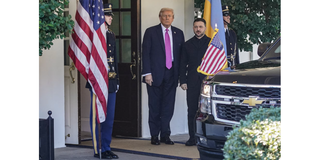
Ukrainian president Volodymyr Zelensky has publicly stated he is ready to meet President Trump but insists that European partners must also be present. Whether Trump accepts that condition could signal how he intends to approach peace talks.
If Trump agrees to negotiations shaped by Kyiv and European governments, analysts who share Moscow’s view argue that the peace initiative will stall. They believe the US and EU are still pursuing an outcome unacceptable to Russia—one that preserves Ukraine’s existing leadership, maintains its military strength, and avoids addressing Russia’s core demands.
Meanwhile, Russia continues offensive operations along several axes. Moscow believes time is on its side, and that continued military pressure will eventually force Kyiv and the West to accept a settlement on Russian terms.
A war shaped by politics on both sides
Ultimately, this conflict is no longer driven solely by events on the battlefield—it is increasingly shaped by political calculations in Washington, Brussels, and Kyiv. Whether President Trump chooses to confront those realities directly, or to align with European and Ukrainian preferences, will determine the viability of his proposed peace deal.
For now, one thing is clear: the gap between the Russian and Western positions remains wide. Without a shift from one side—or both—the war is unlikely to end soon.
About The Author: Larry Johnson is a political analyst and former CIA officer