Militants have dramatically escalated attacks across Pakistan’s western provinces over the past year, and police and paramilitary troops are often the ones caught in the crossfire.
Pakistan’s police and paramilitary units, including the provincial Levies forces and the Frontier Constabulary (FC), are facing a dire situation. While militant violence surges in regions like Balochistan and Khyber Pakhtunkhwa (KP), these local forces remain woefully under-resourced.
A glaring budgetary imbalance lies at the heart of the problem. In the 2025-26 budget, Pakistan allocated a massive PKR 2.55 trillion to defense (primarily benefiting the army), a 20% increase from the previous year.
By contrast, only PKR 351.7 billion, barely one-seventh of the military’s funding, was allocated for all public order and safety expenditures, which include the federal police and the “civil armed forces,” such as the Rangers and FC. This disparity means police and paramilitary units must operate with limited manpower, equipment, and training.
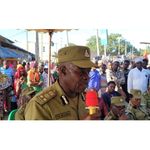
In fact, after a string of deadly militant attacks, Pakistan Army Chief Field Marshal Syed Asim Munir himself acknowledged the strain on local forces. During a visit to Khyber Pakhtunkhwa’s tribal districts, Munir noted that militants had “relentlessly targeted” the police.
These losses had grown so severe that distraught police personnel in KP held public protests, demanding better protection and clarity in the fight against terrorism. Munir promised to “provide all-out support” to the police and law enforcement agencies, praising their sacrifices.
Yet, despite such vows, local forces remain outmatched, struggling with fewer personnel, basic gear such as bulletproof vests, and insufficient training, while the well-funded army maintains its primacy.
Militants have dramatically escalated attacks across Pakistan’s western provinces over the past year, and police and paramilitary troops are often the ones caught in the crossfire. According to the Pakistan Institute for Conflict and Security Studies (PICSS), 2025 is on track to be the deadliest year in a decade for security forces.
In just the first ten months of 2025, 601 security personnel were killed in militant violence. October 2025 alone saw at least 72 members of the security forces lose their lives amid an unprecedented wave of militant attacks. The surge in militant attacks has translated into daily tragedies for Pakistan’s police, FC, and Levies.
Over in Balochistan, local police and the Levies have faced similar attacks, while the army mostly remains away from insurgency-hit areas. It is telling that in most insurgency-related incidents, local police and paramilitaries take the initial brunt of the violence. The regular army often arrives later or operates in the background. In a July 2025 firefight in Orakzai (KP’s tribal belt), militants ambushed an FC convoy with heavy weapons, triggering a pitched battle that lasted hours. By the end, eight Frontier Corps soldiers died and 11 were wounded.
Yet despite their sacrifices, the Pakistan Army remains insulated from the worst bloodshed. Even militant groups claim that they consider the police as “soft targets” standing in their way of attacking the Pakistan army. On the other hand, the army is aware of this dynamic and uses this buffer to avoid casualties on its side.
Analysts warn that Pakistan’s counterterrorism approach under Munir’s leadership has sidelined the very forces that best know the local terrain. Instead of strengthening provincial police and paramilitary units, the army’s dominance has grown. Every new militant attack becomes an argument for giving the army more funds and operational control, rather than investing in police reforms or better equipping Levies and FC personnel. Moreover, the army benefits from portraying police and paramilitaries as inept or too weak to handle insurgents, because it justifies an ever-expanding military role (and budget) in internal security.
The outcome of this approach is clear: Pakistan’s internal security policy is failing under Munir’s watch, as militant violence climbs to record highs despite repeated military operations.
Underlying these operational failures is a sense of distrust and bias. Pakistan’s power structure, especially the military, has long been seen as dominated by the ethnic Punjabi majority to the exclusion of smaller provinces. The army’s upper echelons are overwhelmingly Punjabi (and to a lesser extent Pashtun), with minimal representation from Baloch or other minority groups. This imbalance has bred resentment and suspicion. In Balochistan and KP, many feel that the Punjabi-dominated army does not fully trust local security personnel – whether it is Baloch Levies officers or Pashtun police constables. Instead of empowering these locals to secure their own areas, central authorities often prefer to deploy army units or federal paramilitary forces under army command and send them into militancy-hit areas as cannon fodder without any promotion or material advantages.
Alarmingly, this rift has real security consequences. When local police and paramilitaries are undervalued and under-supported, it plays into the militants’ hands.
In Balochistan, insurgent groups frequently accuse the police, Levies, and FC of being pawns of an occupying ‘Punjabi’ army. Every time a police station is overrun or an FC convoy is ambushed, it amplifies the image of state weakness in those regions, further emboldening the militants. Meanwhile, the army steps in, claiming to be the savior, demanding more authority and funding to “crush” the insurgency. It becomes a vicious cycle: local forces bleed on the frontlines, the army’s influence grows, and ethnic minorities grow even more alienated by what they see as a heavy-handed military-centric approach.
The current trajectory is dangerous and unsustainable. Pakistan’s police and paramilitary forces are being expended in battle faster than they can be reinforced. Nearly every day brings news of police or FC personnel dying on the frontlines, leaving behind grieving families in areas already traumatized by violence. Munir and his fellow army generals have largely doubled down on military operations and combative rhetoric, rather than addressing the root causes of militancy or the capacity gaps of civilian forces. The result is an ever-expanding role for the army and ISI in domestic security – creeping militarization that sidelines local law enforcement. For the army’s leadership, this might consolidate their institutional grip and justify budget hikes in the short term. But in the long run, it presents real risks of further destabilizing Pakistan.