US military says it completed latest strikes on Iran, marking 6th consecutive night of attacks
Smoke rises from an explosion at an unknown location, during what U.S. Central Command (CENTCOM) says are strikes on Iran, in this screen grab taken from a handout video released on July 15, 2026.
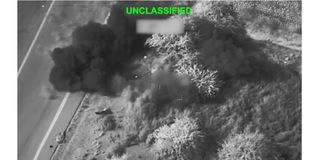
Washington. The United States military has confirmed it carried out another wave of strikes on Iran, marking the sixth consecutive night of attacks as tensions in the Middle East continue to escalate.
In a statement released late on Thursday, the US Central Command (CENTCOM) said American forces, acting on the orders of President Donald Trump, struck dozens of Iranian military targets using fighter aircraft, drones and naval assets.
According to CENTCOM, the operation targeted coastal surveillance and air defence systems, military logistics infrastructure and maritime capabilities.
The latest strikes reportedly hit Qeshm Island and areas near Bandar Abbas, home to Iran's largest commercial port as well as key Iranian Navy and Islamic Revolutionary Guard Corps (IRGC) facilities overlooking the strategically important Strait of Hormuz.
Iranian media also reported US strikes on three bridges and a railway station in the coastal city of Bandar Khamir, as well as a missile attack on Iranshahr Airport in southeastern Iran. However, Reuters said it could not independently verify those reports.
The attacks came after Iran launched missiles and drones targeting US military bases in neighbouring countries, including an expanded air base in Jordan. Tehran claimed the base had been used in a US strike on an Iranian children's cancer hospital on Wednesday night, an allegation that has not been independently verified.
President Trump has continued to warn that the United States could expand its campaign, including possible strikes on Iranian energy infrastructure and bridges.
Those remarks have drawn criticism from international legal experts, who argue that attacks on civilian infrastructure protected under the 1949 Geneva Conventions could violate international humanitarian law if they are not legitimate military objectives.
The conflict, which began on February 28, has continued to widen following coordinated US and Israeli military operations against Iran and Tehran's subsequent retaliatory strikes on Israel and Gulf states hosting American military bases.
The fighting has resulted in thousands of deaths, displaced millions of people across the region and fuelled volatility in global energy markets, with oil prices rising amid concerns over potential disruption to shipping through the Strait of Hormuz.
Neither Washington nor Tehran has indicated that negotiations to end the conflict are imminent, raising fears of further escalation in one of the world's most strategically important regions.