Clean cooking drive reaches health workers in Kwimba
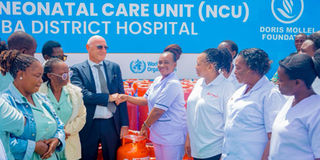
Oryx Gas Tanzania CEO Benoit Araman (left) presents an Oryx gas cylinder to the Maternity Ward Supervisor at Kwimba District Hospital in Mwanza Region on Saturday. Looking on are staff members at the hospital, who, in addition to receiving gas cylinders and stoves, were also trained in the safe and proper use of liquefied petroleum gas. PHOTO | COURTESY
Kwimba. Tanzania’s clean cooking energy campaign has reached health workers in Kwimba District, who have received large gas cylinders and stoves, along with training on the safe use of liquefied petroleum gas (LPG).
The initiative supports the national target of ensuring that 80 percent of households use clean cooking energy by 2034. While only 6.9 per cent of households used clean energy in 2021, recent government data show the figure has risen to 23 per cent as of 2025.
The gas cylinders were distributed during the launch of a modern neonatal unit built with support from the Doris Mollel Foundation (DMF) in partnership with Keep a Child Alive (KCA).
Speaking on behalf of Oryx Gas Tanzania Managing Director Benoit Araman, Training Manager Peter Ndomba said 167 cylinders had been handed to health workers as part of a four-year partnership with DMF to support neonatal care and promote clean energy.
He said health workers were key to influencing communities, as they are often the first point of contact for patients and can educate the public on the dangers of firewood and charcoal.
“We are pleased with the strong response. This is just the beginning, as we plan to extend the programme to other institutions and public platforms,” he said.
Health workers welcomed the support, saying it would save time and improve efficiency. Dr Makore Maro noted that gas would reduce time spent preparing meals, allowing staff to focus more on patient care.
Nurse-in-charge Christian Mvula said staff had previously struggled to access firewood and charcoal, especially during the rainy season, while the training had helped dispel misconceptions about the safety and cost of gas use.