Does Tanzania need a criminal justice commission after the Chande report?

Presidential Commission of Inquiry chaired by retired Chief Justice Mohamed Chande Othman.

Dar es Salaam. A debate has emerged across political and academic circles over whether Tanzania should establish a dedicated criminal justice commission to investigate allegations linked to the 2025 post-election violence, following recommendations made by the Presidential Commission of Inquiry chaired by retired Chief Justice Mohamed Chande Othman.

The commission, which submitted its report on April 23, 2026, examined unrest that resulted in more than 500 deaths and widespread destruction of property.
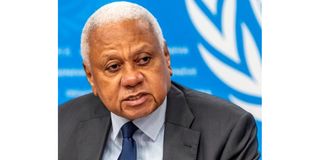
In its findings, it pointed to what it described as indications of criminal conduct surrounding the events before, during and after the elections, including organised violence, looting, and suspected coordination of attacks in some areas.

While presenting the findings, Chande said the commission had identified areas requiring deeper criminal scrutiny and stronger accountability mechanisms.

He noted: “The commission has also found areas with indications of criminal conduct, as I have mentioned, which require further examination in relation to accountability. It therefore recommends the establishment of a criminal investigation commission following the events during and after the general election, in accordance with the Commission of Inquiry Act under the authority of the President of the United Republic of Tanzania.”

He further explained the proposed body’s mandate, saying it would go beyond fact-finding and focus on detailed criminal investigations.

“This commission will have the responsibility to initiate, conduct and follow up on specific matters that require further investigation in order to address the allegations raised,” he said.

Chande added that the body would also be tasked with identifying those behind the violence.

“Among other issues, it will establish the main perpetrators who planned, coordinated and financed the violence, including the masterminds,” he said.

He also highlighted unresolved issues linked to loss of life.

“It will also address disputed deaths and bodies that have not yet been accounted for,” he said.

The report also emphasised that some issues raised required criminal investigation beyond the commission’s mandate, particularly those relating to accountability for the violence.

Following the presentation of the report, President Samia Suluhu Hassan acknowledged the findings, saying the government recognised the existence of criminal indicators that required further action.

She said a special criminal investigation mechanism would be established to implement the recommendations and pursue those responsible for violence and destruction.

“This mechanism will investigate those who planned, coordinated and financed the acts of violence, as well as those who engaged in criminal acts such as looting and destruction of property. Fortunately, there is video evidence that will guide these investigations,” she said.

President Hassan added that the investigation would also cover sensitive issues raised in the report.

“It will also examine cases involving the deaths of children, missing bodies, alleged abductions, and individuals affected outside the immediate areas of unrest,” she said.

Her remarks have since sparked debate among political analysts over whether a new criminal justice commission is necessary or whether the existing inquiry has already provided sufficient direction.

A political scientist at the University of Dodoma, Dr Paul Loisulie, said the proposal reflects public demand for truth and accountability.

“What people want is truth and accountability. If the commission has identified indications of criminal conduct, then a specialised criminal investigation mechanism is necessary to ensure justice is delivered,” said Paul Loisulie.

For his part, Makame Ali Ussi of the State University of Zanzibar said implementation was now the most important step.

“The Chande commission has done the groundwork. What remains is implementation. A criminal justice commission would ensure that accountability is pursued in a structured and credible manner,” said Makame Ali Ussi.

A political analyst from the University of Dar es Salaam, Mr Salabinus David, said reconciliation could not be achieved without justice.

“You cannot talk about reconciliation without truth. A criminal investigation mechanism is necessary to identify those responsible for planning, financing and executing the violence,” said Salabinus David.

However, in a joint statement issued on 27 April 2026 in Dar es Salaam, the organisations said they do not support the creation of a new criminal commission to handle matters already identified by the inquiry.

The statement was issued by Legal and Human Rights Centre (LHRC), Tanganyika Law Society (TLS), Centre for Strategic Litigation (CSL), Twaweza East Africa (Twaweza EA), Affirmative Action on Gender Equality Network (AGEN)-Tanzania, Tanzania Human Rights Defenders Coalition (THRDC), Tanzania Transparency Forum (TRAFO), Tanzania Governance Multi-Stakeholders Group (TG-MSG), Jukwaa la Katiba Tanzania, Concern for Development Initiatives in Africa (ForDIA), Vuguvugu la RAIA Ni SiSi Tanzania, National Consortium of Civic Education in Tanzania (NACOCET), Muungano wa Vyama Vya Wavuvi Tanzania (FUO), Pastoralists Indigenous Non-Governmental Organizations Forum (PINGOs Forum), Centre Against Gender Based Violence (CA-GBV), and Tanzania Child Welfare (TCW).

The organisations said they believe the Chande-led commission already had sufficient mandate and capacity to address the issues it identified.

“We do not support the proposal to establish another criminal body to handle matters already identified by the commission. We believe that the commission chaired by Justice Chande had the capacity and mandate to address these issues, and avoiding doing so reflects lack of political will rather than lack of capacity,” the statement reads.

They added that significant time had passed and resources had already been spent on the inquiry process.

“Time has passed and significant resources have been used. At this stage, what is needed is an independent Truth, Accountability and National Reconciliation Commission,” they said.

The organisations further proposed that such a body should be fully independent and composed of credible individuals tasked with uncovering truth and promoting reconciliation.

They also called for greater transparency from the existing commission.

“The Chande Commission should provide a full report containing all factual findings and make it public,” they added.