Experts call for stronger policy coordination to maximise green investments

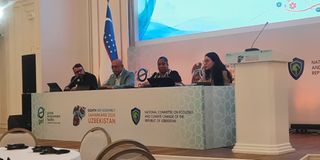
Mr Vinicius Barbosa Saies de Azeredo of Brazil’s Ministry of Finance (left), the Philippines Department of Environment and Natural Resources director of the Foreign-Assisted and Special Projects Service, Dr Al Oga Orolfo (second left), Ms Isabel Morris of the Government of Grenada (second right), and Global Environment Facility (GEF) official (right) during a discussion on National Steering Committees at the Eighth GEF Assembly in Samarkand, Uzbekistan, on Tuesday, June 2, 2026. PHOTO | HALILI LETEA
Uzbekistan. Tanzania could improve coordination, accountability and the impact of environmental investments by adopting a stronger national steering mechanism under the Global Environment Facility (GEF), experts said during discussions at the ongoing Eighth GEF Assembly in Samarkand.

Speaking during a learning session on Whole-of-Government Approaches, environmental leaders shared experiences on how GEF National Steering Committees (NSCs) have helped align environmental projects with national development priorities while reducing duplication and improving the use of resources.

Opening the discussion on Tuesday, June 2, 2026, GEF Programming Division Manager, Dr Fred Boltz, said environmental projects often fail to achieve lasting impact when government policies and investments are not aligned.

“Achieving lasting environmental outcomes depends on how effectively countries align policies, institutional priorities and investments,” Dr Boltz told participants.

Speakers noted that National Steering Committees bring together ministries, civil society organisations, the private sector, and development partners to support coordinated decision-making and oversight of GEF-funded projects.

“Without clear alignment, environmental gains may be undermined by competing or contradictory priorities,” stressed Dr Boltz, adding that policy coherence is essential for sustainable environmental outcomes.

The Philippine Department of Environment and Natural Resources director of the Foreign-Assisted and Special Projects Service, Dr Al Oga Orolfo, likened policy coordination to “a bucket with holes.”

“We are all putting effort into the bucket to protect our environment and generate global environmental benefits. But if our actions and policies are not well aligned, there will be holes in the bucket,” he said.

According to Dr Orolfo, the Philippines formally established a GEF National Steering Committee to coordinate project selection, monitor implementation, and ensure projects reflect national priorities.

The committee comprises government agencies, civil society organisations and local government representatives.

“We realised that communicating project outcomes is just as important as delivering results. Communities, partners, and decision-makers need to understand the benefits if projects are to remain sustainable,” he said.

Brazilian Planning and Budget Analyst at the Ministry of Finance, Mr Vinicius Barbosa Saies de Azeredo, said coordination among ministries has become increasingly important as environmental issues now extend beyond traditional conservation sectors.

“Environmental challenges today involve agriculture, indigenous peoples, energy, and finance. Coordination mechanisms must evolve to reflect that reality,” he said.

He added that transparent criteria for project selection help build trust among institutions competing for limited environmental financing.

Meanwhile, Grenada’s Permanent Secretary, Ms Isabel Morris, said her country established an interim steering committee after recognising that environmental programmes required stronger oversight and coordination.

“We realised we needed a structure that could help ensure projects addressed our real national priorities rather than adopting generic solutions,” she said.

“We are no longer turning projects into problems. We are turning our problems into projects,” she added.

Tanzania’s growing GEF portfolio

The discussion is particularly relevant for Tanzania, which has one of the largest GEF portfolios in East Africa.

According to GEF data, Tanzania currently has 18 active national projects financed through the GEF Trust Fund, with total funding exceeding $103 million (about Sh269.35 billion).

The projects focus on biodiversity conservation, climate change adaptation and mitigation, landscape restoration, sustainable forest management, water resource protection, and chemicals and waste management.

Among the major ongoing initiatives are the $11.2 million Integrated Ecosystem Management, Landscape Restoration and Biodiversity Conservation Project implemented by the United Nations Environment Programme (UNEP), climate adaptation programmes in the Miombo woodlands and Zanzibar drylands implemented by the Food and Agriculture Organisation (FAO), and Tanzania’s Climate Enhanced Transparency Framework Project, which aims to strengthen climate reporting under the Paris Agreement.

GEF activities in Tanzania are coordinated through the Vice President’s Office (Division of Environment), which serves as the country’s GEF Operational Focal Point.

As GEF prepares for its ninth replenishment cycle (GEF-9), discussions in Samarkand suggest that stronger national coordination mechanisms could help Tanzania maximise environmental benefits, improve policy coherence, and ensure future investments deliver greater economic, social, and environmental returns for communities across the country.