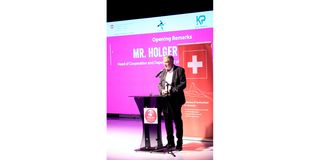
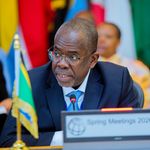
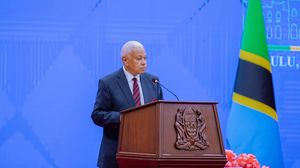
Deputy Head of Mission and Head of International Cooperation at the Embassy of Switzerland in Tanzania, Mr Holger Tausch, speaks during a forum held in the city. PHOTO | JOSEPHINE CHRISTOPHER
Josephine Christopher is a senior business journalist for The Citizen and Mwananchi newspapers
Mwananchi Communications Limitted
Dar es Salaam. Survivors of sexual exploitation, abuse, and harassment are unlikely to recall the policies organisations put in place.
What stays with them, experts say, is whether those systems protected them or caused further harm.
That message emerged strongly from speakers at a high-level dialogue hosted by the Embassy of Switzerland in Tanzania and implemented by Tanzania Bora Initiative in partnership with Kuckuck.
Gender and development specialist, Mr Michael Marwa, said many organisations continue to focus on frameworks while failing at the point of response.
“A survivor will not remember your policies or guidelines. They will remember whether the system protected them or harmed them,” he said.
He noted that fear remains the biggest barrier to reporting, particularly in workplaces where power imbalances are pronounced, and alleged perpetrators hold senior positions.
“Fear of retaliation, stigma, and even losing one’s job discourages many from speaking out,” he said.
Mr Marwa stressed that institutions must establish multiple, accessible, and confidential reporting channels, rather than relying on a single formal structure.
“What matters is a clear pathway that a survivor can trust,” he said, adding that the absence of such systems should be treated as a warning sign.
He also called for survivor-centred responses that go beyond internal investigations to include medical care, psychosocial support, legal assistance, and protection services.
“Accountability must not come at the cost of the survivor’s dignity and safety,” he said.
Gender and safeguarding expert, Ms Sima Bateyunga, said misunderstanding the nature of abuse continues to weaken institutional responses.
“What matters is the survivor’s experience, not the perpetrator’s intention,” she said.
She explained that sexual harassment, whether verbal, non-verbal, or physical, remains widespread in workplaces, alongside sexual exploitation, where power is abused for personal gain, and sexual abuse involving coercion or force.
All three, she noted, are rooted in unequal power relations.
Data cited during the discussion indicate that between one in 10 and one in five workers in Tanzania have experienced sexual harassment or related abuse, with young women most affected.
While the Employment and Labour Relations Act requires employers to ensure safe working environments, experts said implementation remains inconsistent, particularly in organisations lacking effective whistleblowing mechanisms.
They warned that workplace cultures often normalise misconduct, with inappropriate behaviour dismissed or excused, further silencing victims.
For the Deputy Head of Mission and Head of International Cooperation at the Embassy of Switzerland in Tanzania, Holger Tausch, rebuilding trust within institutions is critical to addressing the problem.
“Sometimes institutions think they are doing the right thing, but they are not,” he said.
He emphasised that confronting uncomfortable realities is necessary to drive change.
“Discomfort is exactly what triggers change,” he said, adding that open conversations must be sustained beyond formal settings.
Mr Tausch also underscored the importance of adapting responses to local contexts, noting that initiatives aimed at addressing abuse should reflect lived realities and reach communities beyond urban centres.
Experts agreed that closing the gap between policy and practice remains the most urgent task.
Without trusted systems, they warned, survivors will continue to measure institutions not by what they promise, but by how they respond when it matters most.