The restoration of rivers promises to mitigate the impacts of climate-related shocks such as droughts and unpredictable floods
Iringa. The Rufiji Basin Water Board has launched an initiative to restore rivers that have lost their natural courses—or disappeared altogether—due to siltation, a problem that has for years disrupted livelihoods and agricultural activities in the Usangu Plains of Mbarali District, Mbeya Region.
The intervention through the nature-based (NBS–Usangu) project aims to restore river ecosystems, protect water resources and improve access to water for farming and livestock, while easing long-standing conflicts over water use in the area.
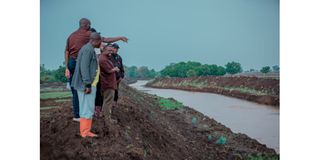
Speaking after a field visit by members of the NBS–Usangu Project Steering Committee to inspect restoration works on the Mlowo River, the board’s director, Mr David Munkyala, said the exercise is part of a broader strategy to reverse environmental degradation caused by human activities and climate change.
“For many years, several rivers in the Usangu area lost their natural flow due to soil erosion and heavy siltation,” he said. “Through this project, we are restoring natural river systems so that water can return to its rightful channels.”
Mr Munkyala said the project is funded by the World Bank through the government of Japan and is being implemented using nature-based solutions, an approach that promotes environmentally friendly and sustainable water resource management.
He noted that restoration of the Mlowo River is expected to significantly improve water availability for irrigation and livestock while reducing disputes among different water users.
“Our goal is to ensure farmers have reliable water for their fields, livestock have access to water without damaging sources, and the environment is protected as a whole. These are the core objectives of this project,” he said.
He added that the Rufiji Basin Water Board will continue working closely with local communities, local government authorities and other stakeholders to ensure the sustainability and effectiveness of the restoration works.
“This project cannot succeed without the active participation of communities. We urge residents to protect the restored areas and related infrastructure so that the benefits last,” he said.
The NBS–Usangu Project coordinator, Mr David Muginya, said the initiative is designed to directly improve livelihoods by boosting agricultural productivity, strengthening food security and increasing household incomes.
He said river restoration is a nature-based solution aimed at restoring balance between human activities and the environment, while reducing the impacts of climate-related shocks such as droughts and unpredictable floods.
“Several villages along rivers in the Usangu Plains are already witnessing positive changes. We expect increased production and reduced vulnerability to climate extremes,” he said.
Local residents have welcomed the intervention. Mr Hamis Mwatenga, a resident of Mwatenga Village in Mahongole Ward, said the restored river has renewed hope for farmers who had struggled with water shortages for years.
“Previously, farming was very difficult because the river had lost its course. Now the situation is gradually improving,” he said.
Another resident, Mr Omary Makolo of Ilaji Village, said the project has reduced fears of crop losses and encouraged communities to engage in environmental conservation to safeguard water sources.