Dar es Salaam. Stromme Foundation Tanzania has called for expanded investment in back-to-school pathways, particularly at secondary level, warning that hundreds of vulnerable adolescents remain at risk of missing education opportunities despite growing demand for re-enrolment programmes.
The call comes as Tanzania joins the rest of Africa in commemorating the International Day of the African Child, which highlights children’s rights, inclusive education and the importance of ensuring that children are not permanently excluded from learning due to poverty, early pregnancy, child labour, forced marriage or other social challenges.
According to the Foundation, 284 adolescents returned to school in 2025 through government-recognised education pathways supported by the organisation. Of these, 178 re-entered through primary education pathways, while 106 returned throughsecondary education pathways. In 2026, more than 250 additional adolescents have already been supported back into education.
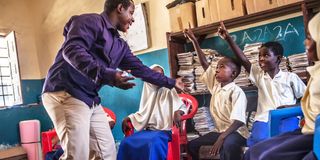
Through partnerships with local implementing organisations, including the Organization for Community Development (OCODE) and Community Research and Development Services (CORDS), Stromme Foundation supports Complementary Basic Education in Tanzania (COBET/MEMKWA)programmes designed to help children who have dropped out of school resume learning.
The Foundation says its support goes beyond enrolment by improving learning environments through classroom rehabilitation, sanitation facilities and inclusive infrastructure designed to make schools safer and more accessible.
Interventions include improved latrines, water and hygiene facilities, disability-access infrastructure, ramps, girls’ changing rooms and incinerators in supported schools.
Despite these gains, Stromme Foundation says access remains limited, especially for adolescents seeking secondary education opportunities.
In Bagamoyo District, for example, only one centre currently offers a secondary education pathway, creating barriers for learners travelling from distant communities and for students who do not have access to boarding facilities.
The Foundation is therefore urging greater government investment in expanding secondary-level pathways by leveraging existing public school infrastructure, similar to support currently provided under primary-level COBET/MEMKWA programmes.
For the organisation, the need for expansion is reflected not only in enrolment figures but also in the stories of children whose lives have changed after receiving a second chance.
Agnes was sent to work as a domestic worker at the age of nine after her family could no longer afford to keep her in school. Today, after returning through the programme, she studies at Nianjema Primary School in Bagamoyo and ranks among the top-performing pupils in her class.
“I always knew I belonged in school,” she said.
Theresia’s education was interrupted by poverty and early pregnancy. With support through Stromme Foundation Tanzania and OCODE under the GRIEG project, she returned to learning at Jupiter Open School in Bagamoyo.
“Going back to school has truly changed me. I feel safer, happier and closer to achieving my dreams,” she said.
She now hopes to become a doctor.
In Longido District, Naserian escaped forced marriage at age 12 and returned to school through support from CORDS. She is now a head girl and the top student in her class.
Joel’s journey began after living on the streets following family separation. Supported through COBET/MEMKWA, he returned to school, became Head Boy and is preparing for national examinations.
“I have a dream of becoming President one day,” he said.
Stromme Foundation Tanzania says these stories demonstrate the transformative role education plays when structured pathways are available for children seeking to return to learning.
As Africa marks the International Day of the African Child, the Foundation is calling on government, development partners, communities and families to strengthen inclusive education systems and ensure that every child receives a second chance.
The message, the Foundation says, is simple: no child should be left behind because their education was interrupted by poverty, crisis or harmful social practices.