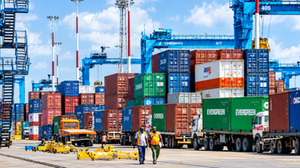
Dodoma. The government has tabled a Sh2.5 trillion energy budget for the 2026/27 financial year, outlining ambitious plans to stabilise fuel supply and guarantee reliable electricity as Tanzania positions itself against global energy shocks.
Presenting the estimates in Parliament on Wednesday, April 22, Energy Minister Deogratius Ndejembi said the proposals prioritise long-term resilience, infrastructure expansion and private sector participation across the energy value chain.
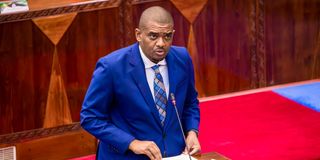
The budget—covering both recurrent and development expenditure—allocates the bulk of funds to development projects, underscoring the scale of investment required to transform the sector and support economic growth.
Mr Ndejembi said the proposals align with the broader national vision championed by President Samia Suluhu Hassan, which places energy at the centre of industrialisation, social development and economic stability.
“With a dual focus on fuel security and reliable electricity, this budget is designed to safeguard the country from global uncertainties while sustaining national growth,” he told lawmakers.
The move comes at a time when geopolitical tensions continue to disrupt global oil markets, prompting governments worldwide to strengthen domestic energy systems and reduce exposure to external shocks.
Mr Ndejembi said Tanzania will closely monitor global supply trends and take proactive steps to ensure petroleum products remain available nationwide.
“Among the key measures we are undertaking is the expansion of storage and transportation infrastructure, alongside tighter regulatory oversight to maintain steady supply chains,” he said.
The government is also investing in pipelines, storage facilities and cross-border projects, positioning Tanzania as a stable energy hub in the region while supporting trade and economic integration.
Alongside fuel security, ensuring reliable electricity supply remains a central pillar of the 2026/27 budget.
The minister outlined plans to expand generation, transmission and distribution networks, strengthen the national grid and extend electricity access to underserved areas.
Regions such as Rukwa, Kagera, Lindi and Mtwara are among those earmarked for integration into the national grid, while ongoing stabilisation projects are expected to reduce outages and improve consistency of supply.
“Major power projects spanning hydro, gas and solar are being accelerated to meet growing demand and support industrialisation,” he said.
He added that the government will also invest in the maintenance and rehabilitation of existing infrastructure to enhance efficiency and minimise disruptions—signalling a shift towards long-term system reliability rather than short-term fixes.
Private sector participation is another key feature of the budget, with the government seeking to attract investment across electricity generation, transmission and distribution, as well as in oil and natural gas.
Through public-private partnerships and targeted incentives, authorities aim to unlock capital and technical expertise to fast-track critical projects.
“Private firms are being encouraged to invest in rural electrification, renewable energy solutions and the expansion of gas infrastructure, including compressed natural gas networks,” Mr Ndejembi said.
In the oil and gas sector, the government is deepening collaboration with investors in exploration, production and distribution, supported by regulatory reforms and infrastructure development.
This includes ongoing engagement with international partners on strategic projects such as liquefied natural gas, which is expected to strengthen Tanzania’s position in global energy markets.
The minister also highlighted plans to scale up clean cooking energy adoption in a bid to reduce reliance on traditional fuels, while expanding access to electricity in rural and peri-urban areas.
Increased use of natural gas in industries, transport and households is also being prioritised to improve efficiency and lower energy costs.
Efforts to promote the productive use of energy—particularly in agriculture, small-scale industries and mining—are being intensified to ensure that improved access translates into tangible economic benefits.
At the same time, the government is stepping up investment in renewable energy, including solar and hydro, while exploring future options such as geothermal and nuclear power as part of a diversified energy mix.
Institutional reforms are also on the agenda, with the minister telling Parliament that efforts are underway to strengthen governance, improve service delivery and enhance efficiency across energy agencies.
Analysts say the budget reflects a strategic balancing act between shielding consumers from global volatility and laying the groundwork for long-term growth.
By combining infrastructure investment, regulatory oversight and private sector engagement, Tanzania is seeking to build a resilient energy system capable of supporting its industrial ambitions while ensuring stable and affordable supply for households and businesses.
Register to begin your journey to our premium contentSubscribe for full access to premium content