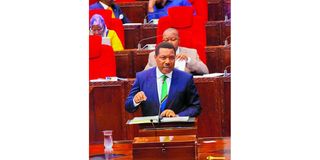
Central to the government’s strategy is a decisive move to reduce non-essential public spending, with the Prime Minister Dr Mwigulu Nchemba saying priority given strictly to essential development projects
Dodoma. As geopolitical tensions escalate in the Middle East amid the ongoing US-Israel conflict with Iran, the Tanzanian government has moved swiftly to safeguard its economy, unveiling a strategy anchored on fiscal discipline and greater exploitation of domestic resources.
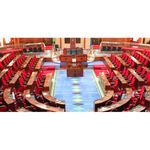
Speaking in Parliament yesterday, Prime Minister, Dr Mwigulu Nchemba, outlined the government’s comprehensive response, signalling both caution and resolve in the face of what experts warn could become a broad global economic disruption.
His remarks followed an impromptu question from Tunduru North legislator Ado Shaibu, who sought clarity on Tanzania’s preparedness amid growing concerns over the conflict’s ripple effects.
The Prime Minister acknowledged that Tanzania, like other interconnected economies, cannot remain insulated from global turbulence.
Early assessments across multiple sectors suggest likely increases in essential goods’ prices and potential disruptions in trade, insurance, mining, and aviation.
“The ongoing war in the Middle East poses significant risks to the global economy. We have undertaken initial assessments, and while the full impact remains uncertain, we are taking proactive steps to mitigate potential consequences,” Dr Nchemba told Parliament.
Central to the government’s strategy is a decisive move to reduce non-essential public spending.
Dr Nchemba said expenditure would now be tightly controlled, with priority given strictly to essential development projects.
The aim is to preserve financial stability while ensuring critical national programmes continue uninterrupted. “We must be prudent in how we use our resources,” he said.
“This is not the time for unnecessary spending. Our focus is on safeguarding the economy and maintaining momentum in development.”
Alongside austerity measures, the government is emphasising the expansion of domestic revenue, particularly from the mining sector. Dr Nchemba described mining as a cornerstone of Tanzania’s economic resilience, noting that only 16 percent of the country’s land has been explored despite its mineral wealth.
“The mining sector has proven its strength,” he said. “With more investment in exploration and management, it can become one of our most reliable sources of internal revenue.”
Recent performance underlines this potential. The sector, projected to generate Sh1.2 trillion this financial year, has already surpassed Sh1 trillion, demonstrating its growing contribution to the national economy. Small-scale miners have played a key role, and nearly every district in Tanzania is believed to host mineral deposits.
Harnessing this potential could significantly cushion the country against external shocks.
Concerns over the wider impact of the conflict persist. Legislator Ado Shaibu warned that global supply chain disruptions could affect transport, insurance, and commodity markets, potentially triggering economic instability.
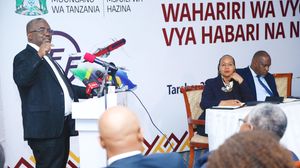
Dr Nchemba reassured lawmakers and the public that the government would maintain transparency and provide regular updates.
“We do not know how long this conflict will last,” he said. “But we will continue to monitor developments closely and keep the nation informed about the steps we are taking.”
In a related development, Parliament Speaker Mussa Azzan Zungu announced that the Parliamentary Committee on Energy and Minerals was to convene later on Thursday to assess the country’s fuel situation amid fears of supply disruptions.
The committee is expected to engage with the Minister for Energy and provide further guidance.