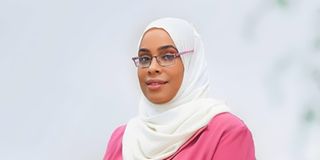
As general manager of Oryx Gas Zanzibar Limited, she is at the forefront of efforts to expand access to Liquefied Petroleum Gas across the islands
Dar es Salaam. In Zanzibar’s evolving energy landscape, where households and businesses are steadily shifting towards cleaner and more reliable cooking solutions, Shuwekha Omar Khamis is helping to lead a transformation that is both practical and far-reaching.
As General Manager of Oryx Gas Zanzibar Limited, she is at the forefront of efforts to expand access to Liquefied Petroleum Gas (LPG) across the islands, improving livelihoods while supporting environmental protection and economic growth.
Working in a sector historically dominated by men, Khamis has built a leadership journey defined by resilience, purpose and commitment to impact. Today, she oversees strategic operations that ensure the reliable supply and distribution of LPG across the Zanzibar archipelago, while also championing initiatives that support women entrepreneurs and strengthen community access to clean cooking technologies. Her work reflects a broader vision of inclusive development—one in which energy access becomes a pathway to better health, stronger businesses and sustainable growth.
Her journey into the energy sector, she says, was shaped by a strong desire to contribute to meaningful change through sustainable development. She became increasingly aware of the central role energy plays in transforming lives, from supporting businesses to improving household wellbeing and protecting the environment. Over time, she recognised the opportunity to contribute directly to clean energy solutions in Zanzibar and chose to pursue that path with determination.
“Energy is at the centre of development,” she explains. “When people have access to reliable and cleaner sources of energy, they are able to improve their livelihoods, support their families and grow their businesses. That understanding inspired me to continue building my career in this sector,” she said.
As General Manager of Oryx Gas Zanzibar, Khamis responsibilities extend far beyond overseeing daily operations. She leads the company’s strategic direction across the islands, ensuring that LPG supply systems operate efficiently while supporting expansion into new communities and markets.
Her role also involves working closely with regulators, government institutions, distributors and development partners to strengthen the LPG value chain and ensure that clean cooking solutions remain accessible and affordable.
She emphasises that leadership in the energy sector requires both technical understanding and collaboration. “Every day involves engaging with different stakeholders, supporting our teams and identifying opportunities to expand access to LPG,” she says. “It is about ensuring safety, reliability and sustainability while also planning for the future.”
One of the achievements she is most proud of during her tenure has been the expansion of LPG accessibility across Zanzibar. Under her leadership, Oryx Gas Zanzibar has strengthened distribution networks and supported the development of infrastructure that ensures a more reliable supply of clean cooking fuel to households and businesses. Increased awareness campaigns have also helped communities understand the benefits of shifting from charcoal and firewood to LPG.
For many families, this transition represents more than convenience. LPG reduces cooking time and improves indoor air quality, significantly lowering health risks associated with smoke exposure. Women and children, who are often most affected by indoor pollution from traditional fuels, are among the biggest beneficiaries of this shift.
“Clean cooking solutions improve everyday life in ways that are very real and immediate,” Ms Khamis says. “Families spend less time collecting fuel, homes become healthier environments and people are able to focus more on education and economic activities.”
Businesses are also benefiting from increased access to LPG. Hotels, restaurants and small enterprises depend on reliable energy supplies to operate efficiently. In Zanzibar’s tourism-driven economy, access to clean and dependable cooking fuel helps support service quality while reducing operational challenges.
Khamis notes that the transition to LPG is contributing to broader economic progress across the islands. “Reliable energy supports productivity,” she says. “It allows businesses to grow and creates opportunities for employment and entrepreneurship.”
Beyond infrastructure development and distribution improvements, she has placed strong emphasis on building partnerships that expand the reach of clean energy solutions. Collaboration with government agencies, regulatory bodies, development organisations and private sector stakeholders has played an important role in strengthening Zanzibar’s LPG supply chain. These partnerships have supported investments in storage and distribution facilities while improving awareness and adoption among communities.
She believes that progress in the energy sector cannot be achieved by a single institution working alone. “Partnerships make it possible to scale solutions and reach more communities,” she explains. “They help ensure that LPG remains accessible, affordable and widely adopted across the islands.”
Despite her achievements, Ms Khamis acknowledges that working in a male-dominated sector has presented challenges. Like many women leaders in technical industries, she has had to overcome stereotypes and demonstrate her capabilities in environments where women are still underrepresented. However, she views these experiences as opportunities for growth rather than obstacles.
“Resilience and continuous learning have helped me overcome challenges,” she says. “I have always believed that leadership is about delivering results and staying focused on impact.”
Her commitment to empowering women is one of the defining aspects of her leadership approach. Through initiatives linked to the LPG value chain, she has supported programmes that provide training, mentorship and opportunities for women entrepreneurs. These initiatives enable women to participate more actively in the clean energy transition while strengthening their economic independence.
“Women’s empowerment is essential for sustainable development,” she says. “When women are economically empowered, the benefits extend to families and entire communities. Supporting women entrepreneurs creates opportunities that can transform lives across generations.”
She adds that involving women in the LPG value chain also helps accelerate adoption of clean cooking technologies, since women are often central decision-makers in household energy use. By equipping them with knowledge, skills and business opportunities, clean energy programmes become more inclusive and effective.
Environmental protection is another area where she sees the impact of clean cooking technologies clearly. Zanzibar, like many coastal regions, faces increasing pressure on natural resources due to reliance on charcoal and firewood. Expanding access to LPG helps reduce deforestation and protect ecosystems that are essential for climate resilience and sustainable livelihoods.
“Clean cooking technologies reduce harmful emissions and improve air quality,” she explains. “They protect both the environment and public health, especially for women and children who are most exposed to smoke from traditional cooking methods.”
Looking ahead, Ms Khamis remains optimistic about the future of clean energy in Zanzibar. She envisions a time when every household and business across the islands will have access to safe, reliable and affordable energy. Achieving that goal, she says, will require continued collaboration between government institutions, private companies and development partners. Her long-term vision also includes strengthening innovation within the LPG sector while supporting policies that encourage investment in clean energy infrastructure. She believes that a coordinated approach will make it possible to accelerate progress and ensure that the benefits of clean energy reach every community.
For young women who aspire to work in the energy sector or take on leadership roles, she offers a message of encouragement and confidence. She urges them to invest in education, seek mentorship and remain resilient in the face of challenges.
“Do not be afraid to step into spaces where women are underrepresented,” she says. “Leadership requires courage and discipline, but women already possess the strengths needed to succeed,” she said.
Her own journey reflects that belief. Through determination, strategic leadership and a commitment to inclusive development, Ms Khamis is helping to shape Zanzibar’s clean energy future while inspiring the next generation of women to pursue careers in sectors where their voices and contributions are increasingly needed.
According to her, the transition to clean energy is not only about technology or infrastructure. It is about people and opportunity. It is about ensuring healthier homes, stronger businesses and a more sustainable environment for future generations. And as Zanzibar continues its journey towards wider adoption of clean cooking solutions, leaders Khamis are helping to ensure that women remain at the centre of that progress.