Zanzibar. Caregivers in Zanzibar are increasingly knowledgeable about critical health signs in children, minimum acceptable diets, and the importance of stimulating environments, thanks to a collaborative effort between health stakeholders and the Zanzibar government.
This initiative has significantly enhanced early childhood development (ECD) on the islands.
In 2019, the Zanzibar Ministry of Health partnered with D-tree International to expand their ongoing Jamii ni Afya (JnA) program.
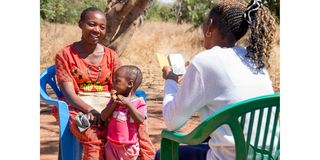
JnA is a national community health initiative that utilizes digital tools for home visits.
The program’s impact was highlighted at a recent Science Communication event in Dar es Salaam, where health sector experts showcased the positive outcomes of their interventions in Tanzanian communities.
This event served as a prelude to the upcoming 11th Tanzania Health Summit scheduled for early October in Zanzibar.
Improving ECD is crucial for shaping educational, emotional, and economic opportunities for children, ultimately breaking the cycle of poverty. A survey conducted in Zanzibar among children aged 18 to 29 months enrolled in JnA assessed knowledge of danger signs, dietary practices, caregiving approaches, and the presence of stimulating home environments.
"While the survey did not cover the entire Zanzibar (Unguja and Pemba), the sample size provided valuable insights for future caregiving practices," stated a project representative. "One limitation was the potential bias in responses, as questions about children were answered by mothers and caregivers."
"We conducted pilot testing of the survey instrument with a small sample to identify and mitigate potential biases using the CREDI tool, a standardized questionnaire," they added.
Based on the UNICEF Multiple Indicator Cluster Survey (MICS), the survey revealed positive changes. "Caregivers exposed to Jamii ni Afya were more likely to recognize critical danger signs, adhere to the minimum acceptable diet, have books and toys at home, and report using only non-violent discipline practices," said Halima Khamis, Senior Implementation Lead for the program. "These measures indicate a more stimulating home environment for children."
The Caregiver-Reported Early Development Instrument (CREDI), designed by the World Health Organization (WHO), assessed ECD outcomes through caregiver reports on developmental milestones and behaviors in children under three.
These findings underscore the effectiveness of the Jamii ni Afya approach, suggesting its potential applicability in other Tanzanian settings and beyond. The study identified areas for further enhancement, such as nutrition knowledge and opportunities for playtime activities.
"Enhancing Early Childhood Development (ECD) is crucial for shaping educational, emotional, and economic trajectories and breaking the cycle of poverty," the study emphasized. "Zanzibar is making significant strides in this area through the engagement of caregivers with Jamii ni Afya."
The collaboration between D-tree and the Zanzibar government has led to substantial improvements in early childhood development for children in Zanzibar. The partnership has demonstrated sustainability and is poised to encompass the entire Zanzibar through established mechanisms.
"We have developed a sustainability plan that outlines costs and advocates for contributions from various partners. Additionally, we are working on a transitional plan to gradually hand over the program to the government between 2023 and 2026."
The program aims to empower government officials to integrate the JnA program into national plans and prioritize community issues politically.
"Last year, we secured 15 percent of our budget from the government, although we aimed for 25 percent. This year, the government allocated Sh1.5 billion to support the project," they added.
The program also engages other ministries to raise awareness about the role of JnA in community development.
"We have engaged the Ministry of Community Development, the Office of the Second Vice President, the OCGS, the Ministry of Finance, and the Ministry of Education, underscoring that ECD is a multisectoral issue."
The program has also taken into account the cultural backgrounds and aspirations of the people of Zanzibar.
"In any program of this nature, cultural practices within the community must be considered. For example, we are actively working on enhancing male involvement in child development, where traditionally, mothers have primarily been responsible."
"The survey conducted in Koani Pemba has yielded tremendous outcomes," they concluded.