Over the past 12 years, their institution, with support from the Royal Danish Embassy, has made significant strides in improving access to justice for women, girls, people with disabilities, and other marginalised communities across the country
Dar es Salaam. A total of 40 million people in Tanzania have received legal assistance from the Legal Services Facility (LSF) over the past 12 years.
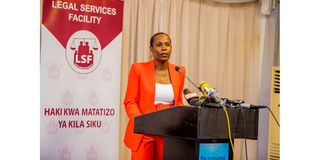
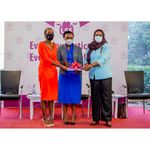
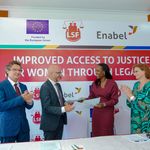
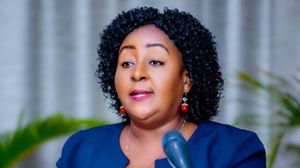
This was revealed by LSF executive director, Ms Lulu Ng’wanakilala, during a special ceremony to mark the 12 years of partnership with the Royal Danish Embassy.
Ms Ng’wanakilala said over the past 12 years, their institution, with support from the Royal Danish Embassy, has made significant strides in improving access to justice for women, girls, people with disabilities, and other marginalised communities across the country.
She noted that the partnership has facilitated the provision of vital legal aid services, positively impacting millions of lives and fostering a more just and equitable society.
“The Royal Danish Embassy, in collaboration with the European Union and UKAid, now the FCDO, in a basket fund modality, granted the LSF a total grant of $33 million to implement the Access to Justice Programme across the Mainland and Zanzibar.
Through the programme, there has been successful institutionalisation of the legal aid sub-sector, establishing 184 paralegal organisations in each district council to ensure the affordability, availability, and accessibility of free legal aid services,” she said.
The programme reached over half of the country’s population, handling 426,349 civil and criminal cases with a resolution rate of 76 percent.
“The programme has addressed key issues such as gender-based violence (GBV), child marriage, and teenage pregnancy, providing critical support to women and girls.
Notably, LSF resolved 39 percent of 7,022 child marriage cases and 36 percent of 8,125 teenage pregnancy cases and helped secure entitlements for 34,214 women, particularly in land and property rights.
Further, the evidence-based policy advocacy implemented through this programme has led to significant legislative achievements, including the enactment of the Legal Aid Acts of 2017 and 2018 and improvements in the Police Gender and Children’s Desks,” she said.
She explained that the efforts have strengthened the legal framework to better protect and include marginalised communities.
“It is without a doubt that women and girls are the most vulnerable, and their rights are infringed upon due to discriminatory social norms, values, and cultures, as well as a lack of social and economic gender inclusiveness. For this reason, our programme is geared to address these issues,” she said.
She also explained that LSF has supported women in high-value agribusiness and business activities in mining areas by providing start-up capital and capacity building.
According to her, in the past year, over 1,055 women in Babati, Manyara, 200 small-business women in Mirerani, Manyara, 103 women in Lindi, and 209 Maasai women in Longido, Arusha, benefited from tailored economic empowerment projects.
“This is because women, who are economically disempowered, are more prone to GBV. Therefore, women’s economic empowerment initiatives will not only eradicate poverty in our communities but also help women fight GBV.