Not sick, but it matters: How Tanzania's 10 Million unknowing carriers can choose Near-Zero Sickle Cell disease births by 2050
By Elias Tryphone & Dr Robhi Jeremiah
The choice a number presents
When two people who carry the sickle cell trait have a child together, every pregnancy carries a 25 percent chance that the child will be born with Sickle Cell Disease, a 50 percent chance the trait continues into the next generation, and a 25 percent chance the child carries nothing at all.
To carry the sickle cell trait, what clinicians call HbAS status, means the trait is present in the bloodline, ready to be passed forward. A carrier is not sick. They live a full, normal life with no symptoms and no outward sign that anything about their blood is different. When they have a child with another carrier, the 25/50/25 inheritance equation applies to every single pregnancy.
This is what makes the estimated 10 to 15 million Tanzanians who carry the HbAS trait the most consequential group in the national fight against Sickle Cell Disease. The majority do not know. They have no symptoms to prompt concern and no reason to seek a test. It is exactly this silent, healthy normalcy that allows the trait to move through families and generations undetected. Two unknowing carriers starting a family together are the primary mechanism by which Sickle Cell Disease perpetuates itself across populations.
A carrier is not sick. They live a full, normal life. And that is precisely what makes them the most consequential group in the fight against Sickle Cell Disease.
A quiet crisis with a knowable cause
Tanzania currently ranks fourth in the world and third in Africa for the number of children born with Sickle Cell Disease each year. The Ministry of Health estimates that between 11,000 and 14,000 children are born with the condition annually. These are children born into a condition that was knowable before conception in many cases, because the most powerful intervention against Sickle Cell Disease is knowing two parents' trait status before a child is conceived.
Tanzania's population is projected to approximately double between now and 2050, according to United Nations Population Division estimates. A crude birth rate of 34.55 per 1,000 people, combined with a carrier rate that has remained stable at 15 to 20 percent for decades, means more carriers being born every year, more unknowing carrier couples forming families, and more children born with Sickle Cell Disease with each passing decade. With deliberate action, that trajectory changes. Without it, the burden doubles alongside the population.
The equation that changes everything
Tanzania's Development Vision 2050 places social innovation and digital technology at the centre of the country's long-term priorities. The vision frames self-reliance as a foundational national principle: building systems that are Tanzanian, run by Tanzanian capacity, and sustained by Tanzanian resources rather than by indefinite external dependence. For organisations working in public health, this is both an invitation and a responsibility.
GenZERO Sickle Cell 2050, a project of the Ruge Mutahaba Foundation, was built with that alignment at its core. Its strategic choice to focus on prevention rather than treatment is deliberate and grounded. Treatment for Sickle Cell Disease is lifelong, specialist-dependent and, in many Tanzanian settings, still out of reach. Prevention through knowledge and informed decision-making, before a family is formed, removes the disease before it begins. It does not require a hospital. It requires a conversation, a test, and the support to understand and act on the result.
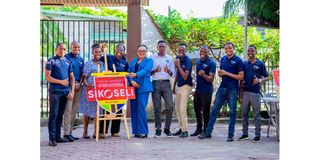
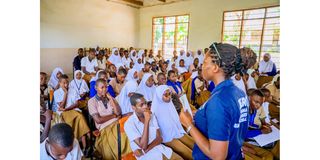
The programme's focus on youth and teenagers follows from the same logic. Young people who are not yet married, not yet parents, are the group whose decisions still have time to change outcomes for the next generation. They are also natural community multipliers: a young person who knows their status tells their peers, brings their siblings, and asks their partner. GenZERO's Commando model formalises that natural leadership, training young community leaders to carry the mission into spaces that a health facility never reaches: schools, camps, church halls, youth programmes.
GenZERO's positioning is built around a simple equation: Know + Test + Lead = Zero. A person who receives Sickle Cell education moves to testing. A person who is tested and understands their result has the knowledge to protect their bloodline. A person who leads others toward the same knowledge becomes a Commando, a recognised, trained peer leader whose name enters a national record. The movement builds from the ground up, one bloodline at a time. This sequence is deliberate: education without testing produces anxiety without resolution; testing without education produces results without meaning; both, without leadership, produce individual knowledge that stops at the person who received it.
In structural terms, GenZERO breaks the national challenge into community-sized building blocks. Each community owns its piece of the solution, led by its own trained Commandos and equipped with digital tools for awareness, community fundraising and screening logistics. Tanzania's investment in digital infrastructure creates concrete pathways for these community-level systems to connect with national health platforms as they develop, turning local action into national intelligence.
The mission goes where medicine doesn't
People engage more readily with health services when those services arrive embedded in environments they already trust. GenZERO builds its delivery model around this reality. Rather than establishing screening centres and waiting for individuals to attend, the programme partners with community leaders, faith organisations, youth programmes and event organisers to embed education and screening into gatherings that are already happening.
In July 2026, GenZERO participated in the Masaki Wellspring Hub Camp Meeting in Kiromo, Bagamoyo: a ten-day gathering of body, spirit, mind and social that brought together over 170 children, teenagers, young adults and parents as families. In that setting, 60 participants received Sickle Cell education and 25 were screened for trait status, with 3 receiving HbAS results and being enrolled in the follow-up protocol. Critically, some who did not screen had already been tested among the 81 participants at a previous Masaki Health Expo in September 2025. This community is building its own culture of knowing, and GenZERO is part of that infrastructure.
Every conversation happens in Swahili and English, using the term Siko seli rather than complex language, because reaching people matters more than sounding technical.
This model is designed to be replicated wherever a community already gathers: schools, workplaces, churches, mosques, youth clubs and annual events. The question GenZERO asks of every community partner is straightforward: you are already bringing your people together. Can we help you use that moment well?
Screening is not a medical appointment to be scheduled. It is a natural part of how a community takes care of itself.
Proof from the field
Across GenZERO's Year 1 pilot activities, the programme reached 1,000 young people with Sickle Cell education and screened 513 of them, a 51.3 percent uptake rate. Of those screened, 67 received an HbAS carrier result and were informed, supported and enrolled in follow-up, and 1 received an HbSS result and was connected to ongoing care. These numbers demonstrate that the model is functional: communities engage when the approach is right, and peer-led education produces real screening uptake.
11.5 million tanzanians. One generation
GenZERO's phased national strategy sets a Phase I target of 5.5 million Tanzanians screened by 2035 and a Phase II target of 6 million additional screenings by 2050, for a combined national total of 11.5 million people screened across both phases. These figures align with Tanzania's National Non-Communicable Disease policy, which includes Sickle Cell Disease among its priority conditions, and with the population health goals articulated under Tanzania's Development Vision 2050.
The methodology behind the targets rests on two complementary mechanisms. The first is community-based screening embedded in existing gatherings at scale. The second is the Family Genetic Mapping Model: when a carrier is identified through screening, their first-degree relatives, parents, siblings and children, carry a substantially higher probability of also carrying the trait than the general population. Standard population-level screening yields an HbAS result in approximately 15 percent of people tested, reflecting Tanzania's national carrier rate. Family Genetic Mapping, which follows an identified carrier into their bloodline to screen close relatives, raises that yield to approximately 35 percent per session. The same resources identify more than twice as many carriers, concentrating testing where it has the highest preventive impact and driving down the cost per carrier identified as the programme scales.
Reaching 11.5 million Tanzanians will require more than one organisation. It requires employers, schools, faith institutions, local governments and civil society organisations who see Sickle Cell prevention as part of their own mandate. GenZERO is designed to catalyse and coordinate that ecosystem, not to substitute for it.
Together, the institutions and communities that come alongside this work are positioned to achieve something that will stand as a defining public health milestone for this generation: a measurable, sustained reduction in the number of children born with Sickle Cell Disease in Tanzania, moving toward near zero within a lifetime. Tanzania has ranked among the world's highest-burden countries for SCD births. The young people being screened today, earning Commando recognition, leading their families to testing, they are the generation that changes that record. Not by treating more cases, but by preventing them. They will be the first generation in this country for whom knowing was normal, and for whom zero was not an aspiration but an outcome.
From Us, For Them.
Know + Test + Lead = Zero.
Elias Tryphone leads Strategy and Program Design for the GenZERO Sickle Cell 2050 project at the Ruge Mutahaba Foundation.
Dr. Robhi Jeremiah serves as Medical Expert for the GenZERO Sickle Cell 2050 project.
For partnership and screening enquiries: 0768 555 563 | [email protected] | genzerosicklecell2050.tz