October 29 violence cost Tanzania Sh125 billion in economic losses, Commission says
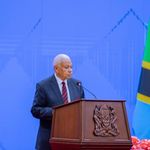
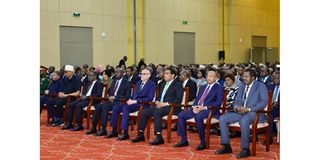
Government leaders listen to the presentation of the Presidential Commission of Inquiry report on incidents during and after the October 2025 General Election, held at State House in Dar es Salaam on April 23, 2026. PHOTO | STATE HOUSE
Josephine Christopher is a senior business journalist for The Citizen and Mwananchi newspapers
Mwananchi Communications Limitted
Dar es Salaam. Tanzania’s Commission of Inquiry into the October 29, 2025 post-election violence has estimated total economic losses at Sh125 billion, with private sector assets bearing the largest share of the damage, according to findings.
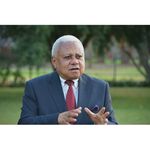
Presenting the final report at the State House on April 23, 2026. Commission Chairperson Retired Chief Justice Mohamed Chande Othman said the losses cut across both private and public sectors, with significant ripple effects on financial markets, business confidence, and livelihoods.
He said private sector losses, which include individuals, commercial banks and fuel stations, accounted for Sh89 billion, representing 71.2 per cent of the total damage.
Public sector losses were estimated at Sh36 billion, or 28.8 percent, affecting institutions including schools, the Tanzania Revenue Authority (TRA), courts, police infrastructure, the Tanzania Electric Supply Company (Tanesco), the Tanzania Telecommunications Corporation (TTCL), the Dar Rapid Transit Agency (DART), and the Tanzania National Roads Agency (TanRoad).
“The private sector bore the brunt of the destruction, and the evidence shows that businesses and individuals continue to carry the emotional and financial burden of what happened,” Justice Othman said.
He said the Commission also documented significant losses among small-scale entrepreneurs, estimating that goods and property worth about Sh1.6 billion were looted or destroyed. He noted that the actual impact on this group could be higher due to unreported losses and informal business structures.
“We found that small traders suffered heavily, with merchandise looted from shops and stalls, disrupting livelihoods in a very severe way,” he said.
The report also recorded financial sector disruptions, including the loss of Sh621.7 million stolen from automated teller machines belonging to commercial banks such as the CRDB Bank, NMB Bank and NBC Bank during the unrest.
Justice Othman said the violence also triggered wider economic instability, affecting currency circulation, financial markets, transport systems, and the tourism sector.
“The incidents disrupted normal economic activity, particularly in transport, financial services, and tourism, with knock-on effects across multiple sectors,” he said.
He further noted that credit rating assessments remained stable, with Moody’s maintaining Tanzania’s rating at B1 during the period, a development he said helped sustain investor confidence in the post-election period.
“Despite the shock to the economy, international ratings agencies maintained Tanzania’s credit outlook, which contributed to continued confidence in the country’s economic fundamentals,” he said.
However, economists who engaged with the Commission warned that if political risks are not addressed, there is a possibility of future downgrades in investor confidence and macroeconomic stability.
Justice Othman said the establishment of the Commission itself had played a stabilising role in restoring trust in governance systems.
“Forming this Commission of Inquiry was an important step toward rebuilding public confidence in national institutions,” he said.
Beyond financial losses, the Commission said the violence left deep psychological and social impacts on citizens, including stress, fear, grief, and loss of trust in social and political systems.
“The incidents resulted in psychological trauma, including stress, anxiety, grief, and fear. There has also been a noticeable erosion of trust within communities and between citizens and institutions,” Justice Othman said.
He said that the violence weakened social cohesion in affected areas, leaving lasting emotional scars on families and communities.