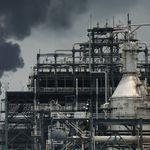
How Tanzania misses out by not having an oil refinery

The world is watching as the shadow of the Iran and US blockade loomed over the Strait of Hormuz. For most individuals, it is a headline about geopolitical brinkmanship. For nations, it is a cold realisation of their economic fragility.

A few weeks ago, I called a friend—a capable intellectual and an economist, Dr Bravious Kahyoza—to get his view on my op-ed arguing that a Hormuz closure would have only a mild impact on Tanzania. He listened, paused, and then gently said it was “short-termist”. It’s fair: I knew it was a risky article, but I still think the jury is out. However, in that conversation, Bravious pointed out a fact I had overlooked—one that reveals a deeper structural issue: a large share, by some estimates 50 percent, of Tanzania’s oil imports come from India.
Excuse me, India?

If someone asked you to name the world’s top oil producers, India would not crack even your top ten, would it? Yet, India produces roughly 600,000 barrels per day (bpd). So how does India become Tanzania’s dominant supplier?

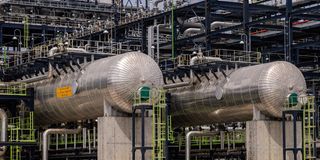
India buys crude oil—from Iran, from Saudi Arabia, from wherever the price is lowest—and refines it into petrol, diesel, jet fuel, and bitumen. That refining step is the single largest value-add in the entire hydrocarbon value chain. A barrel of crude purchased at $75 leaves the refinery as products worth $90 to $100. After costs, a barrel of oil $10 to $15 margin is a manufacturing profit—and India captures every dollar of it.

That said, modern refineries don’t just produce fuel; they extract value from every molecule. Heavy residues become bitumen for road construction, naphtha feeds petrochemical plants, and sulphur is captured for fertiliser production. Byproducts alone cover up to 20 percent of refinery OPEX. India’s model is geared at capturing freight, refining, and distribution margins that crude-exporting nations simply cannot touch.

So, why isn’t Tanzania doing this? We are bordered by eight nations, six of them are landlocked. Our own consumption sits at roughly 100,000 to 120,000 bpd. When you add the demand from Zambia, Malawi, Rwanda, Burundi, Uganda, and the DRC, the total addressable market jumps to over 300,000 bpd.

That market makes it possible to build a mid-sized refinery at a 250,000 bpd capacity. That scale is the “sweet spot”: large enough to achieve global efficiency, yet small enough to be absorbed by our regional neighbours.

Better still, we can locate that refinery in Tanga, thus creating a strategic marriage with EACOP. That means, instead of watching 216,000 bpd of Ugandan crude sail past our shores to be refined in Europe or Asia, we could source that feedstock locally. Even a modest $5 per barrel savings on transport and logistics from EACOP would add a staggering $365 million to our annual margins.

At 250,000 bpd, Tanzania would need about $15 billion to set up a refinery—roughly $60,000 per flowing barrel, aligned with global benchmarks.

Similarly, at a $10 to $15 margin, and after operating costs of $3 to $5 per barrel, net profit lands between $450 million and $1 billion yearly. That means, financial payback may be about 20 years. However, when you factor in savings from logistics and transport of $5 per barrel, plus retention of Forex, job creation, and strategic resilience, the economic payback compresses to as low as 12 years. For context: that is more efficient than the 25-plus-year SGR project, but slower than the 10-year payback of the EACOP.

The economics of building a refinery are daunting but not impossible. Nigeria’s Dangote Refinery, a $25 billion behemoth with a capacity of 650,000 bpd, is Africa’s largest industrial project. It demonstrates both the scale and ambition possible on the continent.

But Dangote is far more than a refinery. The project integrates petrochemical plants, fertiliser production units, pipelines, a dedicated power station, and port infrastructure—each of which adds billions in cost beyond the core refining capacity. We will need ways to capture that value, too.

So what is the verdict? At 250,000 barrels per day, the case is economically viable but still conditional: with a $15 billion investment, Tanzania can capture up to $1 billion in annual profit with an access to 300,000 bpd regional market. But we need to consider scale, capitalise on EACOP, and execute with discipline.  Otherwise, the numbers can quickly turn against us.

For now, the reality is simple: we are already paying for a refinery—it just happens to be in India. Every barrel we import includes someone else’s margin. Every shipment we receive sends value out of the country. The case for a refinery is not conceptual: At 250,000 bpd, Tanzania would simply be capturing the margin already built into every litre of fuel we import.

This week, as uncertainty lingers over Islamabad Talks—with Iran still hesitant to engage—the question for Tanzania is not whether we can afford to build a refinery or not. The real question is whether we can afford another decade of watching others do the work—and collect the cheque.

We are very good at that—watching others create value for themselves at our expense.