She began her legal journey at Zanzibar University, where she earned a Bachelor of Law and Sharia. From the outset, she showed strong academic discipline. She was equally committed to public service
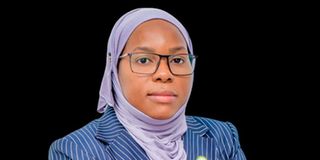
Dar es Salaam. In a judiciary historically dominated by men, Regional Magistrate Sara Omar Hafidh is redefining leadership on the bench in Zanzibar; her rise from a young law student to one of the region’s most respected judicial officers is a personal triumph.
It is also a symbol of change within the legal profession. Her presence reflects shifting tides. It signals growing space for women in positions of judicial authority.
She began her legal journey at Zanzibar University, where she earned a Bachelor of Law and Sharia. From the outset, she showed strong academic discipline. She was equally committed to public service. Studying both civil law and Sharia gave her a deep understanding of Zanzibar’s legal structure. It prepared her to work within a system shaped by statutory law, religion and custom.
Determined to expand her perspective, she pursued an LLM in Jurisprudence specialising in Cybercrime at Beijing Normal University. There, she explored emerging legal challenges linked to technology and transnational crime. She later completed a Master’s in Human Rights and Democratisation in Africa at the Centre for Human Rights, based at the University of Pretoria. This experience strengthened her grounding in constitutionalism and regional human rights systems.
These academic achievements gave her a dual lens. One lens was rooted in local legal traditions. The other was shaped by international human rights standards. Together, they formed the backbone of her judicial reasoning. They also shaped her commitment to gender equality within the justice system.
“I began my career in private practice as a legal officer and advocate before joining the public sector as a State Attorney and Public Prosecutor, serving for over six and a half years. During this period, I handled high-profile criminal and economic cases and focused particularly on violence against women and girls,” she recalls.
Her years as a prosecutor were intense. They were also formative. She worked directly with survivors of gender-based violence. She saw the fear many carried into courtrooms. She observed how stigma and intimidation could silence victims. She encountered evidentiary gaps that complicated prosecutions. These experiences shaped her deeply.
They formed her judicial philosophy. Justice must be impartial. It must be evidence-based. But it must also recognise vulnerability. It must respond to social realities. It must protect dignity without compromising fairness. That philosophy now defines her courtroom.
As a Regional Magistrate in the Judiciary of Zanzibar, Sara presides over a wide range of criminal matters. She applies legal rigour in every case. She also leads with empathy. In cases involving gender-based violence, she adopts trauma-informed approaches. She ensures survivors are not re-traumatised during testimony. She explains procedures clearly. She maintains a strict courtroom order. She prevents intimidation. She upholds privacy safeguards where necessary.
At the same time, she protects the rights of the accused. She grounds her decisions in statutory provisions. She relies on evidence. She references constitutional guarantees. She aligns her reasoning with international human rights principles. For her, gender sensitivity and impartiality are not opposites. They work together. They strengthen justice.
“A major milestone in her career was co-authoring the 2023 Gender Bench Book on Women’s Rights for Judges and Magistrates in Zanzibar. The bench book created a structured guide for gender-responsive judicial practice. It addressed inconsistencies in rulings. It clarified standards in cases involving women and children. It strengthened responses to gender-based violence. It promoted uniform interpretation of rights,” she said.
The publication has since become an important judicial tool. Magistrates and judges rely on it for guidance, reinforces constitutional protections and encourages gender-sensitive reasoning. As a law school trainer, Sara integrates the bench book into her teaching. She mentors emerging lawyers. She encourages them to internalise human rights standards early. She prepares them to carry forward gender-responsive justice.
Her advocacy does not end at the courtroom door. She serves as Zanzibar Coordinator for the Tanzania Women Judges Association. In that role, she promotes professional development for women in the judiciary. She organises workshops on Women’s Rights in Africa. She supports training on Judicial Enforcement of Socio-Economic Rights. She helps women judicial officers strengthen subject-matter expertise.
She also supports structured mentorship programs. Young female lawyers receive guidance on leadership pathways. They are encouraged to pursue specialisation. They are advised on balancing professional growth with public service. Participation in initiatives such as the Women Leadership Program at the Uongozi Institute strengthens decision-making and executive skills. These programs build confidence. They build competence. They prepare women for senior judicial roles.
Despite improvements, women remain underrepresented in higher judicial positions. Historical exclusion plays a role, societal expectations add pressure, professional and community responsibilities often compete.
Sara acknowledges these realities. She advocates for institutional reform, supports leadership training as part of career progression, encourages specialisation in areas such as Disability Rights and Socio-Economic Rights. She believes preparation creates opportunity.
One of her most delicate responsibilities involves navigating Zanzibar’s legal pluralism, customary norms, religious principles and statutory law often intersect. These intersections can create tension. Sara approaches them carefully. Her grounding in Sharia provides cultural fluency. Her human rights training ensures constitutional alignment. She interprets statutes with sensitivity. She evaluates religious and customary arguments with caution. She ensures that no interpretation undermines fundamental rights.
For her, tradition has value. It shapes identity. It guides communities. But it cannot override constitutional protections. It cannot justify discrimination. Especially not against women or children. This balance defines her judicial approach.
Mentorship remains central to her mission. “As a Regional Magistrate, I prioritise mentorship and integrity,” she says. “The next generation of legal professionals — especially women — must pursue advanced expertise, communicate effectively and remain committed to social, economic and political advancement for women and children.”
Looking ahead, Sara envisions a judiciary that is firm and fair. She sees a system that responds decisively to gender-based violence. She imagines stronger protections for children’s rights. She hopes for more women in leadership roles. She aims for efficiency, transparency and integrity in every court.
Her legacy, she believes, should go beyond judgments delivered. It should be measured in systems strengthened. It should be seen in women promoted. It should be reflected in survivors treated with dignity. Above all, it should ensure that the courtroom doors she has opened remain open — not temporarily, but permanently — for the generations of women who will follow.