Dar es Salaam. Rising fuel prices in the country have turned vehicle gas conversion into one of the most sought-after services, with many companies overwhelmed by the growing number of motorists seeking installations.
The surge in demand has forced some firms to prioritise cash-paying customers while temporarily suspending credit arrangements for clients who previously paid in instalments, a situation largely linked to shortages of equipment.
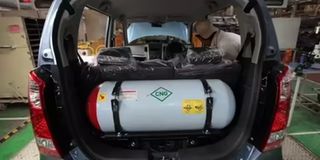
The trend has also pushed up installation costs, with an 11-kilogramme cylinder, preferred by most motorists, now costing between Sh1.8 million and Sh2.1 million, compared to between Sh1.5 million and Sh1.65 million charged by some companies before the current crisis.
The situation has left some companies with waiting lists of up to 300 customers, while delays in cargo shipments have been cited among factors slowing a service increasingly viewed as a lifeline by motorists.
Tanzania remains among countries feeling the impact of rising global fuel prices following the ongoing conflict in the Middle East, which has disrupted oil production, storage and refining infrastructure, including production wells, storage facilities and refineries, ultimately affecting global supply capacity.
The situation has pushed fuel prices in Dar es Salaam to Sh4,115 per litre of petrol, Sh4,248 for diesel and Sh4,677 for kerosene, making compressed natural gas an increasingly attractive alternative for motorists.
Compared to compressed natural gas sold at Sh1,550 per kilogramme, petrol users save about Sh2,565 while diesel users save around Sh2,698.
“The difference is currently huge. Demand has increased sharply because everyone is looking for relief from fuel costs, but the biggest challenge now is the availability of equipment needed to serve customers,” said Exogas Green Solution Limited marketing officer, Mr Aron Dosha.
He said the company currently receives more than 100 calls daily from customers seeking information on gas conversion costs, while over 300 people are already waiting for installation services.
“Equipment is our biggest challenge at the moment. We placed orders, but the ship carrying supplies delayed. Because of the limited materials available, we have suspended instalment-based services and are prioritising customers paying cash,” he said.
He added that shortages had pushed the installation cost of the widely used 11-kilogramme cylinder to Sh1.8 million from Sh1.65 million previously charged before the conflict escalated.
“When equipment is limited, you cannot continue charging Sh1.5 million or Sh1.65 million. Prices must increase because demand is high and costs have also risen,” he said.
EAM Autogas Garage managing director, Mr Emmanuel Mwakaje, said although installation costs had started stabilising, public demand for gas conversion had increased significantly.
He said before the Middle East conflict, only a few motorists sought gas conversion services, and customers were difficult to secure, unlike now, when installers are many and demand is even higher.
“When demand rises, prices increase slightly, and most customers prefer 11-kilogramme cylinders because they fit easily in small vehicles,” he said.
According to him, before the current global crisis, installations cost around Sh1.6 million with room for negotiation, but prices have now risen to no less than Sh1.8 million without bargaining opportunities.
“In the past, business was difficult. We had to lower prices to attract customers because people lacked motivation to install the systems. Now the number of motorists seeking gas conversion has risen sharply as they try to avoid high fuel costs amid equipment shortages,” he said.
Explaining the current charges, he said installation costs now stand at Sh1 million for a 4.5-kilogramme cylinder, Sh1.2 million for six kilogrammes, Sh1.8 million for 11 kilogrammes, Sh2.2 million for 15 kilogrammes and Sh2.5 million for 17 kilogrammes.
Before the Middle East conflict, some companies reduced installation charges by between Sh200,000 and Sh250,000 in efforts to attract customers to the business.
Nk CNG Auto Limited director, Mr Nurdin Kombo, whose company has also suspended credit services for gas installations, said the cost of fitting an 11-kilogramme cylinder had reached between Sh1.9 million and Sh2 million.
“The equipment shortage has worsened because demand is increasing rapidly. The industry has been overwhelmed and many businesses are rushing to order equipment. I believe prices will eventually return to normal,” he said.
Using his company as an example, he said more equipment was expected to arrive in June or July, particularly cylinders that cannot easily be transported by sea, forcing some firms to use air freight for smaller equipment.
“Once companies receive the equipment they ordered, the market will stabilise, and prices will fall again. But for now, some customers have been asked to wait until equipment becomes available,” he said.
Situation at DIT
While private companies complain about overwhelming demand and equipment shortages, Dar es Salaam Institute of Technology (DIT) project manager for compressed natural gas vehicle integration, Dr Esebi Nyari, said the institution still had adequate equipment.
“It is true that customer numbers have increased. Previously, we struggled to attract clients, but now people call and visit daily seeking gas conversion services. We currently handle four vehicles a day according to our capacity,” he said.
Speaking separately, driver Victor Mashaka criticised the increase in installation costs and called for measures to make the services more affordable.
“If you missed the earlier period when negotiations were possible, you are unlucky now. Without at least Sh1.9 million or Sh2 million, you cannot get the service at many places,” he said.
The remarks come as the Ministry of Energy’s 2026/27 budget estimates that more than 20,000 transport and logistics vehicles are currently using natural gas across the country.
In addition, by March 2026, a total of 86 local and foreign private companies had been licensed to invest in Tanzania’s natural gas value chain.
Register to begin your journey to our premium contentSubscribe for full access to premium content