Ritha Ngalo: Powering pension accountability, women progress
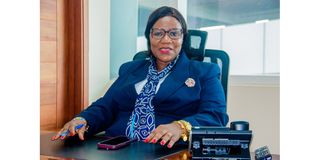
Ms Ritha Michael Ngalo
By Katare Mbashiru
Dodoma. Tanzania marked International Women’s Day 2026 in March, the contribution of women in public institutions came into sharper focus. Among them is Ritha Michael Ngalo, a seasoned professional whose career has left a lasting imprint on the country’s social security landscape.
With more than three decades of public service, Ms Ngalo has built a reputation grounded in discipline, integrity and a strong sense of duty.
Her work at the Public Service Social Security Fund (PSSSF) reflects both technical competence and a sustained commitment to institutional strengthening.
Born and raised in Dar es Salaam, her early life was shaped by a strong emphasis on education and perseverance.
She pursued an Advanced Diploma in Accountancy at the Institute of Finance Management, followed by a Postgraduate Diploma in Finance Management and a Master of Business Administration from the Eastern and Southern Africa Management Institute (Esami).
This academic path laid a firm foundation for her professional journey. Ms Ngalo is a Certified Public Accountant, accredited by the National Board of Accountants and Auditors.
She began her career at the Ministry of Finance in the Pensions Department, where she worked as an Accounts Assistant before rising to the role of Accountant.
These formative years provided her with practical insight into public financial management and pension administration.
In 2000, she joined the then Public Service Pensions Fund. This marked a defining phase in her career. Starting as a Senior Audit Assistant, she steadily rose through the ranks to become a Senior Internal Audit Officer.
In these roles, she developed strong expertise in internal controls, compliance and risk management.
Her career progression continued with appointments as Principal Compliance Officer and Head of Contributions and Inspection.
She also served as Acting Compliance Manager, before taking on regional leadership roles as Manager for PSSSF in Temeke and Kinondoni. Each position broadened her experience in both operational and strategic management.
Currently, Ms Ngalo serves as Internal Audit Manager at PSSSF Head Office in Dodoma. The role places her at the centre of efforts to strengthen governance systems, improve accountability and safeguard members’ funds. Her appointment reflects confidence in her ability to uphold high standards in institutional oversight.
Over the years, her contribution has coincided with notable improvements within the Fund. Internal systems have been strengthened. Compliance frameworks have been enhanced.
Transparency in pension administration has also improved. Her involvement in auditing, investment monitoring and corporate planning has helped reinforce a culture of accountability.
Beyond her technical responsibilities, Ms Ngalo also serves as a board member of the PSSSF/DCC Investment Company Limited. In this capacity, she contributes to decisions that shape long-term investment strategies and financial sustainability for the Fund.
Her leadership, however, extends beyond systems and processes. Colleagues describe her as a mentor who has consistently supported the growth of young professionals, particularly women.
During her tenure in Temeke and Kinondoni, she encouraged female staff to pursue further studies and professional qualifications.
Several responded to that encouragement. Some enrolled in master’s programmes, while others advanced to Certified Public Accountant level.
Today, a number of these women hold senior managerial positions within PSSSF and other public institutions. Her approach has remained consistent: to promote integrity, resilience and continuous learning.
This human dimension of leadership aligns with broader efforts by PSSSF to expand its social impact.
In recent years, the Fund has strengthened its Corporate Social Responsibility initiatives, with a particular focus on women and girls. Since July 2025, targeted interventions have been implemented across different regions.
In Zanzibar, medical equipment worth Sh30 million was delivered to Kizimkazi Hospital. The support has improved maternal and child healthcare services.
In Tabora Municipality, similar equipment of the same value was provided to the municipal hospital.
The intervention aimed to enhance safe delivery services and neonatal care.
In Mara Region, Kasuguti Health Centre received equipment worth Sh30 million to improve conditions for expectant mothers.
In Songea, Mahukuru Health Centre benefited from beds, mattresses and bed sheets valued at Sh30 million.
The support has helped create a more conducive environment for maternal healthcare. In Chamwino District in Dodoma and Bagamoyo in the Coast Region, sanitary pads worth Sh16 million were distributed to about 1,164 schoolgirls.
The initiative promotes menstrual health and supports continued school attendance.
According to Ms Ngalo, such initiatives reflect a broader understanding of social security. It is not limited to pensions alone. It also includes health, dignity and access to opportunities.
She also highlights the Fund’s efforts to improve service delivery.
Through the expansion of district, regional and zonal offices, as well as the adoption of digital platforms, members can now access services more easily. This has been particularly beneficial to women.
She notes that maternity benefits are now processed in a timely manner, in line with established procedures. This provides financial support during a critical period in the lives of beneficiaries.
Ms Ngalo views the progress of women within PSSSF as part of a wider national shift. More women are taking up leadership roles. More are advancing academically and professionally. Within the Fund, this trend is evident across departments and regions.
Her own career reflects this transformation. It brings together technical expertise, administrative leadership and a commitment to social impact. It also demonstrates the role that public institutions can play in driving inclusive development.
As Tanzania continues to recognise the contribution of women in national development, her story offers a clear example of steady and purposeful leadership.
It shows how experience, when combined with mentorship and institutional support, can produce lasting results.
Within PSSSF, her influence is visible in multiple ways. It can be seen in strengthened systems, in improved service delivery and in the growth of a new generation of professionals.
It is also reflected in the lives of women and families who benefit from the Fund’s outreach initiatives. In Dodoma, where the Fund’s headquarters stands, her work continues to shape both policy and practice. The legacy she is building is not confined to reports or procedures.
It is reflected in people, in communities and in an institution that continues to evolve in response to public needs.