With candidates expected to spend more than six months out of formal schooling, experts warn that the idle period
Dar es Salaam. Education stakeholders have urged students who completed Form Four examinations this year to use the long waiting period before the release of results and admission to Advanced Level studies or colleges to acquire practical, life-enhancing skills suited to a rapidly changing, technology-driven world.
With candidates expected to spend more than six months out of formal schooling, experts warn that the idle period, if not well utilised, could expose young people to negative influences while wasting a valuable opportunity for personal development.
They say the transition phase should be treated as a structured learning window in which students gain skills increasingly demanded in both the workplace and everyday life, including basic computer applications, driving, mechanical trades, tailoring and foreign languages.
Education analysts note that the current generation is growing up in an era in which digital tools are central to work, communication and service delivery, making computer literacy essential rather than optional.
“Today, almost everything is done through computers and the internet. Offices, banks, hospitals and even small businesses rely more on digital systems than pen and paper,” said Dar es Salaam-based education consultant Mr Justin Kulwa.
“A student who leaves secondary school without basic computer skills is already disadvantaged before entering A-level, college or the job market,” he added.
Mr Kulwa said learning basic computer applications such as Microsoft Word, Excel, PowerPoint and internet use equips students with foundational skills across disciplines, whether they later pursue sciences, arts or vocational training.
He added that computer literacy also supports independent learning, enabling students to access online resources, tutorials and digital libraries that were largely unavailable to previous generations.
“We are living in a digital age with far greater internet use than in the past. Students should be encouraged to enrol in short computer courses offered by private centres, community hubs or public institutions, many of which are affordable,” he said.
Similarly, a senior official from a private ICT training centre in Ilala, Ms Caroline Kweka, said demand for basic computer courses among young people has been rising, although many still underestimate their importance.
“Some think computer skills are only for those studying ICT-related courses, which is not true. Even students who will study history or languages at A-level will be expected to type assignments, conduct online research and submit work electronically,” she said.
Beyond digital skills, stakeholders also highlighted driving as another critical skill Form Four leavers should prioritise during the waiting period.
A driving instructor and road safety advocate at the Vocational Education and Training Authority (VETA), Mr Emmanuel Ayubu, said the months after Form Four provide an ideal opportunity for young people to learn driving, as they are relatively free from academic pressure.
“Driving is a life skill. At some point, whether for personal use or employment, most people will need it,” he said. “Learning early helps students become confident and responsible drivers, especially when they are properly trained and understand traffic laws.”
He added that many careers, including logistics, sales, field research and public service, increasingly require at least basic driving skills.
Parents have also been encouraged to support their children to enrol in recognised driving schools to ensure they acquire proper skills rather than informal or unsafe driving habits.
Mechanical and technical skills were also cited as beneficial, particularly through exposure to garages, workshops and vocational institutions such as VETA.
A vocational training instructor, Mr Rashid Ally, said mechanical skills remain among the most practical and marketable competencies for young people.
“Understanding basic mechanics helps young people solve everyday problems and opens doors to self-employment. This is the right time for Form Four leavers to spend time in garages or attend short courses,” he said.
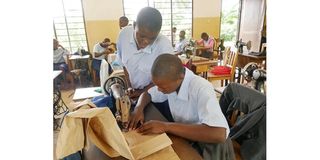
Tailoring and fashion design were also highlighted as skills worth acquiring.
A Dar es Salaam-based tailor and entrepreneur, Ms Neema Hassan, said tailoring remains relevant and profitable, especially with growing demand for customised clothing.
“Many young people think tailoring is outdated, yet fashion is expanding and people want unique designs that cannot be mass-produced,” she said, adding that the skill allows students to repair clothes, design outfits or start small businesses while studying.
Language skills were also identified as an area where students can invest productively.
A linguistics lecturer at the University of Dar es Salaam, Dr Amina Salum, said Tanzanian students already have a strong foundation in Kiswahili and English, making it easier to learn additional languages such as Chinese, French or Spanish.
“These languages are widely spoken globally and are increasingly important in business, diplomacy and tourism,” she said, noting that multilingual skills enhance competitiveness.
Parents and guardians have been advised to actively guide students during the transition period to ensure their time is used productively.
“Even simple planning—deciding which skill to focus on for a few months—can make a big difference,” Dr Salum said, adding that such skills build confidence, independence and resilience.