Josephine Christopher is a senior business journalist for The Citizen and Mwananchi newspapers
Mwananchi Communications Limitted
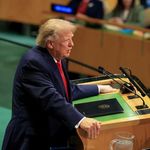
Dar es Salaam. Tanzania has been placed under a new category of partial United States travel restrictions following a sweeping presidential proclamation issued by American President Donald Trump.
In a statement issued on Tuesday, December 16, 2025, President Trump announced that his administration was tightening entry rules for foreign nationals from dozens of countries, citing national security concerns.
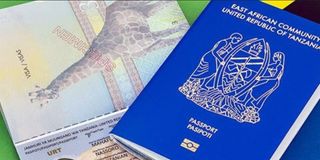
Under the proclamation, the entry of Tanzanian nationals to the United States as immigrants has been suspended.
At the same time, non-immigrant travel on B-1/B-2 (business and tourist), student (F), vocational (M), and exchange (J) visas has also been halted, effective January 1, 2026.
“According to the Overstay Report, Tanzania had a B-1/B-2 visa overstay rate of 8.30 percent and an F, M, and J visa overstay rate of 13.97 percent,” President Trump’s statement read in part.
Other categories of non-immigrant visas remain available but will be issued with reduced validity, subject to United States law.
The US administration justified the move by pointing to visa overstay rates and concerns over screening procedures.
The White House said the overstay figures, combined with broader challenges in identity management and information sharing, undermine the reliability of US vetting processes.
Tanzania is among 15 countries subjected to partial suspension, alongside Angola, Antigua and Barbuda, Benin, Côte d’Ivoire, Dominica, Gabon, The Gambia, Malawi, Mauritania, Nigeria, Senegal, Tonga, Zambia, and Zimbabwe.
Even as the restrictions take effect, Tanzania has signalled continued diplomatic engagement with Washington.
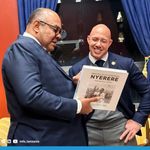
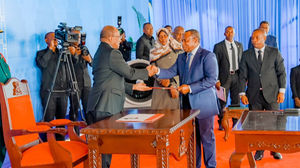
On Wednesday, December 17, 2025, the Minister for Foreign Affairs and East African Cooperation, Mr Mahmoud Thabit Kombo, held talks in the United States with Congressman, Dr Ronny Jackson, a member of the Africa Subcommittee of the US House of Representatives.
Officials said the discussions focused on political cooperation, trade, investment, and social development, underscoring ongoing bilateral engagement despite the new immigration measures.
Meanwhile, the travel restrictions in Tanzania outline several exemptions.
Tanzanians who are lawful permanent residents of the United States, dual nationals travelling on passports of non-designated countries, diplomats, and athletes competing in major global sporting events such as the World Cup or the Olympics are exempt from the ban.
Case-by-case waivers may also be issued if US authorities determine that an individual’s travel serves a critical national interest.
The US government framed the restrictions as non-permanent and conditional, stressing that they are intended to pressure affected countries to improve cooperation on documentation, information sharing, and immigration enforcement.
The US Secretary of State is required to review the restrictions every 180 days and recommend whether they should be modified, lifted, or expanded.
In June, President Trump announced that citizens of 12 countries would be banned from travelling to the United States, while those from seven others would face restrictions.
At the time, the ban included Afghanistan, Myanmar, Chad, the Republic of Congo, Equatorial Guinea, Eritrea, Haiti, Iran, Libya, Somalia, Sudan, and Yemen, with heightened restrictions on visitors from Burundi, Cuba, Laos, Sierra Leone, Togo, Turkmenistan, and Venezuela.
On Tuesday, the Trump administration announced it was expanding the list of countries whose citizens are banned from entering the United States to Burkina Faso, Mali, Niger, South Sudan, and Syria.
The administration also fully restricted travel for people holding Palestinian Authority-issued travel documents.
Register to begin your journey to our premium contentSubscribe for full access to premium content