Small traders voice concerns over government’s Sh200bn promise

Dar es Salaam. As the government prepares a framework on how small traders will benefit from the Sh200 billion promised within 100 days of President Samia Suluhu Hassan’s administration, the target group and stakeholders have raised concerns and suggested the best approach.

Among the issues cited are difficulties in accessing loans, registration procedures, and bureaucracy, while delays in applying policies, regulations, and laws were also highlighted as hurdles.
Ahead of last October’s general election, President Hassan pledged that within 100 days of taking office, her government would disburse Sh200 billion to provide capital for small-scale traders and micro-industries.

These funds are separate from the 10 percent provided by each council to groups of youth, women, and the elderly to help them improve economically.

Speaking recently on progress before the start of the loan disbursements, the Minister of State in the President’s Office responsible for Youth Development, Mr Joel Nanauka, said the procedure would be released in the coming days.

“In the next few days, a meeting will be held with journalists and the Ministry of Finance to provide details on how this money will be disbursed,” he said.

Mr Nanauka made the remarks just days after the Minister of Community Development, Gender, Women, and Special Groups, Dr Dorothy Gwajima, briefed the public on how they could access the opportunity.

In a statement issued on January 30, 2026, Dr Gwajima invited small traders to seize the opportunity for loans provided through the National Microfinance Bank (NMB).

“I would like to use this opportunity to invite and encourage all small traders to seize the government loan opportunity on affordable terms with an interest rate of seven percent per annum, provided through NMB, which has an agreement with the government to manage these loans,” she said. The loans aim to empower small traders with annual sales not exceeding Sh4 million, including mothers and fathers selling food, street vendors, motorcycle taxi operators, and other groups recognised and registered by relevant authorities across the country.

To benefit, small traders must be identified and registered in the Small Trader Identification and Registration System (WBN-MIS) and by a Community Development Officer from their council.

Applicants must also be Tanzanian citizens aged 18 and above, have a business recognised in their area or an area identified by the relevant authority, and possess a National Identification Card (Nida) or Nida number.

“The loan application process is clear and user-friendly. Applicants with a digital ID or ID number are required to go to NMB to complete the application form and submit the required documents,” the statement said.

All applications are verified and assessed according to the bank’s procedures, and eligible applicants receive funds transferred into their accounts based on the type of loan applied for.

Repayment is from three to 24 months, depending on the business type, at a seven percent annual interest rate.

The loan is insured against the borrower’s death or permanent disability to protect the trader and their family.

What citizens say

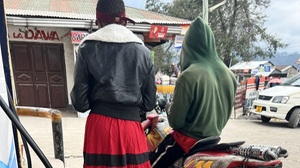
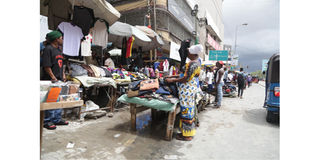
Some small traders, including street vendors, food sellers, and motorcycle taxi operators, said that while they recognise the programme’s benefits in empowering them economically, the process of registering in formal systems is a challenge.

A small trader in Kariakoo, Mr Rashid Mohamed, said most traders lack knowledge about financial systems and formalisation, making them afraid to register due to taxes, levies, and strict loan conditions.

“The government says there is Sh200 billion in capital, but we wonder how we will get it if we do not even understand the system,” he said, adding that going to the bank is another daunting task, as it could involve a long process.

A food vendor in Buguruni, Ms Eva Patrick, said loans have good intentions, but implementation must consider the traders’ working environment. She said many traders with small capital do not maintain proper sales records, making them appear ineligible.

“We can benefit from these loans, but if conditions are strict, we will remain where we are and continue with informal savings and lending,” she said.

Motorcycle taxi driver, Mr Hamad Ngonyani, said enrolling in formal systems could help access capital and insurance, but the challenge is the lack of accurate information.

“Many of us do not know where to start, whether from government institutions. This will not differ from the 10 percent loans most have been providing. I do not know how this process will ensure everyone in need benefits,” he said.

He added that they earn money mainly through online advertising, which is fragile, and penalties for entering the banking system are a challenge.

Mr Ngonyani said formalisation of the informal sector is important, but without adequate education, friendly conditions, and systems aligned with their reality, the programme could become a burden rather than a solution.

Warning issued

Speaking on the matter, business stakeholder, Prof Haji Semboja, said every administration has introduced strategies to empower youth and small traders, but many have stalled, so it is important to examine what went wrong previously.

He said to avoid repeating past mistakes, existing instruments such as policies, laws, regulations, and institutions should be used rather than introducing new ones to achieve positive results.

“Let us not look for foreign solutions, as often these funds have gone to undeserving individuals. We must avoid this to ensure the 10 percent reaches only the target group and the rest is not lost,” said Prof Semboja.