Unity or isolation? Tanzania’s waning Pan-Africanism zeal

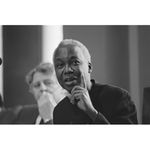
Pan-African philosopher, educator and a public intellectual, Dr Joshua Maponga

Tanzania occupies a special place in Africa’s Pan-African history. From the leadership of Mwalimu Julius Nyerere to its role in hosting liberation movements, the country has long been viewed as a moral and ideological anchor for African unity. The Citizen Reporter, Jacob Mosenda, conducted an exclusive one-onone interview, where, renowned Pan-African philosopher, educator and a public intellectual, Dr Joshua Maponga reflects on Tanzania’s place today, the future of African unity, peace, leadership, and the role of the media in shaping Africa’s destiny. Follow through:

Question. Tanzania has long been recognised as a home of Pan-Africanism, from Mwalimu Julius Nyerere to liberation movements. How do you see Tanzania’s Pan-African role today in a changing Africa?

Answer. In many African communities, you find a father who builds a successful business from nothing. He manages everything himself, and the business thrives. But when that father passes away, a large number of those businesses collapse because the knowledge, values and systems were not passed on to the next generation.

Mwalimu Nyerere laid a very strong foundation for Pan-Africanism. Tanzania today is like a child who inherited a great vision. The responsibility now is to sustain that vision and pass it on across generations.

However, I was recently invited to Butiama for the annual Mwalimu Nyerere commemoration. What saddened me was that there were very few Tanzanians present. Many participants had travelled from Uganda, Kenya and Zimbabwe to honour Nyerere’s vision, yet local participation was minimal.”

To me, this signalled a deeper problem. You cannot claim Pan-African leadership if younger generations are disconnected from the values that defined the nation. You name roads, schools and airports after Nyerere, but you neglect the ideas he stood for. Pan-Africanism survives only when people actively engage with it, not when it exists only in symbols.

Question. Peace has been Tanzania’s strongest identity in the region. What lessons can conflict-affected African countries learn from Tanzania’s experience of peace and coexistence?

Answer. Tanzanians should not be complacent about this. Peace should never be taken for granted. The trends we see across the continent show that instability can emerge anywhere. What happened in other African countries can also happen in Tanzania if warning signs are ignored.

Rather than positioning Tanzania only as a teacher, mutual learning should be embraced.

Tanzania should continue protecting its peace, but it should also learn from the experiences of others. Peace is not a permanent state; it requires constant effort, reflection and correction.

Question. You often say peace is not accidental. What should African leaders and citizens do deliberately to protect peace in our region?

Answer. Africa’s biggest challenge is not individuals, but systems. We often blame leaders, but rarely question the systems that produce them. Many African governance systems were not designed to transform society. They were inherited, adapted and imposed in ways that do not fully reflect African realities.

For instance, why do leaders in supposedly democratic systems require heavy security? If governance truly reflected the will and interests of the people, leaders would not be so detached or fearful. Peace is protected when systems are legitimate, inclusive and owned by the people.

For him, safeguarding peace requires Africans to take responsibility for shaping their own political and social frameworks. Africa must be built by Africans. Peace cannot be outsourced. Citizens must actively protect it by demanding systems that serve their societies, not external interests.

Question. African unity is often discussed but rarely felt by ordinary people. What does real Pan-African unity look like beyond slogans and summits?

Answer. Africa needs to revisit the original Pan-African vision. When leaders like Nyerere, Nkrumah and Gaddafi spoke of unity, they were thinking beyond passports and summits. They spoke about shared security, collective development, and a common African future.

But, the global landscape has changed, and Africa must rethink unity accordingly. Today, unity is often reduced to symbolic gestures, while global power dynamics are shifting rapidly. Africa must ask itself: what kind of unity makes sense in this new world?”

For me, unity must respond to real challenges-economic vulnerability, security threats, and global narratives that undermine Africa’s sovereignty. Without a clear, shared vision, discussions on unity risk becoming outdated while the world moves on.

Question. Global media often portrays Africa through crises and conflict. How dangerous is this narrative for Africa’s development and diplomacy?

Answer. This is one of Africa’s most damaging challenges. Africa is consistently portrayed as poor, unstable and dependent. Yet those who promote this image have no intention of leaving the continent. Instead, the narrative justifies continued extraction and control. This is a form of psychological harm.

When you repeatedly present a person as helpless, they begin to internalise that image. It affects confidence, diplomacy and development. Even the training of journalists is foreign. Many African journalists are educated using Western frameworks and media models. As a result, African stories are often told through non-African lenses.

Economic pressures are another factor nailing on the wound. Media houses struggle financially, while corporate interests control advertising and influence content. This limits editorial independence. The solution lies in collaboration.

African journalists must unite, invest in their own platforms, and shape their own narratives. Africa needs media that speaks from within, not media that echoes external agendas.

Question. Finally, what is your message to Tanzanians and Africans who believe Pan-Africanism is an old idea that no longer matters today?

Answer. I strongly disagree with the idea that Pan-Africanism is outdated. Pan-Africanism already has a rich intellectual foundation. The problem is not lack of ideas, but lack of commitment to build on what already exists.

Capitalism, socialism and major religions have survived because they were documented, refined and passed on. Africans often want to discard existing knowledge and start afresh, which delays progress.

Young Africans be made aware that you do not build a future by abandoning your intellectual heritage. You build by studying it, improving it, and adapting it to your time.

Therefore, pan-Africanism remains relevant—not as nostalgia, but as a living framework.

It is not about going backwards. It is about understanding where we come from so we can move forward with clarity, confidence and purpose.