Survival of the fittest as water crisis bites in Tanzania

Dar es Salaam. Residents of Dar es Salaam, Simiyu, Coast, Morogoro, Dodoma and Arusha regions are grappling with one of the most severe water shortages in recent years, forcing households and businesses alike to adopt drastic coping measures to sustain daily life.

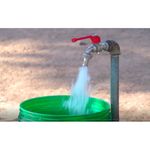
In Dar es Salaam, families have turned to buying bottled water for cooking, suspending activities that require large volumes of water, storing every available drop in buckets and drums, and relying heavily on privately owned wells. 
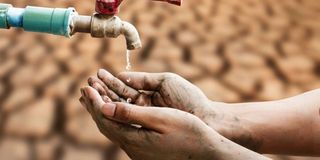
The shortage has reshaped routines, with many residents now planning household activities around erratic and unpredictable water supply schedules.

A 20-litre jerrycan of water in the commercial capital costs between Sh1,500 and Sh2,000, prices that many low-income households find difficult to sustain.

In Morogoro, the situation is even more precarious, with some communities resorting to using contaminated water drawn from valleys and seasonal streams, raising concerns about public health risks.

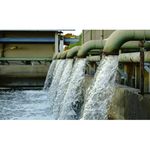
The Dar es Salaam Water and Sewerage Authority (Dawasa) says production at the Lower Ruvu Water Treatment Plant has dropped sharply from 270 million litres per day to about 50 million litres, severely constraining supply to the city and surrounding areas.

The authority attributes the decline to reduced water levels in the Ruvu River, compounded by prolonged dry conditions.

Earlier this month, the Tanzania Meteorological Authority (TMA) attributed the rainfall deficit to La Niña conditions, which are expected to ease by January.

The country is also experiencing unusually high temperatures. On November 21, Moshi in Kilimanjaro Region recorded 35.7°C, about 4.2°C above the long-term average, intensifying evaporation and water demand.

In Dar es Salaam neighbourhoods such as Goba, Mbezi and Tabata, residents say water now arrives sporadically, if at all.

A Goba resident, Ms Rose Joseph, said her family keeps buckets permanently on standby but often ends up buying water when scheduled supply fails.

“Sometimes we buy a six-litre container for Sh4,000 just for cooking. Even when salty tap water is available, long queues mean we may wait several days,” she said.

Similarly, Ms Rehema Rajab from Kimara Suka said her area has gone nearly three weeks without piped water. Households now depend on privately owned deep wells, where a bucket sells for Sh300 or more.

“For cooking, we have no option. Bottled water is essential because the salty water is unsuitable,” she explained.

In Magarisaba, landlord Mr Goodliving Emmanuel said he has advised tenants to temporarily suspend water-intensive activities such as laundry in order to conserve the limited supply.

“They understand the situation, and many are relying on salty water from private wells for basic needs,” he said.

Dawasa Chief Executive Officer, Mkama Bwire, said the authority has taken several measures to mitigate the crisis, including restoring the Ruvu River to its natural course, rehabilitating boreholes and connecting them to the existing supply network.

He urged residents to adopt water-saving practices, store water during the dry season and use available resources more efficiently.

Way forward

Experts warn that without long-term strategies for source protection, storage and water harvesting, the crisis will continue to disrupt livelihoods and constrain economic activity.

Among the proposed solutions is the construction of large reservoirs to capture and store rainwater during wet seasons. These proposals align with the CCM 2025–2030 election manifesto, which pledges increased investment in boreholes and dams.

Other recommendations include completing the national water grid, guiding households on installing and managing private wells, finalising major promised projects and strengthening public education on climate change adaptation.

Key strategies outlined in the National Water Policy include developing climate-resilient storage infrastructure, reducing the risks posed by droughts and floods, and exploring alternative water sources such as wastewater recycling, desalination and inter-basin water transfer systems. Speaking yesterday a senior lecturer at the Open University of Tanzania, Dr Yohana Lawi, said current water supplies remain inadequate despite ongoing infrastructure improvements.

“Even during the rainy season, supply does not meet demand, and the situation worsens significantly during droughts,” he said, adding that many existing interventions are short-term.

For sustainable solutions, Dr Lawi recommended sourcing water from the Julius Nyerere Hydropower Dam, completing the national water grid and promoting household-level rainwater harvesting. He also called for stronger collaboration between the government and the private sector in drilling and legally managing boreholes to ensure equitable access.

Environmental expert Ms Rahel Elibariki said reliance on rainfall alone is no longer viable.

“It is essential to implement storage and harvesting measures, including dams and boreholes, to meet both current and future needs,” she said, stressing that large-scale tree planting should be treated as an emergency measure to help restore natural ecosystems.

Another environmental specialist, Dr Aidan Msafiri, emphasised the need for permanent, coordinated solutions.

“Planning for 2026 and beyond must start now, rather than waiting for recurring crises,” he said. He added that while policies are sound, weak implementation and limited political will continue to undermine progress, calling for shared accountability across public and private institutions.