Tanzania cracks down on online sellers of unregistered cosmetics, medicines

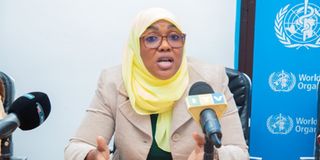
Assistant Director of Public Health Education Dr Rahma Hingora speaks during a discussion at World Health Day celebrations, themed “Together, Let’s Use Science for the Benefit of All.” PHOTO | COURTESY

Dar es Salaam. The government has announced a nationwide crackdown on online traders selling unregistered health products, particularly cosmetics and medicines, as regulators move to protect the public from unsafe goods circulating on social media platforms.

The move, led by the Ministry of Health, follows the Tanzania Bureau of Standards (TBS), outlining strict requirements that must be met before such products can be legally sold.
Officials said the action aims to safeguard public health amid growing concerns that social media has become an easy, largely unregulated channel for potentially harmful products.

The remarks were made on Tuesday, April 7, 2026, by Assistant Director for Health Promotion at the Ministry of Health, Dr Rahma Hingora, during a public discussion held as part of World Health Day commemorations under the theme, “Together, let us use science for our benefit.”

Dr Hingora warned that misinformation remains a major threat, contributing to risky health decisions, including the use of inappropriate medicines and reliance on treatments that lack scientific validation.

She said social media should instead be used to disseminate accurate health information rather than unverified claims.

“Skin health-related products must be discussed by certified professionals,” she said, adding that the government is intensifying oversight to ensure all products on the market are scientifically evaluated and approved by TBS.

“We will place strong emphasis on this. Even those providing health education must follow procedures and obtain the necessary permits,” she added.

The Citizen’s sister newspaper, Mwananchi, sought clarification from TBS on the requirements for importing and selling such products.

TBS Product and Premises Registration Manager, Mr Habakuki Kalebo, said that under the Standards Act, Cap 130, any trader intending to import or sell cosmetics or food products must be officially registered as an importer and ensure their products are duly registered.

He explained that products undergo thorough evaluation, including ingredient analysis and laboratory testing, to verify compliance with quality and safety standards for human use.

“A trader must be known, what they are importing, where it is going, how it is stored, and how it is distributed. Products are tested before being issued with a certificate of quality, which is valid for a specified period,” said Mr Kalebo.

He added that even after registration, every consignment entering the country must be re-inspected to ensure continued compliance with established standards.

Health experts have also raised concerns over the growing volume of cosmetic and treatment advertisements circulating on social media without scientific backing, warning that the trend poses serious risks to public health.

One health approach

During the discussion, Dr Hingora said the government, in collaboration with the World Health Organization (WHO), continues to educate the public on the importance of science in protecting health, in line with this year’s theme and the “One Health” approach, which integrates human, animal, and environmental health.

She noted that outbreaks such as Marburg Virus Disease (MVD) and Mpox highlight the need for such collaboration, as many originate from interactions between humans, animals, and the environment.

Director of Research Promotion and Coordination at the National Institute for Medical Research (NIMR), Dr Nyanda Ntinginya, said the institute has been generating scientific evidence for over four decades to support improvements in health policies and systems.

He said NIMR works with local and international partners to conduct research and translate findings into practical health decisions.

The Global Health Security Project at CIHEB Tanzania Technical Director, Dr Siril Kullaya, said between 60 and 70 percent of infectious disease outbreaks originate from animals and the environment.

He emphasised that the “One Health” approach enables early detection and control of diseases before they spread to humans, stressing the importance of collaboration between human health, livestock, and environmental sectors.

“Health and the economy go hand in hand. If we collaborate effectively as a nation, we will strengthen health security and drive economic development,” he said.

In a message, WHO Regional Director for Africa, Dr Mohamed Janabi, said this year’s theme, “Together for health. Stand with science,” reflects the critical role of scientific research in saving lives and improving healthcare systems globally.

He noted that while science-driven public health efforts have yielded significant progress, Africa still faces numerous challenges, including non-communicable diseases, emerging outbreaks, and weak health systems.

Dr Janabi said the One Health strategy has helped many African countries strengthen disease surveillance, risk assessment, and emergency response.

Despite progress, challenges remain, including limited research funding, weak monitoring systems, and gaps in early warning mechanisms.

WHO has urged African governments to increase domestic investment in science and innovation, while calling on international partners to support Africa-led initiatives and expand access to technology and knowledge.

“Scientific innovation must reach everyone. A discovery that does not reach those who need it most remains unfinished work,” he said.