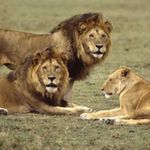
Tanzania emerges as the top in lion and buffalo populations

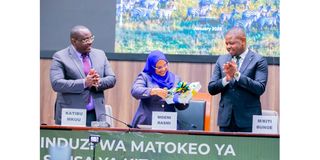
Minister for Natural Resources and Tourism Dr Ashatu Kijaji cuts the ribbon to officially launch the 2024/25 wildlife census results, witnessed by the Chairperson of the Parliamentary Standing Committee on Land, Natural Resources and Tourism, Mr Timotheo Mnzava (right), and the ministry’s Permanent Secretary, Dr Hassan Abbasi. PHOTO | BERTHA ISMAIL

Arusha. Tanzania has cemented its position as Africa’s leading wildlife powerhouse after emerging top in the population of lions and buffaloes, according to the 2024/2025 national wildlife census conducted by the Tanzania Wildlife Research Institute (Tawiri).

The findings show that Tanzania now hosts approximately 328,000 buffaloes, making it the highest in Africa.

It is followed by South Africa with 46,000, Mozambique with 45,000, Kenya with 42,000, and Zambia with 41,000.

In the lion category, Tanzania also leads the continent with an estimated 17,200 lions. South Africa follows with 3,284 lions, Botswana 3,064, Kenya 2,515, and Zambia 2,349.

Presenting the results on Wednesday, June 17, 2026, Tawiri director general, Dr Jublet Mjingo, said that the 2024/2025 census was conducted a decade after the previous exercise in 2014/2015 and, for the first time, covered all ecological systems across the country.

He further revealed that Tanzania currently has 66,714 elephants, placing it behind Botswana, which leads with about 130,000 elephants, and Zimbabwe with approximately 100,000.

The current figure reflects a significant decline compared to 2005, when Tanzania’s elephant population stood at over 134,000.

In another key highlight, Tanzania recorded 302 black rhinos, ranking fifth in Africa.

Namibia leads with 2,196 rhinos, followed by South Africa with 2,056, Zimbabwe with 1,033, and Kenya with 938.

Commenting on the findings, the Chairperson of the Parliamentary Standing Committee on Land, Natural Resources and Tourism, Mr Timotheo Mnzava, called for a comprehensive national dialogue on strategies to restore the declining elephant population.

“While we celebrate the achievements in wildlife conservation reflected in this census, we must also begin a national conversation on how to restore the elephant population lost over the past two decades due to poaching and other challenges,” Mnzava said.

He said that the decline from over 134,000 elephants in 2005 to 66,714 today signals the need for intensified conservation efforts to restore Tanzania’s historic status as one of the world’s major elephant strongholds.

Launching the census results on behalf of President Samia Suluhu Hassan, Minister for Natural Resources and Tourism, Dr Ashatu Kijaji, said the findings demonstrate a generally positive conservation trend over the past decade despite persistent challenges.

She said seven wildlife species recorded significant population increases, 11 showed steady improvement, while one species registered a decline, a situation that calls for urgent policy and operational interventions.

“These results should guide us in making informed decisions, setting priorities, and implementing strong strategies for wildlife resource management and tourism development,” said Dr Kijaji.

“We have also taken note of the directives from the Parliamentary Committee Chair and will begin working on them immediately to ensure we restore Tanzania’s elephant population status in Africa,” she added.

Dr Kijaji also highlighted that human activities near protected areas, including agricultural expansion, settlement growth, and encroachment on wildlife corridors, continue to pose major challenges, often leading to human-wildlife conflicts.

She directed conservation institutions to utilize the census findings to strengthen protected area management and develop sustainable solutions to mitigate such conflicts.

Permanent Secretary in the Ministry of Natural Resources and Tourism, Dr Hassan Abbasi, said conservation gains have significantly contributed to the growth of Tanzania’s tourism sector, one of the country’s key economic pillars.

He noted that rising tourism revenues in recent years demonstrate the direct link between conservation and national economic development, emphasizing the importance of continued research and regular censuses to support evidence-based policymaking.