Tanzania government ramps up efforts to end water shortage

What you need to know:

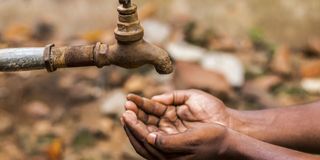
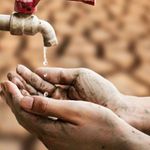
  • Dar es Salaam city has faced water scarcity for weeks, worsened by rapid urbanisation, ageing infrastructure, and increasingly unpredictable rainfall patterns.

Dar es Salaam. The government has intensified efforts to tackle persistent water shortages in Dar es Salaam, with Minister for Water, Jumaa Aweso, outlining the planned action to ensure residents have continuous access to clean water.

This week, Mr Aweso convened a critical working session with the management of the Dar es Salaam Water and Sewerage Authority (Dawasa), issuing clear directives to prioritise uninterrupted water supply across all city zones.

“During this transitional period of service disruption, I want to ensure the water distribution schedule reaches all areas and that water is available throughout the day,” he said, underscoring the urgency of resolving the long-standing issue.

Dar es Salaam city has faced water scarcity for weeks, worsened by rapid urbanisation, ageing infrastructure, and increasingly unpredictable rainfall patterns.

Mr Aweso highlighted the government’s continued investment in major water projects designed to expand supply and strengthen distribution systems.

“Tanzania has made remarkable progress in extending water services to rural communities. Previously, only about 12,000 villages had access to piped water. Today, we have reached over 15,000. In the next five years, we aim to complete water projects in every remaining village, utilising modern borehole and dam technologies,” he explained.

Urban areas, however, remain a significant challenge, especially parts of Dar es Salaam where demand continues to outstrip supply.

To address this, the Government has launched initiatives targeting 68 urban centres, backed by investments exceeding $50 million.

“Our goal is to connect water sources efficiently to industrial zones, healthcare facilities, and schools, thereby supporting economic growth and social wellbeing,” Minister Aweso said.

Key to this strategy is the development of major national water infrastructure projects. The Rufiji Water Supply Project, for example, is designed to channel water safely from the Rufiji River to multiple regions, including Lindi, while ensuring secure storage and distribution.

In addition, Lake Victoria’s waters are being harnessed to supply high-demand urban areas in northern and central Tanzania, a move expected to strengthen both household and industrial water availability.

Across the country, the Government is implementing more than 100 projects to increase water access.

In Arusha, a Sh520 billion water supply scheme is already producing 200 million litres daily, benefiting approximately 850,000 residents and raising urban water coverage toward the Government’s 2030 targets.

In Kilimanjaro and Tanga, the Same–Mwanga–Korogwe Project, valued at Sh406 billion, provides 51.65 million litres daily to 300,000 residents, while the Kidunda Dam in Morogoro, costing Sh335 billion, is set to serve 6.77 million people by storing 190 billion litres and stabilising flows to the Ruvu River, thus reinforcing water supply to Dar es Salaam and the Coast Region.

Further north, the Tabora–Nzega–Igunga–Singida Project, with an investment of Sh602 billion, will deliver 54.1 million litres daily to 1.2 million people, while other strategic schemes in regions including Bunda, Singida, Mwanza, and Dodoma are steadily boosting daily production to meet rising demand.

“Many of these initiatives also incorporate climate-resilient designs, ensuring that even during prolonged dry spells, water supply can remain stable and sustainable,” he said.

“We have increased capacity significantly, and more regions are receiving regular water supply. Dar and Coastal regions are still experiencing challenges. However, challenges remain due to prolonged dry spells and technical limitations in some treatment plants,” he said.

“Due to drought and delayed rains, our systems are not producing at full capacity,” the minister said, noting that Dawasa’s infrastructure is designed to produce about 508 million litres of water per day, but current output has dropped to around 320 million litres, leaving a deficit of nearly 200 million litres.

To tackle these challenges, the Government is taking a multi-pronged approach: expanding water sources, upgrading infrastructure, and implementing strategic distribution plans to ensure equitable access.

This includes zoning the city for more effective delivery, extending service hours, and closely monitoring supply to pre-empt disruptions.

“We urge citizens to use water responsibly while we implement these projects. With patience and collective effort, we will overcome these shortages,” Minister Aweso said, expressing confidence that these measures will provide long-term solutions.

He said with coordinated efforts from the Ministry of Water, Dawasa, and regional authorities, backed by substantial investment and modern infrastructure, the Government is confident that the persistent water shortages that have long plagued some areas will gradually be resolved, paving the way for a future of reliable and equitable water supply for all Tanzanians.