Dar es Salaam. While motor vehicle owners continue to voice frustration over prolonged insurance payout timelines following road accidents, industry experts say rigorous verification processes remain the primary cause of delays.
Specialists argue that administrative bottlenecks are frequently driven by incomplete police documentation, extended investigations, and glaring maintenance cost discrepancies between repair garages and underwriting firms.
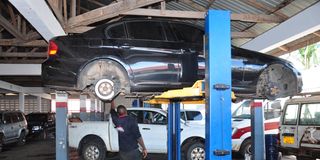
The clarification comes amidst rising consumer complaints, with affected motorists claiming it takes nearly a month to access compensation and vehicle release authorisations following an accident.
Magomeni resident Baraka Benson is among vehicle owners who experienced the setback firsthand.
He revealed he was forced to wait three weeks to recover his vehicle, a repair job that would have taken two days had he avoided the formal insurance procedure.
“My car was hit from behind, scraped, and the bumper slightly bent. Police measured and drew the sketch, then it went to the insurer, taking a week. After that, actual repairs took a week and several days,” he said.
Mr Benson added that he lost three weeks over a minor issue that should have been resolved swiftly.
Similarly, motorist Bakari Mlanzi said after two weeks of administrative delays, he abandoned the claims process altogether to settle privately with the driver responsible.
“It became necessary to agree with the person who caused my accident to pay for repairs directly. The car was fixed within a day. These delays force many of us to settle matters out of court without even involving the police,” noted Mr Mlanzi.
Standard claim procedures
Insurance Specialist Raphael Msaki clarified that insured motorists involved in accidents must first report the incident to the police.
He explained that law enforcement officers issue Form PF90, an official accident sketch, and Form PF3 if bodily injuries occurred.
“The motorist must report to police to secure Form PF90 and the sketch map. If there are casualties, Form PF3 is issued for medical treatment,” said Mr Msaki.
Thereafter, the client must notify their insurer within 14 working days to obtain a claim form.
“If the motorist has a preferred garage, they submit an invoice. Where no official garage is designated, the insurer dispatches assessors to estimate repair costs,” he added.
Once satisfied, the claim is provisionally processed within 14 days to allow repairs to commence.
Clients with courtesy vehicle cover receive alternative transport or an allowance during the repair window.
Addressing bureaucracy complaints, Mr Msaki insisted the fault often lies with policyholders who fail to submit required documentation, alongside necessary cost verification checks.
“Insurers send specialists to verify quotes because some policyholders stage deliberate damage to inflate compensation,” noted Mr Msaki.
Roots of delay
Dexter Insurance Company Director, Mr Optatus Constantine, outlined mandatory steps for major accident claims, starting with preserving the scene until police sketch the site and impound the vehicle for inspection.
Because the process spans multiple institutions, delays at police level inevitably cascade down to the insurer.
“Insurance operates on regulatory guidance. When documentation from police is delayed, service delivery stalls automatically,” said Mr Constantine, noting complex cases involve secondary investigative bodies.
He highlighted inflated garage estimates as another major stumbling block.
“A car valued at Sh150 million might suffer Sh5 million in actual damage, but the client’s chosen garage quotes Sh20 million. Investigating and resolving such inflated invoices takes time,” he said.
Policy categories and regulator stance
Mr Constantine noted third-party policies cover third-party victims rather than the driver or private passengers.
Claims under this category require court judgments establishing liability, often stretching processing times to three months, whereas comprehensive policies rely on police reports.
Tanzania Insurance Regulatory Authority (Tira) Insurance Commissioner, Dr Baghayo Saqware, defended current timelines, stating the regulator serves 26.6 million citizens without widespread formal complaints.
“Payouts require strict documentation. The longer a client delays submitting required files, the longer processing takes,” emphasised Dr Saqware.