Dar/Upcountry. Tanzanians’ dream of homeownership is facing severe headwinds as surging construction material prices threaten to drive up residential rents, halt building projects, and shrink casual labour opportunities nationwide.
The price surge stems largely from recent fuel price hikes that escalated production, haulage, and distribution costs for vital building inputs across the country.
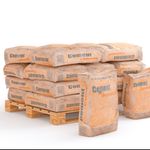
Beyond logistics, the spike follows the Finance Act 2026 implementation, which introduced higher taxes and levies on specific goods, including cement products.
Economic and construction experts warn that if left unchecked, the trend will affect more than just prospective homeowners, hitting tenants, business proprietors, and construction-dependent livelihoods.
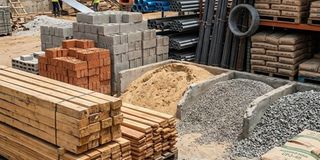
An investigation by The Citizen, sister newspaper, Mwananchi, across several regions established that escalating costs for steel bars, cement, gravel, sand, and concrete blocks are already disrupting the construction sector’s trajectory.
Speaking on Sunday, August 9, 2026, Fair Competition Commission (FCC) acting director-general, Ms Khadija Ngasongwa, said the watchdog is examining the issue before official state clarification.
“Leave it to us; we are examining it over the next two or three days. The Minister [for Industry and Trade, Judith Kapinga will offer detailed clarification to journalists,” she said.
As the government prepares its response, Dar es Salaam, the nation’s commercial and construction hub, remains among the hardest-hit destinations, with traders attributing the increases to inflated logistics costs.
July 2026 cap prices set by the Energy and Water Utilities Regulatory Authority (Ewura) positioned Dar es Salaam petrol at Sh3,990 per litre and diesel at Sh4,182, keeping freight expenses elevated nationally.
Dar es Salaam builder, Mr Boniface Jacob, noted that escalating costs have left prospective homeowners and real estate investors at a difficult crossroads.
He revealed that 12mm deformed iron bars previously selling for Sh24,000 now fetch Sh28,000, while 16mm bars jumped from Sh38,000 to Sh44,000, severely inflating development budgets.
Consequently, investors are forced to seek ways to recover excess capital expenditure, including hiking commercial and residential property rents.
“Ultimately, spent costs must be recovered. If you construct using more money than planned, you find ways to compensate so the project remains profitable,” said a former Ubungo Mayor.
In Morogoro, resident Suzana John revealed that she suspended work on her three-bedroom house following the price swings.
“Everything: blocks, rebar, sand, and gravel have gone up. I halted construction to reorganise,” said Ms John.
Sand and gravel vendors echoed her sentiment, confirming that fuel price spikes drove up raw material collection costs at source.
Trader Christian Salehe noted that a semitrailer load of gravel sourced from Chalinze, Coast Region, now costs Sh1.8 million, up from Sh1.6 million, with sand following suit.
“Traders and customers are affected alike, as costs along the transport chain manifest directly in final retail prices,” explained Mr Salehe.
Similar conditions were recorded in Dodoma, Arusha, Kilimanjaro, Manyara, Mwanza, and Zanzibar, where citizens and vendors reported elevated material quotations.
In several regions, the shift has altered consumer behaviour, forcing developers to downscale or suspend plans until prices stabilise.
In Dodoma, a 50kg cement bag rose from Sh20,000 to Sh21,000, 12mm rebar climbed from Sh23,000 to Sh25,000, and a seven-tonne gravel load increased by Sh10,000.
Hardware dealer, Ms Rehema Nkya, attributed the surge to wholesale adjustments, adding that market competition prevented further markups.
Gravel crusher, Ms Agnes Nyamuhwa, confirmed that quarry prices escalated due to rising operational expenses.
In Kilimanjaro Region, traders reported reduced purchase volumes as clients paused operations.
“Building materials have risen sharply while money availability remains tight,” observed resident Mr Samwel John.
Mr John was supported by Mr Francis Peter, who added that the surge dealt a blow to young people saving to build homes.
“When costs suddenly spike, our targets move further away, discouraging young savers,” lamented Mr Peter.
Arusha saw seven-tonne gravel truck prices jump from Sh250,000 to Sh300,000, while sand reached Sh450,000 from Sh380,000–Sh420,000.
In Mwanza City, gravel rose from Sh100,000 to Sh130,000 per trip, while sand moved from Sh80,000 to Sh100,000.
Traders cited stone processing, transport, and fuel expenses, while developers cited squeezed budgets for slowing project execution.
In Babati, Manyara Region, trader Benjamin Aloyce said high procurement and transport overheads left merchants with no choice but to adjust retail prices.
In Zanzibar, rebar and aggregate prices surged sharply.
Pemba resident, Ms Swaumu Saleh Mansour, noted that an 8mm rebar piece rose from Sh10,000 to Sh15,000, while timber pieces started at Sh10,000.
Construction supervisor, Mr Golliath Mfalamagoha, stated that end-consumers will bear the brunt through inflated rent and property prices.
“A block previously selling at Sh1,300 now fetches Sh2,000. Ultimately, tenants and traders renting shops will bear that burden,” argued Mr Mfalamagoha.
He added that while suppliers might benefit if sales remain steady, declining market turnover could equally hurt their revenues.
Economist Dr Charles Malaki observed that commercial and residential rents will inevitably rise, particularly in major cities, as landlords move to protect profit margins.
“Once rents increase, they rarely drop, creating long-term hardship for tenants,” cautioned Dr Malaki, noting that price drops depend heavily on global fuel trends.
Economist Charles Matekele warned that public and private projects risk stalling, as initial contract sums no longer reflect current market realities.
“Work quality might suffer unless contracts are adjusted. The government must account for price variations in new contracts,” said Mr Matekele.
“Stalled projects will ultimately deny casual labourers their daily livelihoods,” he added.
Register to begin your journey to our premium contentSubscribe for full access to premium content