Dar es Salaam. Needle-stick injuries have emerged as the primary hazard exposing healthcare workers to Human Immunodeficiency Virus (HIV) infection risks while providing medical care across the country.
Amid the worrying trend, medical experts have urged the government to improve clinical working environments and recruit more personnel to ease the workload on staff. The pressure is particularly acute in busy facilities.
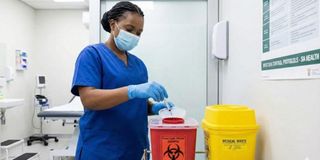
The findings are contained in the National Infection Prevention and Control in Healthcare Services (IPC) 2021–2025 Report released by the Ministry of Health, which ranks needle-stick incidents among the leading occupational HIV exposure risks.
The report shows that the ‘Others’ category accounted for 1,231 incidents, representing 35.4 percent of all healthcare workers exposed to HIV risks while on duty.
Injuries from hollow needles used to administer medication or establish intravenous lines caused 813 incidents (23.3 percent), while phlebotomy procedures during blood collection recorded 782 cases (22.5 percent).
Solid needle injuries contributed 348 cases (10 percent), while blood or body fluid splashes accounted for 8.8 percent, equivalent to 306 incidents.
Nursing specialist Rehema Eliya attributed the exposure risks to physical fatigue caused by excessive workloads in health facilities.
She said staff are forced to work long shifts without adequate rest, impairing concentration and increasing workplace accidents.
"When you are exhausted from attending to many patients, alertness drops. That increases needle-stick injuries or non-compliance with safety protocols," she said.
Ms Eliya noted that emergency units are particularly affected because staff must make rapid, life-saving decisions under intense pressure.
"If a trauma patient arrives, the caregiver's focus is on saving a life. In such chaotic moments, needle-stick accidents easily occur while setting up drips or administering blood," she added.
Beyond fatigue, declining visual acuity among older health workers further increases the risk of needle-stick injuries during routine clinical tasks.
She therefore urged the government to recruit additional medical staff to reduce workloads, ensure adequate rest and improve health facility infrastructure.
The Ministry report further indicates that post-exposure prophylaxis (PEP) utilisation was highest among the 'Others' category, with 1,476 workers (38.1 percent) receiving treatment.
Nurses and nursing assistants followed with 815 recipients (21.1 percent), while doctors and clinicians recorded 757 cases (19.6 percent).
Laboratory personnel accounted for 331 cases (8.6 percent), while medical students and interns comprised 5.4 percent and 3.3 percent, respectively.
Improve working environments
Tanzania National Nurses Association (Tanna) President Alexander Baluhya said reducing needle-stick injuries requires upgrading facilities and expanding regular safety training.
"Beyond college training, continuous workplace sensitisation on safe equipment handling and self-protection is critical," said Mr Baluhya.
He noted that uncooperative patients during procedures can also cause unexpected needle-stick injuries among caregivers.
Mr Baluhya stressed that any health worker suffering a needle-stick injury must begin HIV PEP within 72 hours of exposure.
"Scientific evidence demonstrates that starting PEP within the recommended timeframe significantly reduces HIV transmission risk," he said.
Ms Eliya said health workers must also guard against other blood-borne infections, particularly hepatitis.
She highlighted the need for psychological support services, noting that personal stress and mental burnout can reduce workplace vigilance.
"We treat every patient as potentially infectious. Workers require conducive environments, rest and counselling to serve safely," she stressed.
Medical practitioner, Dr Elizabeth Kawiche, said needle-stick injuries remain major occupational hazards but are largely preventable.
"Adhering to infection control principles, using personal protective equipment, avoiding needle reuse or manual recapping, and immediate disposal in sharps containers is vital," said Dr Kawiche.
Government response
Contacted for comment, Ministry of Health Director of Nursing and Midwifery Services, Ms Ziada Sellah, acknowledged that nurses face the highest exposure risks because of their 24-hour proximity to patients.
Citing World Health Organisation (WHO) guidelines, Ms Sellah said one registered nurse should attend to eight to 10 patients, while a diploma nurse should manage four to six.
"To meet WHO benchmarks, the government is continuously hiring staff and procuring retractable safety needles that auto-sheathe after use," she said.
She added that standardised safety boxes are available across facilities for immediate needle disposal.
Continuous infection prevention training is also provided, alongside clear post-exposure protocols covering reporting, screening, PEP initiation and support for affected staff.
Key statistics
Ministry of Health 2024 data shows nurses and midwives constitute 60 percent of the national health workforce.
Globally, WHO reports 29 million nurses and 2.2 million midwives, projecting deficits of 4.5 million nurses and 310,000 midwives by 2030.
Register to begin your journey to our premium contentSubscribe for full access to premium content