Dar es Salaam. Chadema chairman Tundu Lissu has asked the Court of Appeal to order the Director of Public Prosecutions (DPP) to compensate him, arguing that delays in hearing the Republic's application have unnecessarily prolonged his detention on remand.
The Republic lodged the review application on February 24, 2026, challenging a High Court, Dar es Salaam Sub-Registry, decision rejecting its request for leave to adduce additional evidence in the treason case facing the opposition leader.
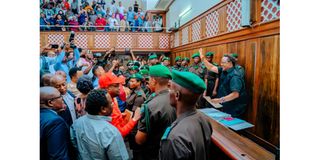
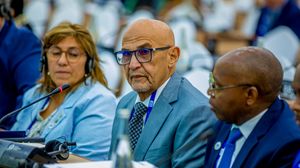
The review application, Case No. 7203216/2026, was heard on Friday, July 3, 2026, by a three-judge bench comprising Justices Augustine Mwarija, who presided, Zainabu Muruke, and Amour Khamis.
The Court also heard Mr Lissu's preliminary objection challenging the proceedings.
Mr Lissu argued that the High Court's ruling was an interlocutory decision that neither finally determined the substantive case nor gave rise to a right of appeal or review.
Republic's response
Responding for the State, Principal State Attorney Nassoro Katuga argued that Section 8(2)(d) of the Appellate Jurisdiction Act (AJA), relied upon by Mr Lissu, applies only to civil proceedings.
He submitted that the Republic's application was brought under Section 6(3) of the AJA and Rule 65 of the Court of Appeal Rules, 2009.
He said the Republic was not asking the Court to review the High Court's decision itself, but the legal basis upon which it rejected the application to adduce additional evidence.
Mr Katuga argued that Section 6(3) empowers the Court of Appeal to call for and examine High Court records to satisfy itself as to the legality and correctness of any order or decision.
He further maintained that Section 8(2)(d) concerns situations in which the Court refuses an appeal or review against an order or decision, which, he argued, was not the issue raised by the Republic.
Principal State Attorney Job Mrema submitted that, under Rule 107 of the Court of Appeal Rules, a preliminary objection must be capable of disposing of the substantive matter.
He argued that Mr Lissu's objection could not dispose of the review application and was therefore misconceived.
Mr Mrema further maintained that Section 8(2)(d) bars appeals and reviews against interlocutory orders only in civil proceedings, whereas the matter before the Court is criminal.
Replying, Mr Lissu argued that the Republic's complaint stemmed from a High Court ruling that examined the proposed additional evidence, considered the applicable law, and found it inadmissible before dismissing the application.
He further argued that although Mr Katuga submitted from the Bar that the application was brought under Section 6(3) of the AJA, neither Section 6(2) nor Section 6(3) was cited anywhere in the application itself.
Mr Lissu nevertheless contended that Section 6(3) grants the Court supervisory jurisdiction upon receiving a formal complaint and does not permit a litigant to file a review application directly.
He argued that if the Republic wished to invoke the Court's jurisdiction, it ought to have proceeded under Section 6(2) of the AJA.
Even then, he said, he would still have objected under Section 8(2)(d) because the ruling was neither appealable nor reviewable.
"They have no case, and this review is completely baseless. They want to strip the Court of its powers," Mr Lissu told the bench.
After hearing both sides, the Court reserved its ruling, with the date to be communicated to the parties.
Justice Mwarija said that if the Court upheld Mr Lissu's preliminary objection, the proceedings would end.
If the objection was dismissed, however, the Court would proceed to determine the substantive review application.
Mr Lissu faces one count of treason contrary to Section 39(2)(d) of the Penal Code over remarks he allegedly made about plans to prevent the 2025 General Election from taking place.
The prosecution alleges that on April 3, 2025, in Dar es Salaam, Mr Lissu, while being a Tanzanian citizen, intentionally incited members of the public to prevent the 2025 General Election from being held by uttering and publishing statements intended to pressure the Head of State.
Among the statements attributed to him is: "If they say this position amounts to rebellion, that is true... because we say we will stop the election, we will mobilise rebellion; that is how change is achieved... so we are going all out... we will seriously disrupt this election... we are going to cause major disruption..."
The treason trial is being heard by a three-judge High Court bench comprising the Principal Judge, Justice Dunstan Ndunguru, and Justices James Karayemaha and Ferdinand Kiwonde. The prosecution has so far called 15 witnesses.
On February 18, 2026, the Republic electronically filed an application seeking leave to adduce additional evidence under Section 308(1) of the Criminal Procedure Act (CPA). The application was heard on February 23, 2026.
Mr Katuga told the High Court that the prosecution intended to introduce additional evidence relating to the testimony of Assistant Commissioner of Police (ACP) Amin Mahamba.
Mr Lissu opposed the application, arguing that Section 308(1) applies only to evidence that existed during committal proceedings but was not read into the record, and not to entirely new evidence that never formed part of those proceedings.
He maintained that ACP Mahamba's evidence had already been read during committal proceedings and that the prosecution's opportunity to introduce fresh evidence had therefore expired.
He further argued that the proposed evidence was irrelevant because the alleged offence occurred on April 3, 2025, he was charged on April 10, 2025, and subsequently remanded, whereas the additional evidence related to events occurring both before and after the election.
In a ruling delivered on February 24, 2026, the High Court agreed with Mr Lissu, holding that Section 308 of the CPA permits only evidence that existed during committal proceedings but was not read into the record, not evidence obtained afterwards.
Justice Ndunguru found that the prosecution sought to introduce evidence obtained after the committal proceedings.
The Court therefore dismissed the application for contravening Section 308 of the CPA, prompting the Republic to seek a review before the Court of Appeal.