Mainland, Zanzibar residents can use health insurance cards across Union, says PM
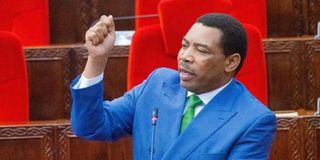
Prime Minister Mwigulu Nchemba while responding to impromptu questions from Honourable Members of Parliament in Dodoma, June 18, 2026. PHOTO | COURTESY
Dar es Salaam. Prime Minister Mwigulu Nchemba has sought to defuse a growing debate over access to healthcare services within the Union, saying the issue is not a dispute between Mainland Tanzania and Zanzibar but a challenge arising from foreigners allegedly exploiting weaknesses in the system.
Speaking during the Question and Answer session in Parliament on Thursday, June 18, 2026, Dr Nchemba said relations between the two sides of the Union remain strong and are founded on shared identity and kinship rather than administrative arrangements alone.
He said the debate emerged following concerns over free healthcare programmes for vulnerable groups, including beneficiaries of the Tanzania Social Action Fund (Tasaf) on the Mainland and similar welfare schemes in Zanzibar.
According to the Prime Minister, some foreigners have been obtaining Zanzibar Resident Identity Cards through illegal means and using them to access services intended for Zanzibaris.
“This is not an issue between the two sides of the Union. It is a national issue. We do not have a relationship problem regarding the sharing of resources or provision of services,” Dr Nchemba told Parliament.
He called on immigration and other state institutions to strengthen verification mechanisms to prevent non-citizens from unlawfully accessing public services.
“We should not ignore the fact that there are people from outside Tanzania who infiltrate the country, acquire citizenship or residency documents through improper means, and seek to benefit from national resources,” he said, describing the Union as one built on deep social and family ties.
“The founders symbolically mixed soil to demonstrate the Union, but today it is even stronger because it has united families and blood relations through marriage and social integration,” he said.
Health insurance cooperation
The Prime Minister noted that although healthcare is a non-Union matter, the two sides cooperate closely in service delivery through reciprocal health insurance arrangements.
He said members of the National Health Insurance Fund (NHIF) on the Mainland and the Zanzibar Health Services Fund (ZHSF) are allowed to access treatment on either side of the Union using their respective insurance cards.
“A Zanzibari with a ZHSF card can receive treatment in Mainland Tanzania, while an NHIF member from the Mainland can also obtain services in Zanzibar,” he explained, noting that those without insurance coverage are required to pay for services directly.
Background to the debate
Dr Nchemba was responding to a question from Segerea Member of Parliament, Ms Agnesta Kaiza, who sought to know the policy and legal procedures used to provide health services to citizens from Tanzania Mainland and Zanzibar.
The MP’s question follows public reactions to comments made by some officials in the Revolutionary Government of Zanzibar, which were interpreted by some as discriminatory towards non-Zanzibaris.
On June 6, 2026, acting Zanzibar Minister for Health Dr Saada Mkuya Salum questioned the increasing number of non-Zanzibaris accessing treatment through the Matibabu Card programme, which is designed specifically for Zanzibar residents.
She argued that Zanzibar’s budget could not support healthcare costs for a much larger population beyond the Isles, remarks that generated criticism, particularly among some mainland Tanzanians.
However, Dr Mkuya later clarified that her concern centred on financial sustainability rather than exclusion.
She said Zanzibar had established mechanisms through which non-residents could contribute to healthcare financing and noted that mainland residents could access services through insurance schemes.
She also explained that the Zanzibar Health Services Fund provides services to all registered members, including those from Mainland Tanzania.
Gold reserves and war veterans
Responding to a question from Tarime Urban MP Esther Matiko, Dr Nchemba dismissed claims that Tanzania had secretly sold part of its gold reserves.
He said the country currently holds about 27 tonnes of gold worth between $3.9 billion and $4 billion.
“Gold has become an important monetary policy instrument for maintaining economic stability and strengthening the Tanzanian shilling. No gold has been sold,” he told Parliament.
He added that Tanzania’s total foreign reserves exceed $6 billion, sufficient to cover more than four months of imports.
The Prime Minister also addressed compensation for volunteers who participated in the 1979 war that helped topple former Ugandan leader Idi Amin.
Responding to a question from Njombe MP Deodatus Mwanyika, Dr Nchemba said legal and verification processes had been completed and 72 veterans had been identified.
“I expect payments to begin during this financial year,” he said.